Jun 2026 · 6 min read
ORS powder is one of the most important and most misunderstood products in any Indian medicine cabinet. It has saved millions of lives from diarrhoeal dehydration, yet most people use it slightly wrong, and through 2025–2026 the rules around what can even be called ORS in India were rewritten. This piece explains the product properly: the science, the exact formula, how to use it, and the regulatory line every brand and parent should now understand.
What ORS powder actually is
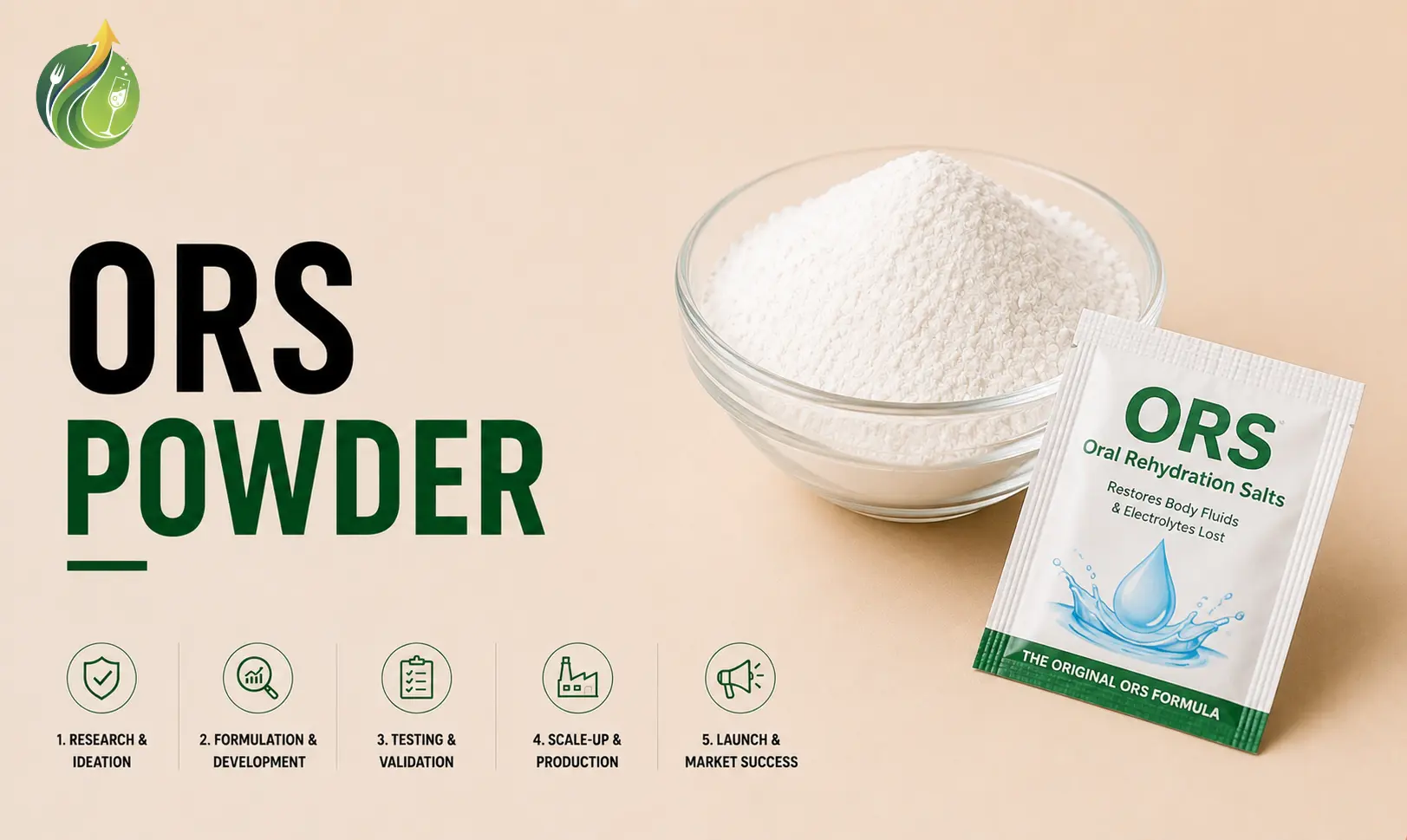
ORS stands for Oral Rehydration Salts. It is a precisely balanced blend of glucose and mineral salts that, when dissolved in clean water, replaces the fluid and electrolytes the body loses during diarrhoea, vomiting, heat stress or heavy exertion.
The clever part is not the salt — it is the glucose. The small intestine has a transport mechanism (sodium–glucose co-transport) where glucose and sodium are absorbed together, dragging water across the gut wall with them. This is why ORS rehydrates far faster than plain water or a sugary drink. The roughly 1:1 molar ratio of glucose to sodium is the whole point of the design; change it and the mechanism stops working efficiently.
The exact WHO low-osmolarity formula
Since 2002, the WHO and UNICEF have recommended a reduced-osmolarity formula, which is gentler and more effective than the older version. Per one litre of clean water:
| Ingredient | Quantity per litre | Role |
| Glucose (anhydrous) | 13.5 g | Drives sodium + water absorption; light energy |
| Sodium chloride | 2.6 g | Replaces sodium lost in stool/sweat |
| Potassium chloride | 1.5 g | Replaces potassium; supports heart and muscle |
| Trisodium citrate, dihydrate | 2.9 g | Corrects the acidosis caused by dehydration |
| Total osmolarity | ~245 mOsm/L | Optimised for fast, safe rehydration |
That total osmolarity figure is the signature of a genuine WHO-formula ORS. A sugary “electrolyte drink” sits at a very different osmolarity and behaves differently in the body.
How to use ORS powder correctly
Most ORS failures are dilution errors. Too little water makes the solution too concentrated, which can worsen dehydration by pulling water out of cells.
| Situation | What to do |
| Standard sachet (e.g. ~21.8 g) | Dissolve fully in exactly 1 litre of clean, safe water |
| Small sachet (e.g. ~4.4 g) | Dissolve in the volume printed on the pack (often ~200 ml) |
| Mixing liquid | Use only water — never milk, juice, or soft drinks |
| Drinking pattern | Small, frequent sips, not large gulps |
| Freshness | Discard any prepared solution after 24 hours |
| Storage of powder | Cool, dry place; the powder is highly moisture-sensitive |
Always follow the exact instructions on your specific pack — sachet sizes differ, and the printed dilution is the one that matters.
When ORS is not enough — the safety part
ORS treats mild to moderate dehydration. It is not a cure-all, and there are situations where you should stop relying on it and seek medical help quickly:
- Signs of severe dehydration: sunken eyes, very little or no urine, extreme lethargy, or a child who cannot drink.
- Blood in stool, persistent high fever, or vomiting that prevents any fluid intake.
- Dehydration in a newborn or very young infant.
- People with kidney disease, heart failure, or on sodium/potassium-restricted diets should use ORS only under medical guidance.
Severe dehydration can need intravenous fluids, which only a clinician can give. When in doubt, especially with infants and the elderly, call a doctor.
The big change: what FSSAI did about “ORS” in 2025–2026
This is the part most people missed. For years, Indian shelves filled up with sweet “electrolyte” drinks and powders using “ORS” in or near their brand names — even though they did not meet the WHO formula and often carried far more sugar.
In October 2025, FSSAI directed that the term ORS must not be used on food and beverage labels, brand names or advertising unless the product is the genuine WHO-recommended formulation. The reasoning was blunt: high-sugar drinks marketed as “ORS” can mislead parents and may worsen a child’s dehydration. The Delhi High Court declined to interfere with the order, and the Indian Academy of Pediatrics publicly backed it, stressing that electrolyte drinks and true ORS are not interchangeable.
There is a deeper regulatory fact underneath this:
| True WHO-formula ORS | Typical “electrolyte” drink/powder | |
| Legal classification | Drug (Drugs and Cosmetics Act) | Food (regulated by FSSAI) |
| Primary purpose | Medical rehydration | Refreshment / mild hydration |
| Sugar level | Low, precisely balanced | Often high |
| Can it be called “ORS”? | Yes | No (post-2025 rules) |
| Who it’s for | Anyone with fluid loss, under guidance | Casual hydration, not treatment |
For consumers, the takeaway is simple: for actual dehydration, buy something that states it meets the WHO ORS formula, and ignore the marketing.
What this means for brands building in the hydration space
If you are a founder eyeing the booming hydration and electrolyte category, the 2026 rules are a fork in the road, and getting this wrong is now a recall risk.
You essentially have two honest routes. The first is the pharmaceutical route — making a genuine WHO-formula ORS, which is regulated as a drug and sits outside the food licence entirely. The second, and far more common for food and beverage startups, is to build a compliant electrolyte or hydration product that does not pretend to be ORS, does not misuse the term, and competes on real benefits: clean ingredients, sensible sugar, taste, and format.
That second route is squarely a food formulation challenge — balancing electrolyte levels, mouthfeel, stability and label claims so the product is both appealing and fully FSSAI-compliant. Taking it from concept to a shelf-stable, launch-ready SKU is the broader discipline of food product development, and for liquid formats it overlaps heavily with beverage formulation. The brands that will win in 2026 are the ones that respect the regulatory line instead of dancing on it. At Flavor Catalystz, the first question we ask any hydration-brand founder is which side of the drug-versus-food line they actually intend to stand on, because everything else flows from that answer.
Frequently asked questions
What is ORS powder used for?
Treating and preventing dehydration from diarrhoea, vomiting, heat exposure or heavy sweating, by replacing lost water and electrolytes quickly.
What is the full WHO ORS composition?
Per litre of water: 13.5 g anhydrous glucose, 2.6 g sodium chloride, 1.5 g potassium chloride and 2.9 g trisodium citrate dihydrate, at about 245 mOsm/L.
Can I make ORS at home?
In an emergency, six level teaspoons of sugar plus half a teaspoon of salt in one litre of clean water can help — but it is imprecise. A proper WHO-formula sachet is safer and should be used whenever available.
Can adults take ORS powder?
Yes. Adults lose fluids and electrolytes too — from gastroenteritis, heat or intense exercise — and ORS rehydrates them effectively.
Is ORS a drug or a food in India?
The genuine WHO-formula ORS is legally a drug. Many sweet “electrolyte” products are foods, and since late 2025 they may no longer use the term “ORS.”
Can I drink ORS every day?
No. ORS is for fluid loss, not routine hydration. Daily use without need can overload you with sodium; for everyday thirst, drink water.
Is ORS safe for babies and young children?
It is the recommended first-line treatment for childhood dehydration, but dosing for infants should follow a paediatrician’s advice, and severe cases need medical care.
Why does the water quantity matter so much?
Because ORS works on a precise concentration. Too little water makes it too strong and can pull water out of your cells, worsening dehydration instead of fixing it.