May 2026 · 14 min read
A chocolate bar created in a home kitchen in Dubai in 2021 became the most searched food product on the internet by 2024. In December 2023, a TikTok video of someone unwrapping the bar inside a car accumulated 120 million views and ignited a global demand surge that disrupted international pistachio supply chains, spawned thousands of copycat products across six continents, and forced global chocolate manufacturers to reformulate entire product lines.
This is not a trend that peaked and faded. In 2026, the Dubai chocolate phenomenon continues to grow confectionery food product development, global pistachio trade, and how food companies approach viral moments. This guide covers what the product actually is, where it came from, why it went viral, what it did to global markets, and how the trend is evolving through 2026 and beyond.
What Is Dubai Chocolate?
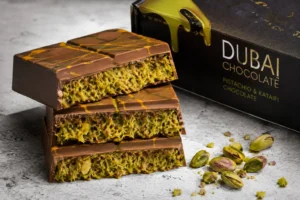
Dubai chocolate is a thick, oversized chocolate bar filled with a distinctive three-component filling: pistachio cream, toasted kataifi pastry, and tahini, all encased in a premium Belgian chocolate shell. The chocolate shell is typically 3 to 5 millimetres thick, with a high-gloss finish and a satisfying snap when broken.
The filling is what makes the product unlike anything previously available in the global confectionery market. Kataifi is a form of shredded phyllo pastry used in the traditional Middle Eastern dessert knafeh. When toasted in butter and mixed with pistachio paste and tahini, it creates a filling that is simultaneously creamy, crunchy, sweet, and subtly savoury. The filling is naturally green from the pistachio cream, creating a vivid colour contrast against the brown chocolate shell that makes every cross-section photograph shareable.
The product is often described as the intersection of European chocolate-making craft and Middle Eastern dessert culture. It does not feel like a novelty or a gimmick. The flavour profile is genuinely complex and the textural contrast between the chocolate snap, the crispy kataifi strands, and the dense pistachio cream is designed to reward every bite rather than disappearing after the first two.
The Origin Story: Fix Dessert Chocolatier and Sarah Hamouda
The original Dubai chocolate was created in 2021 by Sarah Hamouda, a British-Egyptian entrepreneur living in Dubai. During pregnancy, she experienced cravings for knafeh, the traditional Middle Eastern dessert made with shredded phyllo pastry, cheese or cream, pistachios, and sweet syrup. Unable to find exactly what she wanted, she experimented in her home kitchen.
She combined pistachio cream with a hint of tahini, added crisp toasted kataifi pastry for texture, and wrapped the filling in smooth milk chocolate. The result honoured the spirit of knafeh while creating something distinctly modern. She named it Can’t Get Knafeh of It, a pun on the dessert name and the phrase ‘can’t get enough of it’, and launched Fix Dessert Chocolatier as a boutique chocolate brand in Dubai.
For three years, the bar was a beloved local speciality, sold through the Fix shop and website and popular among Dubai residents and tourists who discovered it in person. Demand was strong enough to sustain a small business, but the bar remained largely unknown outside the UAE.
Everything changed in December 2023 when TikTok creator Maria Vehera posted an ASMR-style video of herself unwrapping and eating the bar in a car. The video accumulated 120 million views in two years. The viral moment triggered what food industry observers have described as the fastest global demand spike for a single confectionery product in modern histor
Why the Product Went Viral: The Anatomy of a Food Trend
Visual Design Built for Social Media
The product’s visual identity was accidentally engineered for sharing. The thick chocolate shell creates a dramatic snap visible in every breaking video. The bright green pistachio filling contrasts sharply with the brown chocolate exterior, creating the instant colour pop that drives social media engagement. Every cross-section photograph produces an aesthetically compelling image without any food styling required.
ASMR Sound Design
The crunch of kataifi against the smooth pistachio cream, layered under the snap of the chocolate shell, creates an audio experience that is unusually satisfying to record and listen to on video. ASMR food content consistently outperforms other food video formats on TikTok and YouTube in terms of watch time and share rate, and the Dubai chocolate bar produces one of the richest sound profiles of any confectionery product.
Exclusivity and Discovery
When the bar first went viral, it was only available in Dubai. This exclusivity created an aspirational quality: it was something you had to travel to experience, or know someone who was travelling. Travellers from Europe, India, the US, and Southeast Asia began buying multiple bars to carry back as gifts, each social share extending reach to new audiences.
Cultural Crossover Appeal
The product sits at the intersection of Middle Eastern culinary tradition and European confectionery craftsmanship, two food cultures with massive global followings. It was simultaneously exotic to Western audiences and familiar to Middle Eastern diaspora populations worldwide. This dual appeal gave it natural reach across demographic lines that few food products achieve.
The Global Market Impact of Dubai Chocolate
What It Did to Pistachio Supply Chains
The viral demand for Dubai chocolate created immediate and measurable disruption in global pistachio markets. US pistachio supplies fell 20 percent from February 2024 to February 2025. Iran, the world’s second-largest pistachio producer, exported 40 percent more pistachios to the UAE from September 2024 to March 2025 than in the full previous year. The surge in pistachio demand created price volatility that affected food contract manufacturers across multiple categories.
Major confectionery brands that use pistachio cream as an ingredient in other products reported supply pressure. Artisan bakeries in Europe and North America faced ingredient shortages in pistachio paste. The disruption was significant enough that agricultural economists tracked it as a case study in how a single viral food product can reorganise global commodity trade.
The Copycat Product Explosion
By mid-2024, chocolate manufacturers on every continent had launched their own versions of the pistachio kataifi chocolate bar. German discount supermarket chains Lidl and Aldi introduced their versions of the bar at accessible price points, selling out within hours of restocking in the UK, Germany, and the Netherlands. Lindt, Hotel Chocolat, and dozens of artisan chocolatiers across the US, Australia, and Southeast Asia launched premium interpretations.
Cacao and Cardamom, a US-based artisan chocolate brand, launched their Dubai Pistachio Knafeh Bar in July 2024, and it became their best-selling product of the year within weeks. The speed with which established brands capitalised on the trend demonstrated both the genuine consumer demand and the willingness of the market to accept product variants at multiple price points.
The Dubai Chocolate Product Landscape in 2026
| Product Tier | Price Range | Key Players | Core Differentiator |
| Original / Luxury | USD 20 to USD 55 per bar | Fix Dessert Chocolatier, Compartres | Authentic recipe, Belgian chocolate, premium packaging |
| Premium Artisan | USD 8 to USD 20 per bar | Cacao and Cardamom, Hotel Chocolat interpretations | High-quality ingredients, small batch, origin story |
| Mass Market Supermarket | USD 3 to USD 8 per bar | Lidl, Aldi, own-label versions | Price accessibility, wide distribution |
| Bakery and Patisserie Format | USD 5 to USD 15 per piece | Independent patisseries globally | Fresh made, seasonal, local ingredient adaptations |
| DIY and Recipe Format | N/A (home made) | Ingredient brands, kataifi suppliers | Home cooks replicating the experience |
Luxury and Premium Products Leading the Category
Fix Dessert Chocolatier: The Original
Fix Dessert Chocolatier remains the definitive original and commands the highest price point in the category. The brand ships internationally but maintains limited availability and premium pricing that preserves the exclusivity that drove the original viral moment. Sarah Hamouda has expanded the flavour range beyond the original Can’t Get Knafeh of It bar, introducing additional pistachio and Middle Eastern-inspired fillings. The brand’s Instagram presence continues to generate significant organic engagement, and the Fix experience remains a tourism draw in Dubai.
The Kataifi and Pistachio Cream Category
What began as a single product has evolved into a flavour category. Kataifi-filled chocolate products are now a recognised sub-category in European and North American specialty chocolate retail. The pistachio and tahini flavour combination has expanded from chocolate bars into macarons, croissants, cheesecakes, ice creams, and biscuits. Several European patisseries have built significant Instagram followings around their croissant and Danish pastry interpretations of the Dubai chocolate flavour profile.
Retail Innovation: The Category in 2026
The most commercially significant development in 2026 is the emergence of pistachio kataifi as a standard flavour in premium chocolate retail, similar to how salted caramel moved from niche pastry kitchens to a supermarket staple over the decade prior. Lindt, Ferrero, and several European private-label brands now carry permanent or semi-permanent pistachio kataifi product lines, suggesting the flavour combination has achieved mainstream staying power rather than remaining a temporary viral moment.
What Makes Dubai Chocolate Different from Other Food Trends
Most viral food trends are visual novelties: rainbow bagels, Unicorn Frappuccinos, cloud bread. They generate initial curiosity but struggle with repeat purchase because the novelty does not survive the second experience. Dubai chocolate has sustained repeat purchase for two reasons.
The first reason is that the product genuinely tastes exceptional. The flavour profile, the textural contrast, and the richness of the pistachio filling meet a high standard of palatability that holds up across multiple tastings. This is not a product that overpromises visually and underdelivers sensorially.
The second reason is the cultural authenticity of the pistachio and tahini combination. These ingredients have deep roots in Middle Eastern confectionery traditions spanning centuries. The product connects to something real rather than inventing a novelty. That connection gives it staying power in communities with Middle Eastern culinary heritage and gives it an educational dimension for consumers discovering these flavours for the first time.
How Food Businesses Can Respond to the Pistachio Kataifi Trend
For Chocolate Brands and Chocolatiers
The window for being first in a new market has closed, but the window for being best remains open. Differentiation now requires a genuine take on the ingredient combination: single-origin pistachio sourcing with traceable provenance, dark chocolate variants for less sweet-tolerant markets, regional adaptations of the kataifi filling (incorporating local nuts, spices, or dairy), or premium gifting formats that make the bar a genuine luxury purchase occasion.
For Patisseries and Bakeries
The pistachio kataifi flavour combination translates exceptionally well into fresh pastry formats. Croissants, Danish pastries, eclairs, and bomboloni filled with kataifi pistachio cream generate strong social media content from their own visual and textural qualities. For businesses that can produce fresh versions of the format, this represents a customer acquisition channel through social sharing that most marketing spend cannot replicate.
For Ingredient Suppliers and Food Manufacturers
The sustained demand for pistachio cream, kataifi pastry, and tahini in confectionery applications has created stable long-term procurement opportunities. Suppliers that developed relationships with confectionery brands during the initial viral surge in 2024 are benefiting from repeat orders as the flavour combination becomes a permanent fixture in premium chocolate ranges. The structural lesson is that flavour trends driven by cultural authenticity have longer supply chain lives than novelty-based trends.
The Broader Implications for Food Product Development
The Dubai chocolate story contains several lessons that apply beyond confectionery. First, cultural culinary heritage is a more durable source of product differentiation than engineered novelty. The knafeh tradition that Sarah Hamouda drew from has centuries of consumer validation behind it. She did not invent a flavour; she translated an existing tradition into a new format.
Second, ASMR and multi-sensory product design are now relevant to packaged food development in ways they were not a decade ago. Products that reward the act of opening, unwrapping, and first eating with distinctive sound and visual experiences are disproportionately shareable. This is a formulation and packaging design consideration, not just a marketing one.
Third, the speed with which a single social media post can reorganise global supply chains is unprecedented. The Dubai chocolate episode is the most dramatic example yet of the need for food brands to maintain supply chain flexibility and ingredient sourcing redundancy. Brands that had diverse pistachio suppliers before the 2024 viral surge recovered faster than those dependent on single-origin procurement.
Understanding what drives category-level food trends rather than individual product virality is the difference between reactive product development and proactive market positioning. The Dubai chocolate story is the most complete case study available of how cultural authenticity, sensory design, and social media timing combine to create a demand event that reshapes global food markets.
Flavor Catalystz helps food brands analyse emerging trends like this and translate them into defensible, commercially viable product strategies rather than short-term copycat launches.
Frequently Asked Questions
What is Dubai chocolate made of?
Dubai chocolate is made of a thick Belgian chocolate shell filled with three main components: pistachio cream, toasted kataifi pastry (shredded phyllo dough), and tahini (sesame paste). The filling is the defining element: the kataifi is toasted in butter until golden and crispy, then mixed with pistachio paste and tahini to create a filling that is simultaneously smooth, crunchy, nutty, and subtly savoury. The outer shell is typically milk chocolate, though dark and white chocolate variants are also produced.
Who invented Dubai chocolate?
The original Dubai chocolate was created by Sarah Hamouda, a British-Egyptian entrepreneur living in Dubai, through her brand Fix Dessert Chocolatier in 2021. The bar was inspired by her pregnancy cravings for knafeh, a traditional Middle Eastern dessert. The original bar is called Can’t Get Knafeh of It and remains available through Fix Dessert Chocolatier.
Why did Dubai chocolate go viral?
Dubai chocolate went viral on TikTok in December 2023 when creator Maria Vehera posted an ASMR-style video of unwrapping and eating the bar, which accumulated over 120 million views. The product’s viral success was driven by its visual impact (vivid green pistachio filling contrasting with brown chocolate), its satisfying ASMR sound profile (the snap of the chocolate and crunch of kataifi), its exclusivity (only available in Dubai initially), and its genuine flavour quality that sustained repeat purchase after the novelty wore off.
What is kataifi pastry?
Kataifi is a form of shredded phyllo dough used in traditional Middle Eastern and Mediterranean desserts. It resembles fine angel hair pasta or shredded wheat in appearance. In the Dubai chocolate bar, the kataifi is toasted in butter until golden and crispy before being mixed into the pistachio cream filling. It provides the distinctive crunchy texture that contrasts with the smooth pistachio cream and creates the ASMR crunch heard in viral videos. Kataifi is also called kadaif or kunefe pastry depending on the region.
Can I make Dubai chocolate at home?
Yes. The main components are chocolate (milk, dark, or white depending on preference), kataifi pastry (available from Middle Eastern grocery stores and online), pistachio cream or paste, butter, and tahini. The process involves tempering the chocolate for the shell, toasting the kataifi in butter, mixing it with pistachio cream and tahini, filling chocolate moulds, and sealing with a chocolate base. The most common challenge is chocolate tempering, which requires precise temperature control for a glossy finish and proper snap. Many home cooks use pre-tempered chocolate coating to simplify this step.
Is Dubai chocolate available outside Dubai?
As of 2026, Dubai chocolate and pistachio kataifi chocolate bars are widely available globally. The original Fix Dessert Chocolatier bar ships internationally but at premium pricing. Lidl, Aldi, and major European supermarkets have introduced their own versions at accessible price points. Premium artisan versions are available from chocolatiers and online retailers across the US, UK, EU, India, and Southeast Asia. In countries where kataifi pastry is difficult to source, some products substitute crushed phyllo pastry or other shredded pastry alternatives.
What happened to pistachio prices because of the Dubai chocolate trend?
The Dubai chocolate viral trend caused significant disruption to global pistachio supply chains. US pistachio supplies fell approximately 20 percent between February 2024 and February 2025. Iran, the world’s second-largest pistachio producer, exported 40 percent more pistachios to the UAE from September 2024 to March 2025 than in the full previous year to meet demand. Pistachio cream and paste prices increased across multiple markets, affecting not only chocolate manufacturers but also bakeries, ice cream producers, and other confectionery makers that use pistachio as an ingredient.
What is the difference between Dubai chocolate and regular pistachio chocolate?
Standard pistachio chocolate typically incorporates pistachio nuts, pistachio paste, or pistachio cream as a flavour component within the chocolate itself or as a simple filling. Dubai chocolate’s distinguishing feature is the kataifi pastry component, which provides a completely different textural experience. No other major chocolate bar category includes toasted shredded pastry as a filling element. Additionally, the tahini component adds a subtle earthiness and complexity that standard pistachio chocolate does not replicate.