Jul 2026 · 14 min read
India’s food startup ecosystem has undergone a dramatic transformation. Where once the industry relied on traditional restaurant models and unorganized food distribution, today’s entrepreneurs are leveraging technology, data science, and innovative supply chains to disrupt centuries-old food systems. The numbers tell the story: over $2 billion in venture capital flowed into Indian food tech companies between 2023 and 2025, with major players crossing the $400 million funding milestone—signaling investor confidence in exits and scalability.
What’s driving this momentum? A perfect storm of factors: a massive 1.3+ billion consumer base increasingly conscious of health and sustainability, 700+ million digital natives demanding convenience, and technology infrastructure (cloud kitchens, logistics, payment systems) that has lowered barriers to entry. Entrepreneurs no longer need 50 physical outlets to scale; they need smart unit economics and a digital-first playbook.
Launch Food Startup
Launch Your Own New Food Startup
We Turn food ideas into market-ready food and beverage products with expert consulting, formulation, testing, compliance advice, and manufacturing consulting designed to boost successful launches and business growth.
As of 2026, the landscape spans multiple categories—from hyperlocal cloud kitchen networks operating 500+ units, to direct-to-consumer fresh food models, to precision fermentation startups developing sustainable proteins. This diversity reflects India’s complex consumer market: urban wealth meets price sensitivity, health consciousness meets indulgence, and global trends meet regional tastes.
Quick Comparison: Top 10 Food Startups in India 2026
| Startup Name | Category | Funding Raised (2025-26) | Key Strength |
| Rebel Foods | Cloud Kitchens | $587M (Series G) | Multi-brand portfolio |
| Curefoods | Cloud Kitchens | $175M+ (IPO filed) | Speed to market |
| Licious | Fresh D2C | $489M (Series E) | Cold-chain logistics |
| The Whole Truth | Health Foods | $51M (Series D) | Clean-label positioning |
| Evo Foods | Alt Proteins | Undisclosed (Growth) | Plant-based eggs |
| TagZ Foods | Better-For-You | $3.09M (Acquired) | Low-fat positioning |
| Slurrp Farm | Kids Nutrition | ₹50Cr+ ARR (2021) | Millet-based focus |
| iD Fresh Food | Fresh D2C | Series B | Hyperlocal delivery |
| WickedGud | Alt Proteins | ₹40Cr (2025-26) | Maida-free noodles |
| Proeon | Food Ingredients | ₹17.5Cr (Seed) | Plant proteins |
Deep Dive: Profiles of India’s Top 10 Food Startups in 2026
1. Rebel Foods: The Cloud Kitchen Network Leader
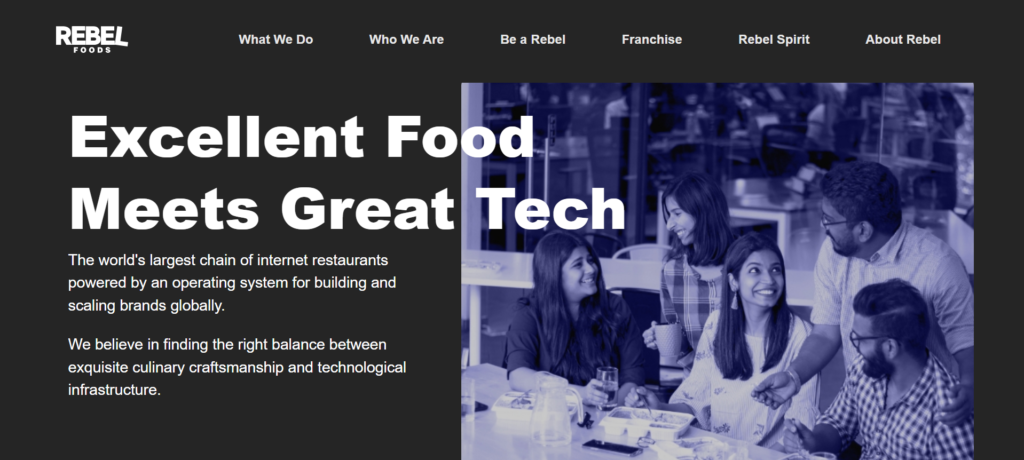
Founded in 2011 as Faasos, Rebel Foods has evolved into India’s largest cloud kitchen network operator. With over 450 cloud kitchens spanning 75 cities and a portfolio of iconic brands—Faasos, Behrouz Biryani, Oven Story, The Good Bowl, and Slay Coffee—the startup demonstrates a crucial insight: the future of restaurant scale does not require real estate.
Rebel Foods’ innovation lies in menu optimization through AI and consumer data. Each cloud kitchen operates as a micro-fulfillment center, processing orders from multiple brands simultaneously from a single facility. With $587 million raised and a valuation pegged at ₹13,800 crore (approximately $1.65 billion), the company has signaled IPO plans for 2026—a milestone that would mark the maturation of India’s cloud kitchen model.
Key investor confidence: Peak XV Partners, Coatue Management, Lightbox, Qatar Investment Authority.
2. Curefoods: Speed and Scale in Multi-Brand Cloud Kitchens
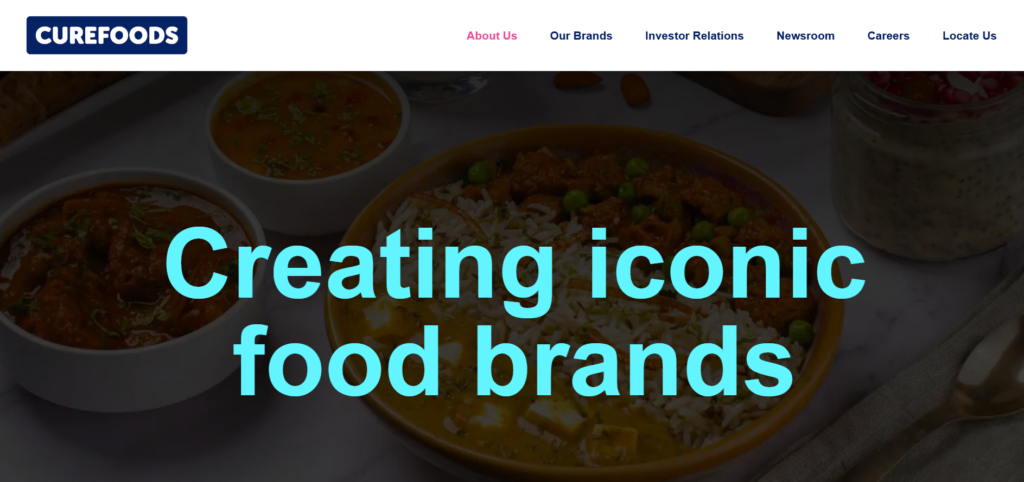
Founded in 2020 by Ankit Nagori, Curefoods operates as a diversified cloud kitchen operator managing over 500 kitchens across 70+ Indian cities under brands like EatFit, CakeZone, Nomad Pizza, Sharief Bhai Biryani, and Frozen Bottle. The company raised $40 million in Series D funding in December 2024, followed by ₹56.4 crore in debt—demonstrating investor confidence and a path to profitability.
What sets Curefoods apart is its ability to launch and scale brands at velocity. The company filed its DRHP for IPO in June 2025, achieving regulatory approval by October 2025. This aggressive growth trajectory reflects the startup’s strong unit economics and operational discipline—critical factors in the capital-intensive cloud kitchen business.
3. Licious: Direct-to-Consumer Fresh Meat and Seafood
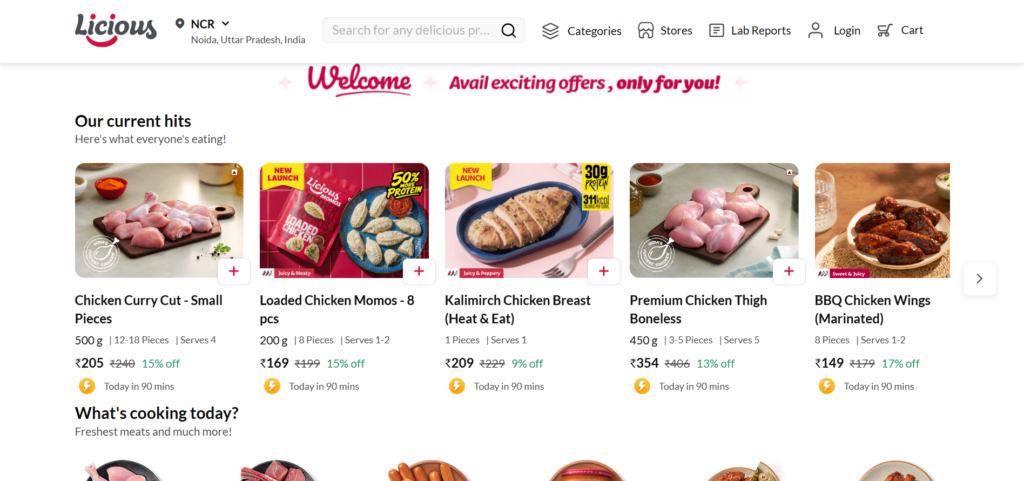
Licious has fundamentally transformed India’s $40 billion meat market—historically fragmented across unorganized vendors with questionable hygiene standards. By building a direct-to-consumer model powered by robust cold-chain logistics, Licious offers raw, marinated, and ready-to-eat meat and seafood products with guaranteed freshness and traceability.
With $489 million raised to date, Licious leverages data science and consumer insights to redefine quality standards in a traditionally opaque category. The startup’s farm-to-fork model eliminates middlemen, allowing it to capture margin while building brand loyalty among urban, affluent consumers prioritizing quality and convenience.
4. The Whole Truth: Clean-Label Health Foods
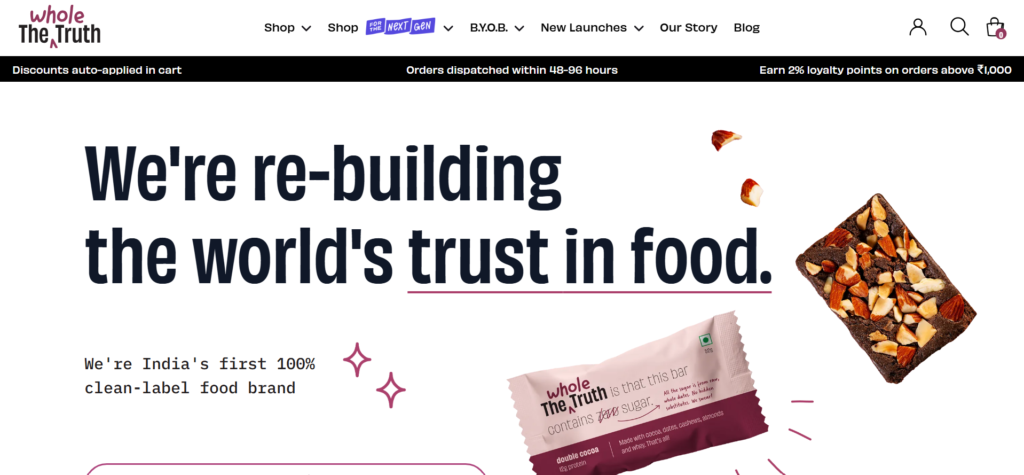
The Whole Truth‘s Series D funding of $51 million (led by Sofina and Sauce.vc) reflects investor appetite for premium, transparent food brands. The startup positions itself at the intersection of health consciousness and skepticism—offering snacks and bars with no artificial ingredients, added sugars, or mystery components.
The company’s growth trajectory is notable: it raised $15 million in Series C just 12 months prior, doubling funding velocity. This acceleration reflects product-market fit and the rising consumer demand for clean-label alternatives. Early investors include Rebel Foods founder Jaydeep Burman and Swiggy cofounder Sriharsha Majety—signaling endorsement from seasoned entrepreneurs.
5. Evo Foods: Pioneering Plant-Based Egg Alternatives (Currently Closed)
Evo Foods is India’s first and leading plant-based egg startup, using food science and plant biochemistry to develop vegan egg alternatives addressing sustainability and ethical concerns. The startup exemplifies the global trend: precision fermentation and advanced food formulation are replacing commodity agriculture for animal proteins.
Operating within the alternative protein space—which attracted $2+ billion in global funding despite recent volatility—Evo Foods benefits from falling ingredient costs and improving taste parity. With government support through biotech initiatives and growing institutional interest from QSR chains, the company is positioned to capture significant market share in India’s protein-hungry market.
6. TagZ Foods: Better-For-You Snacking for Gen Z (Currently Closed)
TagZ Foods manufactures popped potato chips with 50% less fat, targeting health-conscious Gen Z consumers. Founded in 2019 by Anish Basu Roy and Sagar Bhalotia, the brand raised $3.09 million and was acquired by Reliance Consumer Products in November 2024—validating the D2C snacking model.
The acquisition underscores a broader trend: legacy CPG conglomerates acquiring DTC brands to reach younger, digitally native consumers. TagZ’s positioning of “guilt-free indulgence” rather than restrictive “diet” resonates with aspirational millennials seeking convenience without sacrifice.
7. Slurrp Farm: Nutrition-First Kids Snacks
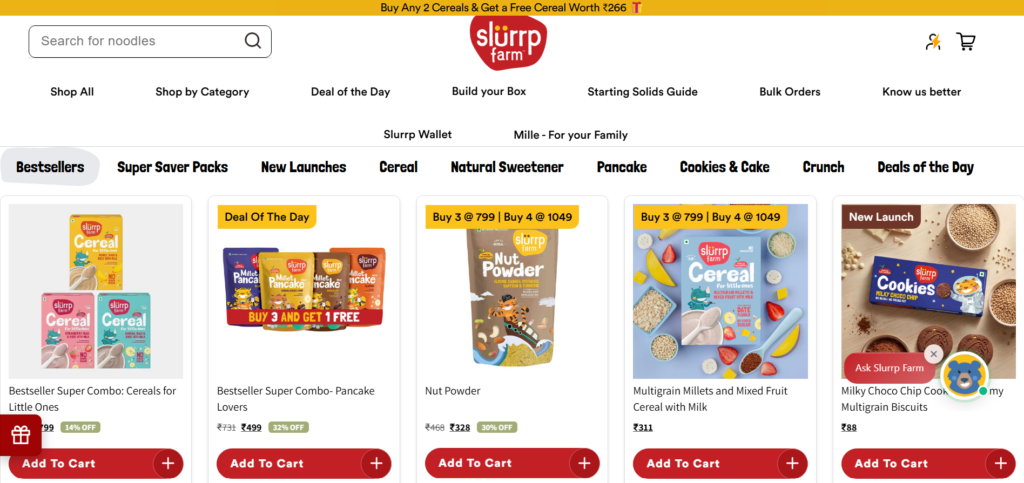
Slurrp Farm specializes in preservative-free, millet-based snacks for children—a segment often overlooked by mainstream brands. The startup transformed ancient grains into familiar formats: ready-to-mix pancakes, noodles, and cereals that appeal to modern parents prioritizing nutrition without sacrificing palatability.
The company’s ARR exceeded ₹50 crore by 2021-22 and has expanded into multiple geographies (India, UAE, US, UK). What’s notable is parent company Wholsum Foods’ backing by Bollywood actress Anushka Sharma—reflecting celebrity endorsement’s power in early-stage food brands and demonstrating investor confidence in founder authenticity.
8. iD Fresh Food: Hyperlocal Fresh Food Delivery
iD Fresh Food operates a fresh food D2C model, delivering daily dosa batter, parathas, and other prepared foods directly to households. By controlling the supply chain end-to-end, the startup emphasizes freshness and traceability—value propositions that matter deeply in categories historically fragmented by local vendors with opaque sourcing.
The company exemplifies the broader trend of hyperlocal last-mile logistics enabling food brands to scale without franchising or extensive retail networks. Subscription-based revenue models ensure predictability while direct customer relationships yield valuable data for product development.
9. WickedGud: Maida-Free High-Protein Noodles
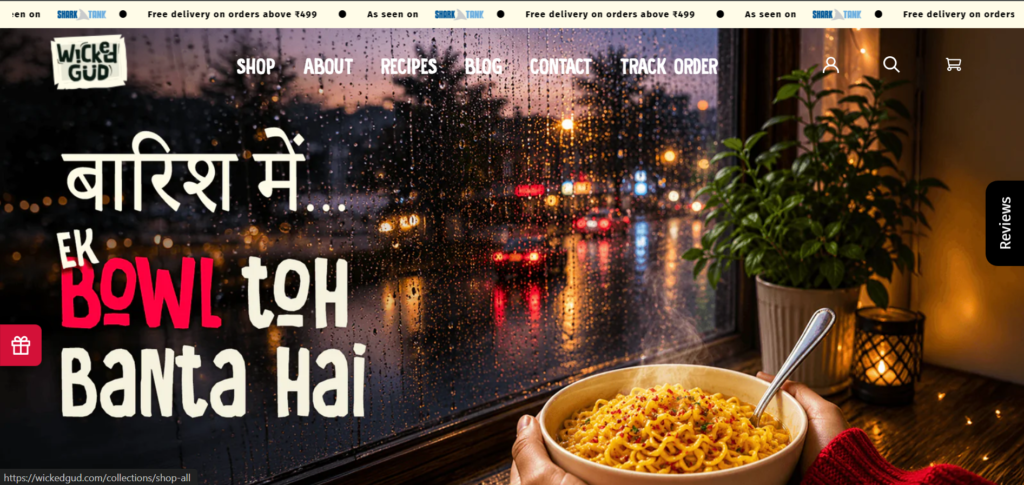
WickedGud‘s mission is to make eating guilt-free using indigenous, high-nutrition ingredients. The startup offers maida-free, high-fiber, high-protein pasta and instant noodles targeting health-conscious consumers. Founded in 2021, the company raised ₹20 crore in fresh funding in December 2025, with participation from Shilpa Shetty, Orios Venture Partners, and the Asiana Fund.
The funding trajectory is accelerating: ₹20 crore in December 2024, followed by ₹20 crore more in December 2025. This velocity reflects successful product-market fit and expanding distribution into modern trade and general trade channels. Celebrity backing from actress Shilpa Shetty adds credibility in the wellness segment.
10. Proeon: Sustainable Plant Protein Ingredients
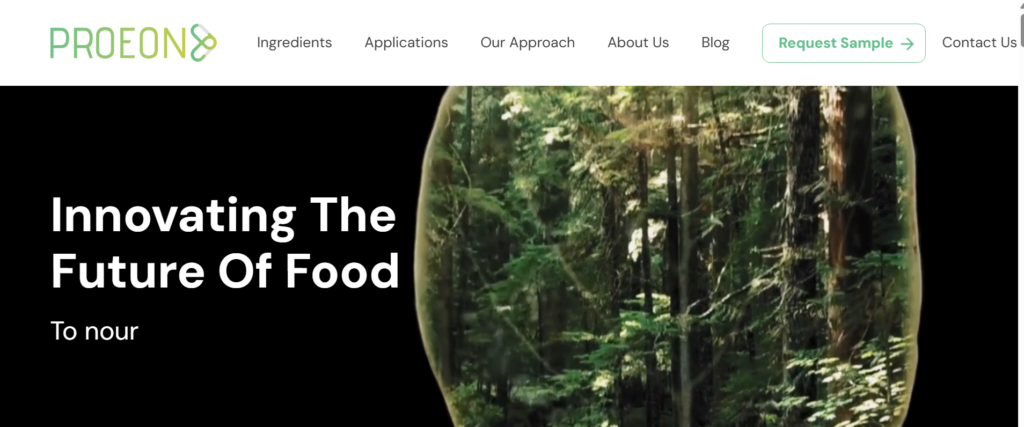
Proeon is a Pune-based food ingredient startup developing sustainable plant proteins to tap a multibillion-dollar global market projected to reach $200 billion by 2027. The startup raised ₹17.5 crore as seed capital, led by entrepreneur Shaival Desai and including participation from Flowstate Ventures, Peak Sustainability Venture Fund, and Waoo Partners.
Proeon represents the emerging precision fermentation and advanced food formulation wave—where biotech and food science converge to create ingredients with functional benefits and environmental benefits. The startup is backed by Sanjaya Mariwala (OmniActive Health), signaling domain expertise and network access.
Market Trends Driving Food Startup Growth in 2026
The Protein Gap and Alternative Protein Surge
India’s protein consumption lags developed nations significantly. Rising health awareness and the need to feed 1.3+ billion people sustainably have created urgency around alternative proteins—plant-based, precision-fermented, and cell-based solutions. The global precision fermentation market is projected to reach $57.1 billion by 2032, growing at 40.57% CAGR, with India positioned as a key innovation hub given its biotech talent pool and cost advantage.
Government Support and Infrastructure
India’s government has launched multiple initiatives supporting foodtech innovation. The Ministry of Food Processing Industries’ Startup Grand Challenge, PMFME schemes, PLI for food processing, and subsidies through Startup India have lowered financial barriers. Government-backed biotech facilities—Bengaluru’s Centre for Smart Protein (2024), the National Institute of Animal Biotechnology in Hyderabad, and precision fermentation centers in partnership with industry leaders—are accelerating R&D cycles.
Consumer Demand Inflection Points
Urban India’s 700+ million digital natives now demand transparency, health-first options, and ethical sourcing. Quality, convenience, and sustainability are no longer premium add-ons—they’re baseline expectations. This consumer sophistication has enabled DTC brands to bypass traditional retail, capturing margin while building direct relationships and harvesting valuable data for product iteration.
Food Formulation and Product Development: The Hidden Driver of Startup Success
Most founders begin with a recipe that works at home. But scaling that recipe to commercial volumes introduces challenges that derail unprepared teams: taste inconsistencies, shelf-life degradation, cost inflation, and manufacturing surprises.
This is where specialized food product development becomes non-negotiable. Startups like Rebel Foods, Curefoods, and The Whole Truth don’t compete on recipes alone—they compete on food formulation rigor. Precise ingredient ratios, process control, and shelf-life validation separate brands that scale from brands that fail within 18 months.
The stakes are high: food startups face thin profit margins after distribution cuts (30-40% go to retailers and logistics), making cost optimization during product development existential. A startup might spend ₹20,000 to ₹1.5 lakh on formulation and compliance services—a fraction of launch budgets for D2C brands—but these investments prevent costly reformulations and recalled batches later.
Forward-thinking founders now engage formulation experts early, stress-testing products for shelf stability, taste consistency across batches, and cost efficiency before pilot production. This systematic approach—combining food science with supply chain thinking—has become the competitive moat separating winners from failures in India’s increasingly crowded food startup space.
Investment Landscape: Capital Velocity and Exit Signals
$2 billion raised across 2023-2025, with two unicorns (Rebel Foods, Curefoods) signaling IPO readiness, signals a maturing ecosystem. Investors are moving away from pure-play consumer brands lacking technology differentiation toward companies combining food products with scalable tech platforms—cloud kitchens with AI menu optimization, logistics networks, or precision fermentation infrastructure.
Most active funding categories in 2025-2026 include precision fermentation, functional beverages, sustainable food packaging, AI-powered supply chain tools, and alternative proteins. Later-stage capital (Series C and beyond) is concentrated among 20-30 standout founders with previous exits, creating a “barbell” dynamic: abundant pre-seed capital for experimentation, competition for Series A slots, and institutional capital reserved for proven operators.
This shift has implications: the era of funded experimentation is ending. Today’s food founders must validate market demand before raising, stabilize unit economics before scaling, and demonstrate clear paths to profitability—a discipline that weeds out undifferentiated commodity plays.
What’s Next for India’s Food Startup Ecosystem?
India’s food startup ecosystem has matured dramatically in just five years. What began as niche experimentation by D2C founders is now a $2 billion asset class attracting institutional capital, corporate acquisitions, and government support. The startups profiled in this guide—from Rebel Foods’ cloud kitchen dominance to Proeon’s biotech-driven ingredient innovation—represent the full spectrum of food tech opportunity.
Yet success in 2026 looks markedly different from 2018. Today’s winners combine market insight with operational discipline, taste with technology, and growth with profitability. Founders who treat food formulation and product development as core competencies—not afterthoughts—build products that scale. Those who leverage government infrastructure and specialized expertise (formulation professionals, compliance specialists, logistics operators) compress time-to-market and reduce failure risk.
For entrepreneurs and investors evaluating food startup opportunities, the landscape offers extraordinary potential alongside real complexity. The $9 trillion global food market is undergoing profound transformation: technology enables efficiency, sustainability becomes non-negotiable, and consumer expectations continue rising. India, with its scale, talent, and appetite for innovation, is positioned to produce world-class food companies that export models as well as products.
Whether you’re a founder exploring market entry, an investor seeking portfolio opportunities, or a partner like Flavour Catalystz supporting food brands with formulation expertise, now is the time to understand this ecosystem deeply. The next wave of unicorns in India’s food space is not yet determined—and the opportunity window remains wide open.
At Flavour Catalystz, we work directly with food startups on the technical side of innovation—helping founders transform ideas into scalable, shelf-stable products through rigorous food formulation and product development. If you’re building the next generation of India’s food brands, let’s talk about how we can accelerate your path to scale.
Frequently Asked Questions
How much funding do food startups need to raise to scale?
This depends on business model and scale ambition. A direct-to-consumer packaged food brand might launch with ₹50-100 lakh (₹5-10 million) covering formulation, packaging, initial inventory, and marketing. Cloud kitchen networks require significantly more—₹5-10 crore for kitchen infrastructure, tech platform, and operating capital. However, many successful founders emphasize testing product-market fit with self-funding or small angel rounds before seeking venture capital. The best-performing startups in 2026 delayed Series A until demonstrating repeatable unit economics.
What’s the difference between food product development and food formulation?
Food product development is the complete journey from concept to market: ideation, market research, recipe creation, taste testing, and launch strategy. Food formulation is a subset—the technical, scientific work of optimizing ingredient ratios, achieving target taste profiles, ensuring shelf stability, and validating cost at scale. Think of formulation as the engineering phase within the broader product development process. Startups must invest in both, not just one.
Why do so many food startups fail within the first two years?
Data shows 60%+ of new food products fail within year one. Common reasons: (1) founders perfect recipes in kitchens but never validate actual market demand; (2) scaling causes taste/quality issues due to inadequate formulation testing; (3) cash burn from inefficient go-to-market strategies; (4) regulatory/compliance surprises post-launch; (5) inability to compete on price after distribution cuts. Startups that survive combine rigorous consumer testing, systematic formulation work, efficient supply chain design, and disciplined unit economics from day one.
How do cloud kitchen networks achieve profitability?
Cloud kitchen profitability hinges on utilization and portfolio economics. A single cloud kitchen can operate 4-8 brands simultaneously, each processing orders independently but sharing infrastructure costs (rent, utilities, labor). This multiplier effect drives unit economics dramatically better than traditional restaurants. Companies like Rebel Foods and Curefoods achieve 15-30% EBITDA margins on mature kitchens through menu optimization (using AI to identify high-margin items), labor efficiency, and dynamic pricing. The path to profitability typically takes 18-36 months per location depending on market maturity.
What role does alternative protein play in India’s food startup wave?
Alternative proteins (plant-based, precision-fermented, and cell-based) address two imperatives: sustainability and affordability. India’s protein gap is acute—average consumption remains well below developed nations. Simultaneously, traditional animal agriculture strains land and water resources. Startups like Evo Foods and WickedGud are proving that plant proteins can match animal proteins on taste, nutrition, and price. Government investment in biotech infrastructure and falling ingredient costs are accelerating adoption. By 2030, alternative proteins could capture 5-10% of India’s total protein market—a $5-10 billion opportunity.
How do direct-to-consumer food brands maintain freshness and manage logistics?
Companies like Licious and iD Fresh Food solve this through vertically integrated cold-chain logistics. Licious owns its own cold storage, insulated packaging, and delivery fleet in key markets—expensive upfront but enabling control over temperature, timing, and customer experience. These brands also leverage location-based data to optimize delivery routes and reduce time-to-customer. The model works best in high-density metros where order volumes support infrastructure investment; rural expansion remains a challenge due to logistics costs.
Which government schemes or support programs help food startups in India?
Key programs include: PMFME (Pradhan Mantri Formalisation of Micro food processing Enterprises) offering subsidies and capacity-building; PLI (Production Linked Incentive) for food processing providing direct financial incentives; Startup India registration for tax benefits and faster compliance; CGTMSE (Credit Guarantee Trust for Micro and Small Enterprises) offering loan guarantees; APEDA (Agricultural and Processed Food Products Export Development Authority) registration for export-ready units; and government-backed biotech facilities offering R&D support for precision fermentation startups. These programs collectively reduce early-stage capital requirements and de-risk compliance.
What’s the outlook for food startups in India by 2027-2028?
Expect consolidation and specialization. The era of generalist founder-led experimentation is ending; investors now back founders with deep domain expertise and networks. IPO activity will accelerate—Rebel Foods and Curefoods will likely list in 2026-27, validating the cloud kitchen model. Venture funding will concentrate in precision fermentation, alternative proteins, and supply chain tech (areas with structural defensibility) while decreasing in crowded segments like delivery-focused platforms. Most importantly, successful founders will combine rigorous product development, clean unit economics, and technology leverage—the trio that defines 2026 winners.