May 2026 · 17 min read
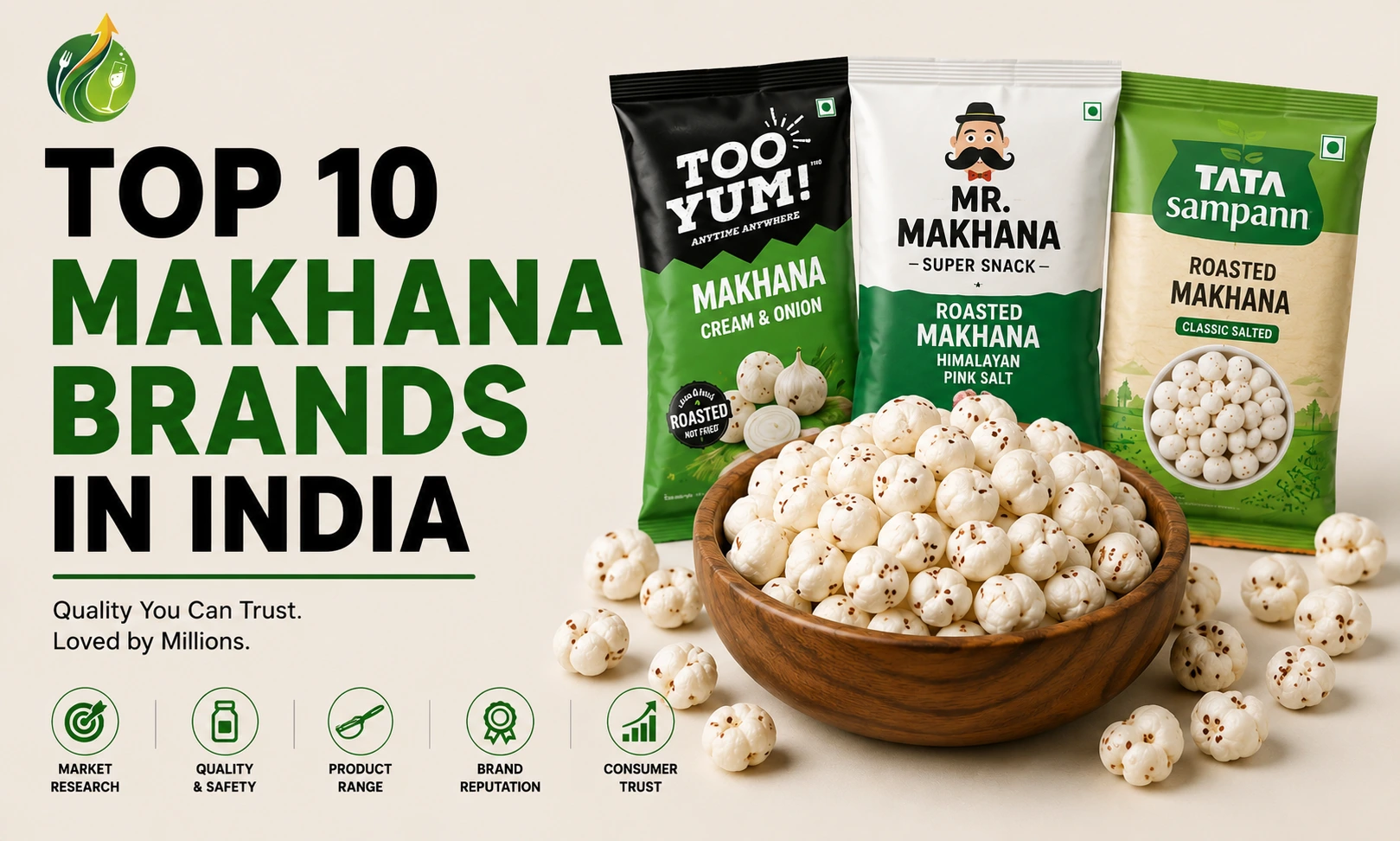
The lotus seeds harvested from the freshwater ponds of Bihar’s Mithila region have been eaten in India for over three thousand years. In 2026, the category is expanding rapidly through innovation in food product development, with brands launching flavoured, protein-rich, and ready-to-eat variants for modern consumers. The snack is now chased by venture capital, stocked on Blinkit shelves, and shipped across the United States and United Kingdom through large-scale makhana contract manufacturing networks. Backed by a INR 100-crore government board announced in the Union Budget 2025-26, makhana has completed one of India’s most remarkable food category transformations, evolving from fasting food and temple offering into a mainstream branded health snack.
India produces over 80 to 85 percent of the world’s makhana supply, almost entirely from Bihar’s Madhubani and Darbhanga districts. The global fox nut market is valued at USD 1.7 billion in 2026, projected to reach USD 4.7 billion by 2036 at a CAGR of 11 percent. India’s domestic makhana market, valued at approximately INR 9.29 billion in 2025, is projected to reach INR 19.95 billion by 2034. This guide covers the ten brands defining the category in 2026, what each one offers, who it is designed for, and how they compare.
Launch a Makhana BRAND
Launch A Profitable & Trending Makhana Brand
Start a Winning makhana brand with expert support in product formulation, flavour coating, shelf-life optimization, FSSAI compliance, and ready-to-scale manufacturing solutions.
Disclaimer: The brands mentioned in this blog are listed for informational and educational purposes only, based on publicly available market presence, consumer popularity, and general industry recognition. Brand names belong to their respective owners. We do not claim any official association, endorsement, or partnership with any featured brand. Product preferences and rankings may vary based on individual experience, availability, and market trends.
What to Know Before Choosing a Makhana Brand
Makhana quality is determined primarily by grade, which reflects puff size, popping quality, and moisture content. Larger puffs indicate higher quality seeds and better popping technique. The premium grade, sometimes called Lawa Makhana or Grade A, produces the largest, crispest puffs and commands the highest price. Smaller, denser puffs are used in powders, kheer, and processed food applications.
For flavoured products, the quality of the coating matters as much as the makhana itself. Good flavoured makhana has an even coating that does not flake or leave residue, uses natural colouring where colours are applied, and maintains the crunch of the makhana beneath the seasoning. Brands that prioritise clean ingredient declarations and avoid artificial colours and excessive sodium are showing the strongest growth among urban consumers aged 25 to 40.
India Makhana Market Overview
| Market Indicator | 2025 Data | 2026 Forecast | 2034 Projection |
| India Domestic Market Size | INR 9.29 billion | INR 10+ billion | INR 19.95 billion |
| Global Fox Nut Market | USD 1.55 billion | USD 1.7 billion | USD 4.7 billion (2036) |
| Market CAGR (India) | 8.85% | 8.85% | Through 2034 |
| Global CAGR | 11% | 11% | Through 2036 |
| Bihar Production Share | 80 to 85% of global supply | 80 to 85% | National Makhana Board to formalise |
| Dominant Pack Size (India) | 250 to 500g (46% market share) | 250 to 500g | Smaller D2C pouches growing |
| Government Initiative | National Makhana Board (INR 100 crore) | Board operational | Post-harvest loss reduced from 25% to below 10% |
Top 10 Best Makhana Brands in India 2026
Farmley
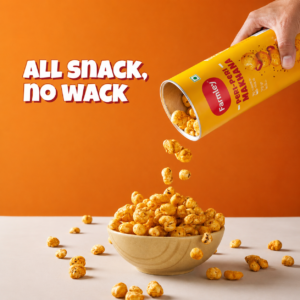
Farmley secured USD 40 million in Series C funding in May 2025, making it the most heavily funded dedicated makhana and dry fruit brand in India. Founded with a focus on farm-to-consumer supply chain transparency, Farmley sources directly from Bihar’s makhana growing regions and sells through its D2C website, Amazon, Blinkit, and a growing modern trade presence.
The brand occupies the premium-accessible positioning: higher quality than commodity brands at a price point that is accessible to the urban professional. Farmley has expanded distribution to North American markets, aligning with rising demand from Indian diaspora communities and health-conscious consumers discovering makhana as a clean-label popcorn alternative.
Key Differentiators
- Largest Series C investment in the makhana category
- Direct farm sourcing with supply chain documentation
- Strong D2C and quick-commerce presence
- International distribution in North America
Price Range: Rs 120 to Rs 280 per 100g | Available: D2C website, Amazon, Blinkit, Zepto
Too Yumm Makhana
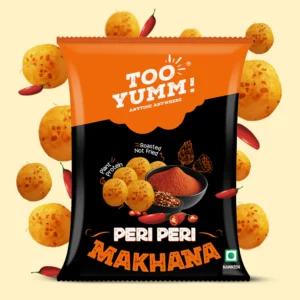
Too Yumm, from the RP-Sanjiv Goenka Group, was among the first national brands to popularise flavoured makhana as a mainstream health snack. The brand’s approach was straightforward: take a product with established health credentials and make it as flavourful and visually appealing as conventional fried snacks without matching their calorie load.
Too Yumm Makhana is available in Chatpata Masala, Tandoori, Spanish Tomato, and several other variants. Bright packaging, wide general trade distribution, and retail presence in modern trade chains across India make it the most accessible branded makhana for consumers discovering the category for the first time. The brand serves the function of converting snack-category buyers into makhana buyers.
Key Differentiators
- Strongest physical retail distribution among flavoured makhana brands
- Multiple flavours targeting mainstream snack-category consumers
- Backed by RP-Sanjiv Goenka Group’s distribution and marketing infrastructure
Price Range: Rs 40 to Rs 120 per pack | Available: Modern trade, general trade nationwide
Tata Sampann
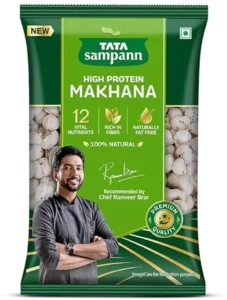
Tata Sampann, the staples brand from Tata Consumer Products, entered the makhana category leveraging the single largest trust asset in Indian branded food: the Tata name. Consumers who are uncertain about which makhana brand to trust default to Tata Sampann as a safe, quality-assured choice, particularly in supermarkets and e-commerce where they cannot physically assess the product before buying.
The brand offers plain roasted and lightly seasoned makhana with clean ingredient labelling and consistent pack quality. It does not compete aggressively on flavour innovation but wins on perceived quality assurance and brand credibility with the 35 to 55 age consumer who shops in modern trade and values established brand names in food staples.
Key Differentiators
- Tata brand trust as the primary conversion driver
- Clean labelling and consistent pack quality
- Strong modern trade presence in Tier 1 and Tier 2 cities
Price Range: Rs 100 to Rs 200 per 100g | Available: Big Bazaar, DMart, Reliance Smart, Amazon
Open Secret
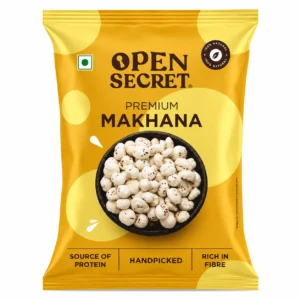
Open Secret was founded in 2019 by Ahana Gautam in Mumbai with a stated mission to reduce artificial additives and excessive sugar across the snacking category. The brand goes beyond makhana to offer biscuits, namkeen, weight-management snacks, and nut mixes, all positioned around cleaner ingredients and honest nutritional labelling.
Their makhana range is positioned for health-focused families, working professionals, and parents seeking better snack options for children. The brand has built a loyal D2C following and has been featured in mainstream media for its clean-label commitment. Open Secret communicates nutritional information more completely and accessibly than most competitors, which resonates with its target consumer who reads ingredient lists.
Key Differentiators
- Clean-label mission with full ingredient transparency
- Range extends beyond makhana for cross-category consumer loyalty
- Strong D2C base with high repeat purchase from health-conscious consumers
Price Range: Rs 100 to Rs 250 per 100g | Available: Amazon, Open Secret website, Blinkit
Mr. Makhana
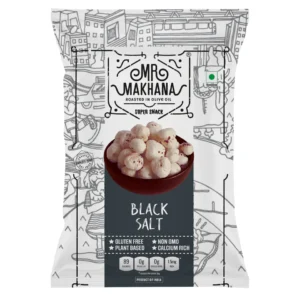
Mr. Makhana has positioned itself as the premium end of the branded makhana market, targeting urban millennials who approach healthy snacking as part of a lifestyle identity rather than merely a nutritional decision. The brand offers innovative flavour combinations that go beyond standard masala and cheese options, with packaging designed for social shareability.
The brand’s focus on the 22 to 35 urban demographic who discover products through Instagram and quick-commerce apps has guided its packaging and flavour development. Mr. Makhana operates primarily through D2C and e-commerce channels, with selective modern trade placement in premium stores.
Key Differentiators
- Premium positioning with higher average selling price than mass brands
- Flavour innovation targeting urban millennial taste preferences
- Visual identity optimised for social media and quick-commerce thumbnails
Price Range: Rs 150 to Rs 350 per 100g | Available: D2C, Amazon, select modern trade
Happilo
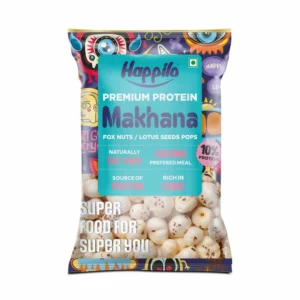
Happilo is a Bengaluru-based brand that built its initial reputation in the premium dry fruit and nut category before extending into makhana. The brand’s dry fruit expertise informs its approach to makhana sourcing and quality grading, and its existing e-commerce and modern trade distribution infrastructure has given its makhana range rapid national reach.
Happilo makhana is positioned in the premium dry fruit section of retail shelves rather than the snack aisle, which affects both the consumer it reaches and the price it commands. The brand offers both plain and minimally flavoured varieties, consistent with its dry fruit positioning of quality over novelty.
Key Differentiators
- Premium dry fruit brand halo extending credibility to makhana
- Strong Bengaluru and South India market presence
- Modern trade placement in premium grocery alongside nuts and dry fruits
Price Range: Rs 120 to Rs 280 per 100g | Available: Amazon, Nykaa, Reliance Smart, D2C
Sattviko
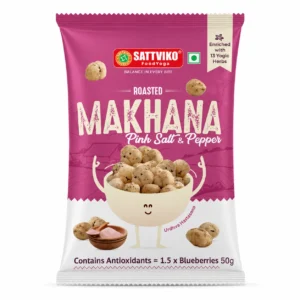
Sattviko, founded in 2014, was one of the earlier branded makhana players in India, having been present in the category before the 2020s health trend acceleration. The brand’s positioning around Sattvic food principles, which emphasise purity, natural preparation, and avoidance of stimulants, gives it a distinct niche in the wellness-conscious consumer segment.
Sattviko’s makhana offerings are typically plain, lightly salted, or seasoned with simple natural ingredients. The brand avoids artificial flavours and strong chemical seasonings, which aligns with its core consumer who prioritises purity of ingredients as a purchase criterion. Distribution includes modern trade, select HORECA accounts, and e-commerce.
Key Differentiators
- Sattvic food philosophy as a genuine positioning differentiator
- Pioneer brand with early-mover credibility in the category
- Clean, minimal ingredient approach resonating with ayurveda-aligned consumers
Price Range: Rs 100 to Rs 220 per 100g | Available: Amazon, modern trade, D2C website
MakhanaWala
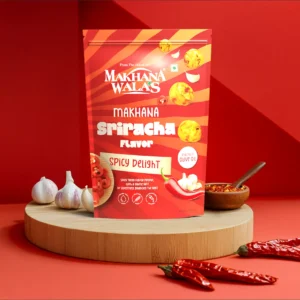
MakhanaWala is a dedicated makhana specialist that positions around the natural quality of the makhana itself rather than flavour additions. The brand focuses on premium-grade Lawa Makhana procured directly from farmers in Bihar’s Madhubani region, and its product range is intentionally narrow, centred on plain and lightly seasoned varieties that emphasise the natural taste and texture of high-quality puffed lotus seeds.
This positioning appeals to the health consumer who uses makhana primarily as a plain snack, in kheer and desserts, or as a culinary ingredient, and who wants the highest quality base product rather than a flavoured snack format. MakhanaWala has built its reputation on product quality consistency and farmer direct sourcing transparency.
Key Differentiators
- Category specialist identity as a quality signal
- Direct farmer sourcing with traceable Bihar origin
- Premium Lawa grade as the primary quality differentiator
Price Range: Rs 100 to Rs 220 per 100g | Available: Amazon, MakhanaWala website
Lotus Makhana
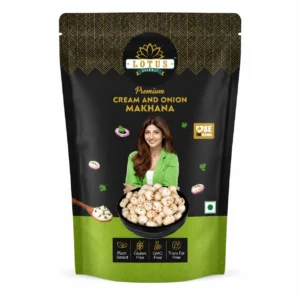
Lotus Makhana launched Makhana Pops in Mumbai in February 2025, a product that uses makhana flour roasted in olive oil and served with a DIY seasoning range. This format represents the next wave of makhana product development: taking the ingredient beyond its whole-puff format into new textures and consumption occasions. The DIY seasoning approach also extends the consumer experience beyond opening a pouch and eating, creating an interactive element that generates social media content.
The brand is targeting urban consumers who are already familiar with makhana and want a more sophisticated or varied consumption experience. The olive oil roasting and DIY format positions the product at a premium price point while justifying it through ingredient quality and novel format.
Key Differentiators
- Format innovation beyond standard whole-puff makhana
- Makhana flour and olive oil positioning for premium health credential
- DIY seasoning range creating interactive consumer experience
Price Range: Rs 150 to Rs 300 per pack | Available: Amazon, D2C, select Mumbai modern trade
Bonvie Snacks
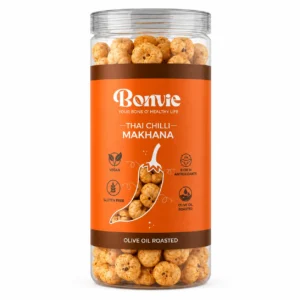
Bonvie Snacks represents the most recent wave of makhana brand entrants in 2026, targeting Gen Z and younger millennial consumers with bold flavours including Coffee Caramel and Wasabi, packaging with contemporary visual design, and distribution primarily through D2C channels and quick-commerce platforms. The brand launched globally-inspired flavour variants in 2026 specifically designed to appeal to urban consumers aged 18 to 28 who discovered makhana through social media rather than through traditional consumption.
This consumer segment is less attached to the fasting food or Sattvic food heritage of makhana and treats it purely as a better-for-you snack format that can carry any flavour profile they find interesting. Bonvie’s approach of applying international flavour trends to a traditional Indian ingredient is a commercially sensible response to this consumer’s expectations.
Key Differentiators
- Gen Z targeted visual identity and social media presence
- Globally inspired flavours (Coffee Caramel, Wasabi) not previously seen in makhana
- D2C first distribution strategy for direct consumer relationship
Price Range: Rs 120 to Rs 260 per 100g | Available: D2C, Instagram shopping, Blinkit
Side-by-Side Comparison of Top Makhana Brands
| Brand | Positioning | Primary Consumer | Strength | Price Tier |
| Farmley | Farm-to-consumer premium | Urban professional, export market | Funded scale and supply chain | Mid-premium |
| Too Yumm | Mass market flavoured snack | First-time makhana buyers | Retail distribution width | Accessible |
| Tata Sampann | Quality-assured FMCG | 35 to 55 age, modern trade shopper | Brand trust, shelf credibility | Mid |
| Open Secret | Clean label health food | Health-focused families and professionals | Ingredient transparency and mission | Mid-premium |
| Mr. Makhana | Premium lifestyle snack | Urban millennial, D2C buyer | Flavour innovation and packaging | Premium |
| Happilo | Premium dry fruit extension | Dry fruit category buyers | Cross-category credibility | Mid-premium |
| Sattviko | Sattvic and organic | Ayurveda and wellness-aligned | Philosophy-based differentiation | Mid-premium |
| MakhanaWala | Category specialist | Quality-focused plain makhana buyers | Grade quality and farmer sourcing | Premium |
| Lotus Makhana | Format innovation | Urban innovation-seekers | Novel format and olive oil positioning | Premium |
| Bonvie Snacks | Gen Z global flavours | 18 to 28 D2C first-time buyers | Flavour boldness and social design | Mid-premium |
Why the Makhana Market Is Accelerating in 2026
The National Makhana Board
The Union Budget 2025-26 allocated INR 100 crore for the establishment of a National Makhana Board in Bihar. The Board’s mandate includes mechanised popping cluster development, cold storage infrastructure, supply chain formalisation, and quality standardisation. The expected outcome is a reduction in post-harvest losses from the current estimated 25 percent or more to below 10 percent by 2030, which will increase marketable supply by 15 to 20 percent without requiring additional cultivation area. This supply-side improvement is expected to stabilise farm-gate prices and improve brand-level product cost predictability.
Export Demand and Global Superfood Positioning
India’s makhana exports crossed INR 150 crore annually according to APEDA data, with demand surging from the United States, United Kingdom, UAE, and Southeast Asian markets. In North American and European markets, makhana is positioned as a clean-label, high-protein, low-calorie alternative to popcorn and fried snacks. At approximately 350 calories per 100g with 9g of protein, it has a nutritional profile that is genuinely competitive with most conventional snack alternatives. The growing Indian and South Asian diaspora in these markets provides an initial consumer base, and mainstream health food retail is the expansion channel.
Venture Capital and D2C Infrastructure
Farmley’s USD 40 million Series C funding in May 2025 marked the largest single investment in the makhana category. The investment confirmed the category’s commercial viability for institutional investors and attracted additional attention from angel investors and strategic food company acquirers to other makhana brands. The funding is being deployed into D2C distribution technology, cold chain infrastructure, and international expansion, which will have positive category-level effects beyond Farmley’s own brand.
How to Choose the Right Makhana Brand for Your Needs
For plain snacking and culinary use: MakhanaWala and Farmley offer the highest quality whole puff makhana sourced directly from Bihar farmers, with minimal processing and clean ingredient declarations.
For flavoured everyday snacking at an accessible price: Too Yumm provides the widest flavour range with the broadest retail availability for consumers discovering flavoured makhana for the first time.
For trust-based purchase in modern trade: Tata Sampann delivers brand assurance and consistent quality for the consumer who prioritises a known brand name in a supermarket context.
For health-conscious households with children: Open Secret’s clean-label mission, complete nutritional transparency, and family-oriented positioning make it the strongest option for parents evaluating healthy snack choices.
For gifting and premium occasions: Mr. Makhana and MakhanaWala both offer packaging quality and product presentation appropriate for gifting contexts.
Start A Makhana Brand With Us
Flavor Catalystz partners with startups and food brands to create retail-ready makhana products through expert formulation, flavour innovation, FSSAI compliance, packaging guidance, and pilot-scale production.
Frequently Asked Questions
Which makhana brand is best in India in 2026?
The best makhana brand depends on what you are looking for. Farmley is the best-funded and most distribution-capable brand for plain and premium makhana. Too Yumm has the widest flavour range and the best general trade availability. Tata Sampann offers the strongest brand trust for consumers who prioritise known names. Open Secret is the best option for health-focused households prioritising clean ingredient lists. Mr. Makhana leads in premium positioning for urban millennial buyers.
Is makhana really a superfood?
Makhana (fox nuts) has a strong nutritional profile that supports the superfood classification in practical terms. Per 100g serving of plain roasted makhana, it provides approximately 9 grams of protein, 14 to 15 grams of dietary fibre, and significant amounts of magnesium, potassium, and phosphorus, at approximately 350 calories. It is gluten-free, low in saturated fat, has a low glycaemic index making it suitable for diabetics and weight management, and contains kaempferol, an antioxidant compound with documented anti-inflammatory properties. These characteristics, combined with its versatility as an ingredient, support its classification among nutritionally dense snack options.
What is Lawa Makhana?
Lawa Makhana refers to the premium grade of puffed lotus seeds produced in Bihar, characterised by larger puff size, lighter texture, and cleaner taste compared to lower grades. The Lawa grade is produced from the best quality lotus seeds using careful popping technique that maximises puff size and minimises breakage. It commands the highest price in the market and is preferred for plain eating and kheer preparation where texture and taste quality are most apparent. Several brands including MakhanaWala explicitly label their products as Lawa grade to signal quality.
Where does India’s makhana come from?
India produces 80 to 85 percent of the world’s makhana supply, with production concentrated in Bihar’s Mithila region, particularly the Madhubani and Darbhanga districts. The lotus plant Euryale ferox grows naturally in the freshwater ponds and wetlands of this region, and the seeds have been harvested and processed using traditional methods for centuries. The Government of India has recently allocated INR 100 crore through the National Makhana Board to formalise and improve this supply chain.
How do you eat makhana?
Makhana is most commonly eaten as a roasted snack, either plain, lightly salted, or seasoned with a flavoured coating. In traditional Indian cooking, makhana is used in kheer (a milk-based dessert), raita, curries, and gravies where it absorbs the cooking liquid and develops a creamy texture. It can also be ground into a flour for use in porridges, baby food, and baked applications. As a snack, it can be roasted in ghee or oil and seasoned with spices. Most branded makhana products are pre-roasted and ready to eat from the packet.
Is makhana good for weight loss?
Makhana is commonly recommended in weight management contexts because of its combination of low caloric density relative to conventional fried snacks, high fibre content which promotes satiety, low glycaemic index which reduces blood sugar spikes and subsequent hunger, and moderate protein content that helps preserve muscle mass. Plain or lightly seasoned makhana is an appropriate snack for someone managing caloric intake, particularly as a replacement for chips, namkeen, or biscuits in the same snacking occasion. Heavily flavoured and coated varieties may contain added oil and sodium that reduce this advantage.
What is the price of good quality makhana per kilogram in India?
Good quality plain Lawa grade makhana in India costs approximately Rs 800 to Rs 1,600 per kilogram in the branded retail market as of 2026, depending on brand and pack size. Smaller premium packs from D2C brands carry a higher per-kilogram cost than larger bulk packs. Unbranded loose makhana from Bihar markets trades at Rs 400 to Rs 700 per kilogram at the farm-gate level, with branded premiums reflecting processing, quality grading, packaging, and distribution costs.
Do makhana brands ship outside India?
Several leading makhana brands now ship internationally. Farmley is actively expanding North American distribution. Happilo and Open Secret ship internationally through their D2C websites and Amazon Global. Tata Sampann products are available through Indian grocery stores and Indian online retailers serving diaspora markets in the US, UK, Canada, Australia, and UAE. The GI-tagged Mithila Makhana designation, granted in 2022, supports premium positioning in export markets.