
May 2026 · 14 min read
Ghee has been central to Indian cooking, Ayurvedic medicine, and daily rituals for over 5,000 years. From the dal on a weeknight dinner table to the sweetness of Diwali halwa, no other ingredient carries the same cultural weight. But in 2026, buying ghee is more complicated than it used to be.
The Indian ghee market is flooded with options ranging from large cooperative brands to small-batch A2 bilona producers. Adulteration remains a documented concern in food product development — FSSAI surveys have repeatedly flagged mixing of vegetable oils, starch, and even animal fats in commercial ghee products. Knowing which brands are genuinely trustworthy matters for your family’s health, not just your kitchen’s aroma.
Start a Ghee Business
Launch Your Winning Ghee Product in 2026 Market
we help brands develop high trust and best ghee products with scalable manufacturing, compliant packaging, and strong market positioning for modern Indian consumers.
This guide has been put together after reviewing brand sourcing practices, customer feedback, lab-test reports shared publicly, AGMARK and FSSAI certifications, and nutritional claims. Whether you want everyday ghee for cooking or a premium A2 bilona product for health and Ayurvedic use, the list below covers both ends of the spectrum honestly.
What Makes a Ghee Brand Worth Trusting in 2026
Before getting into specific brands, it helps to understand what separates genuinely best ghee from marketing-heavy products that do not live up to their claims.
| Quality Factor | What to Look For | Red Flags |
| Milk Source | Named cow breeds (Gir, Sahiwal, Tharparkar) or buffalo (Murrah) | Vague terms like ‘pure cow milk’ with no breed or farm details |
| Production Method | Bilona (curd-churned) or cream-separated clearly stated | No mention of process; generic ‘traditional method’ language |
| Certifications | AGMARK Grade 1, FSSAI license, organic certifications | Unverified ‘natural’ or ‘organic’ claims without any certification |
| Texture & Aroma | Grainy texture on cooling, nutty golden aroma, golden-yellow color | Waxy, odorless, very white appearance |
| Lab Testing | Third-party test reports available on request or website | No visible lab reports despite premium pricing |
| Adulteration Tests | Brand encourages home tests; results reproducible | Hesitant to discuss purity standards publicly |
A2 Ghee vs. Regular Ghee: A Quick Clarification
You will see A2 labels everywhere in 2026. Here is what the term actually means: A2 ghee is made from the milk of indigenous Indian cow breeds that naturally produce A2 beta-casein protein instead of A1 beta-casein found in most commercial dairy breeds like Holstein-Friesian. Many consumers find A2 milk-based products easier to digest. The bilona method — converting milk to curd, churning to butter, and then slowly clarifying — is considered the traditional Ayurvedic approach and is believed to retain more fat-soluble vitamins.
Not all A2-labeled ghee is genuinely bilona-made. Some brands use the A2 label on cream-separated ghee from Gir cows, which is a faster, less expensive process. The difference matters if you are buying for therapeutic or Ayurvedic reasons.
Disclaimer: This article is based on independent research, publicly available information, and editorial analysis. Brand names, logos, and trademarks belong to their respective owners. Rankings are for informational purposes only and do not imply endorsement.
Top 10 Ghee Brands in India 2026: At a Glance
| Rank | Brand | Type | Best For | Price Range (per kg) |
| 1 | Amul | Cream-Separated Cow Ghee | Daily cooking, budget reliability | Rs. 480 – Rs. 560 |
| 2 | Patanjali | Cow Ghee / Desi Ghee | Value-driven buyers, Ayurvedic preference | Rs. 420 – Rs. 500 |
| 3 | Mother Dairy | Cow Ghee | Urban households, consistent quality | Rs. 490 – Rs. 570 |
| 4 | Anveshan | A2 Bilona Cow Ghee | Health-conscious buyers wanting transparency | Rs. 1,200 – Rs. 1,600 |
| 5 | Two Brothers Organic Farm | A2 Bilona Gir Cow Ghee | Premium, farm-traceable organic ghee | Rs. 1,400 – Rs. 1,800 |
| 6 | Gir Organic | A2 Gir Cow Bilona Ghee | Authentic Gir cow heritage ghee | Rs. 1,300 – Rs. 1,700 |
| 7 | Shahji Ghee | A2 Bilona Desi Ghee | Budget A2 bilona without compromising quality | Rs. 1,100 – Rs. 1,500 |
| 8 | Sri Sri Tattva | A2 Cow Ghee (Bilona) | Ayurvedic users and wellness seekers | Rs. 1,200 – Rs. 1,600 |
| 9 | Nestle Shahi Ghee | Cream-Separated Cow Ghee | Festive cooking, premium aroma experience | Rs. 510 – Rs. 590 |
| 10 | Saras (RCDF) | Cooperative Cow Ghee | Rajasthan & North India regional preference | Rs. 460 – Rs. 540 |
Detailed Brand Profiles
1. Amul Ghee
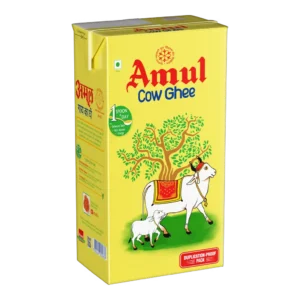
Amul is India’s largest dairy cooperative and its ghee is the default choice for millions of households. Made from cream-separated cow milk by the Gujarat Cooperative Milk Marketing Federation (GCMMF), Amul ghee is AGMARK Grade 1 certified. The texture is smooth and the flavor is mildly nutty — reliable for everyday cooking from dal tadka to halwa.
What it does well: Universal availability, consistent batch quality, transparent FSSAI licensing, and an accessible price point. It is also widely trusted for babies and toddlers due to its documented quality standards.
What it does not offer: It is industrially processed from cream, not bilona. It is not A2-specific and does not come from named desi cow breeds.
| Attribute | Details |
| Founded | 1946 (GCMMF) |
| Milk Source | Mixed cooperative farms across Gujarat |
| Method | Cream separation, industrial clarification |
| Certifications | AGMARK Grade 1, FSSAI |
| Availability | Pan-India — retail, e-commerce, kirana |
| Best Use | Daily cooking, baking, sweets |
2. Patanjali Desi Ghee
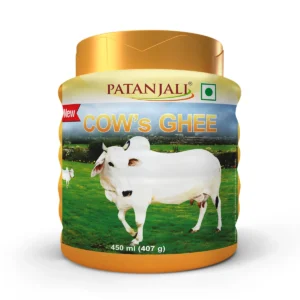
Patanjali desi ghee has built a loyal following on the strength of its Ayurvedic positioning and value pricing. The brand sources from multiple dairy cooperatives and processes through FSSAI-licensed facilities in Haridwar. Its ghee carries a mild, clean aroma that resonates with buyers seeking a Yoga-inspired lifestyle.
What it does well: Strong rural and semi-urban distribution network, affordable pricing, and visible Ayurvedic branding. For buyers who want a daily-use ghee with a traditional positioning, Patanjali delivers consistently.
What it does not offer: Like Amul, it is cream-separated and does not offer specific breed traceability or A2 certification.
3. Mother Dairy Ghee
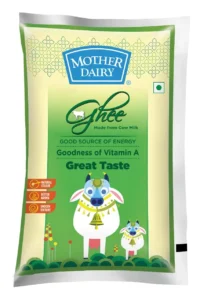
Mother Dairy, headquartered in Delhi, is a dominant brand in North and East India. Its ghee is made from pasteurized cow milk and maintains consistent quality through centralized processing. The brand has invested significantly in cold chain infrastructure, which contributes to product freshness.
It sits in a similar quality tier to Amul but tends to have a slightly stronger aroma preferred by North Indian cooking styles. Widely available through Mother Dairy’s own booths and major modern retail chains.
4. Anveshan A2 Bilona Cow Ghee
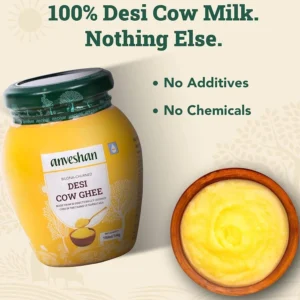
Anveshan is one of India’s most transparent food brands. Founded in 2016, it partners with small farmers who raise indigenous cow breeds including Gir, Sahiwal, and Red Sindhi. The ghee is made using the traditional bilona process — curd is first prepared from whole milk, churned into makkhan (butter), and then slow-cooked to produce best ghee. Anveshan publishes third-party lab reports for its products and has been transparent about its supply chain since inception.
What it does well: Genuine A2 bilona process, verified sourcing, published lab test results, and strong community trust. The grainy texture and deep nutty aroma signal authentic preparation. For health-conscious urban buyers, this is among the most credible options available.
What it does not offer: Higher price point means it is not suitable for very high-volume cooking. Shelf life is also shorter compared to industrially processed ghee.
| Attribute | Details |
| Founded | 2016 |
| Milk Source | Gir, Sahiwal, Red Sindhi cows |
| Method | Traditional Bilona (curd-churned) |
| Certifications | FSSAI, third-party lab tested |
| Availability | Online (own website, Amazon, Flipkart) |
| Best Use | Health use, Ayurvedic preparations, baby food |
5. Two Brothers Organic Farm (TBOF) Ghee
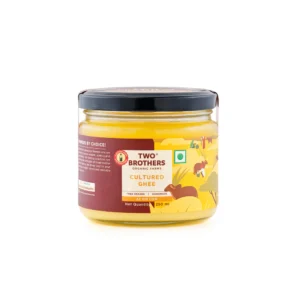
Two Brothers Organic Farm is run by brothers Satyajit and Ajinkya Hange from their farm in Bhodani, Maharashtra. This is one of the few brands in India where you can trace the ghee back to specific cows, specific land, and specific farming practices. Their Gir cows graze freely on natural pasture, and milk is collected manually without machines. The bilona process is followed strictly.
TBOF ghee has a deeply rich, complex flavor profile with a noticeably grainy texture. It is favored by chefs, food bloggers, and nutrition-aware consumers who want full ingredient and sourcing transparency. The brand also follows regenerative agriculture practices.
6. Gir Organic Ghee
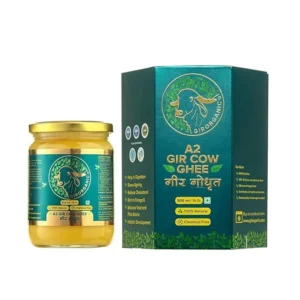
Gir Organic is a Gujarat-based brand that focuses exclusively on Gir cow milk products. The Gir cow is considered one of India’s finest indigenous breeds, and its milk is notably high in A2 beta-casein, CLA (conjugated linoleic acid), and Omega-3 fatty acids. The brand maintains its own Gir cow herds and prepares small-batch ghee using bilona methods.
Its flavor is distinctly rich and slightly sweet, which makes it popular for both cooking and Ayurvedic use. The golden-yellow color comes from natural beta-carotene in Gir cow milk.
7. Shahji Ghee
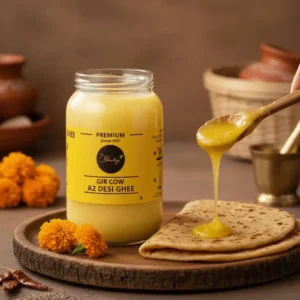
Shahji has positioned itself as a premium-quality A2 bilona ghee that does not require you to spend as much as the most expensive farm-direct brands. It sources from Gir, Tharparkar, and Sahiwal cows across Gujarat and Rajasthan and maintains quality verification at multiple production stages. For buyers transitioning from commercial ghee to A2 bilona without a dramatic budget shift, Shahji offers a practical middle path.
8. Sri Sri Tattva Ghee
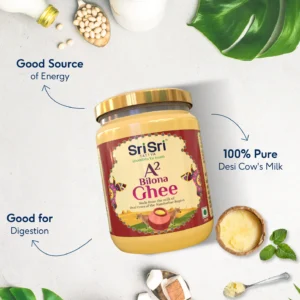
Associated with the Art of Living Foundation, Sri Sri Tattva produces ghee that is positioned primarily for Ayurvedic and spiritual use. The brand uses bilona methods and sources from indigenous cow breeds. It has a substantial and loyal customer base among Art of Living practitioners and consumers seeking Sattvic food options. The aroma is mild and the texture is typically grainy, consistent with authentic bilona preparation.
9. Nestle Shahi Ghee
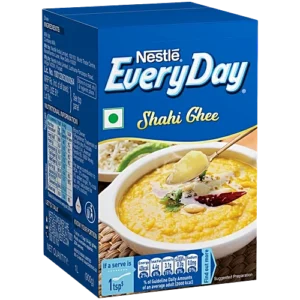
Nestle Shahi Ghee occupies a distinct space as a premium, aroma-focused product within the mainstream segment. It is not bilona-processed and does not specifically claim A2 sourcing, but it is positioned for festive cooking — biryanis, pulaos, and Indian sweets. Its fragrance holds well at high heat, which makes it suitable for large-batch cooking.
10. Saras Ghee (RCDF)
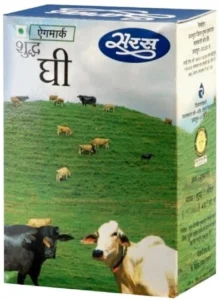
Produced by the Rajasthan Cooperative Dairy Federation, Saras ghee has deep regional roots in Rajasthan and parts of North India. It carries AGMARK Grade 1 certification and is made from fresh cow milk collected through the state’s cooperative network. Priced competitively, it serves as the everyday ghee of choice across much of rural and semi-urban Rajasthan.
How to Choose the Right Ghee Brand for Your Household
| Your Priority | Recommended Category | Top Pick |
| Budget daily cooking for a large family | Commercial cream-separated ghee | Amul or Mother Dairy |
| Ayurvedic and therapeutic use | A2 Bilona ghee from named breeds | Anveshan or TBOF |
| Maximum traceability and farm transparency | Direct-from-farm A2 Bilona | Two Brothers Organic Farm |
| Authentic Gir cow heritage | Gir-specific A2 Bilona | Gir Organic |
| Festive cooking with premium aroma | Mainstream premium ghee | Nestle Shahi Ghee |
| Value-conscious A2 Bilona upgrade | Mid-tier A2 Bilona | Shahji Ghee |
| Regional preference (Rajasthan/North India) | Cooperative-produced ghee | Saras (RCDF) |
3 Simple Home Tests to Verify Ghee Purity
Before spending on any new brand, these basic tests can help you spot adulterated ghee quickly.
- Heat Test: Place a small spoonful of ghee in a pan on low heat. Pure ghee melts immediately and turns a clear brownish color. Adulterated ghee takes longer to melt and may show a white or cloudy residue.
- Palm Test: Take a small amount of ghee and rub between your palms. Pure ghee melts at body temperature and leaves no residue. Hydrogenated fats or added starch will leave a sticky, waxy, or white film.
- Iodine Test (for starch adulteration): Dissolve a small amount of ghee in warm water and add two drops of iodine. If the solution turns purple or blue, starch has been added. Pure ghee will show no such color change.
Ghee Quality Standards in Food Manufacturing
For food businesses, caterers, HORECA segments, and manufacturers incorporating ghee into ready-to-eat products, mithai, or bakery items, the sourcing quality of ghee directly affects the end product’s flavor, shelf life, and nutrition profile. Consistent fat composition, absence of adulteration, and verified moisture content are non-negotiable in professional food production environments. Food formulation specialists working with dairy ingredients routinely assess ghee for fatty acid profiles, smoke point characteristics, and peroxide values to ensure product quality at scale.
India Ghee Market: Key Numbers in 2026
| Metric | Data Point |
| India Ghee Market Size (2025) | Approx. Rs. 55,000 crore (organized + unorganized) |
| Organized Market Share | Approximately 35-40% (brands like Amul, Patanjali, etc.) |
| A2 Ghee Segment Growth (2023-2026) | Estimated 25-30% CAGR in premium/online segment |
| FSSAI Reported Adulteration Rate | Detected in 35-40% of random samples in enforcement surveys |
| Key Producing States | Gujarat, Rajasthan, Haryana, Punjab, Maharashtra |
| Primary Consumer Segments | Households (70%), HoReCa (18%), food manufacturers (12%) |
Frequently Asked Questions
Which is the best ghee brand in India for daily cooking?
Amul and Mother Dairy are the most consistent choices for daily cooking. Both carry AGMARK Grade 1 certification, are widely available, and maintain reliable quality. For a larger family that uses ghee frequently, these brands offer the best balance of quality and price.
Is A2 ghee better than regular ghee?
A2 ghee is made from the milk of indigenous Indian cow breeds like Gir, Sahiwal, and Tharparkar that produce A2 beta-casein protein. Many people report easier digestion with A2 products. However, the difference is most significant for people with dairy sensitivity. If your family digests regular ghee without issues, the nutritional gap may not justify the price premium for everyday use. For therapeutic or Ayurvedic purposes, A2 bilona ghee is clearly the more appropriate choice.
What is bilona ghee and why is it expensive?
Bilona ghee follows a traditional Indian method: whole milk is first boiled, converted to curd, hand-churned with a wooden churner (bilona) to extract butter, and then slow-cooked over low heat to produce ghee. The process uses significantly more milk per kilogram of ghee compared to cream separation (roughly 25-30 liters of milk vs. 15-20 liters for cream-separated ghee) and is labor-intensive. This explains the higher cost.
How do I store ghee properly to maximize shelf life?
Store ghee in a clean, dry, airtight glass or stainless steel container away from direct sunlight. Commercially produced ghee typically lasts 12-18 months at room temperature. A2 bilona ghee, due to lower processing, is best consumed within 6-9 months. Avoid using wet spoons when scooping ghee as moisture accelerates rancidity.
Is Patanjali ghee pure and of good quality?
Patanjali ghee is FSSAI-licensed and maintains acceptable quality standards for everyday use. It is not A2-specific and does not offer bilona preparation, but for value-oriented buyers seeking a mainstream option with Ayurvedic brand positioning, it is a reasonable choice. Independent quality checks have generally found it to be within acceptable purity parameters.
What’s the Difference Between Bilona Ghee and Regular Commercial Ghee?
A2 Bilona ghee is crafted using traditional methods while regular ghee is made using modern mechanized processes that can strip away some nutritional value; the slow cooking process in bilona ghee retains more nutrients. Bilona ghee has more vitamins A, D, E, and K plus healthy fatty acids compared to normal ghee because of the traditional preparation method. Hand-churned bilona butter retained 23% more vitamin A compared to centrifugally separated cream butter due to lower oxidation during processing. Bilona is pricier but delivers better taste and digestibility.
Is Ghee or Butter Better for High-Temperature Cooking?
Ghee has a smoke point of 485°F (252°C), making it one of the best fats for frying and high-heat cooking, while butter has a smoke point of only 350°F (177°C). Ghee’s high smoke point reduces production of harmful compounds like acrylamide during high-heat cooking. For high-heat cooking, ghee wins because of its higher smoke point; butter is better for baking and low-to-medium heat. Also, ghee is lactose-free, making it ideal for dairy-sensitive people.
Why Does Grass-Fed Ghee Cost More Than Regular Ghee?
Grass-fed ghee comes from cows grazing freely on chemical-free pastures, producing milk richer in omega-3 and omega-9 fatty acids plus conjugated linoleic acid (CLA), which helps reduce bad cholesterol and body fat. Milk from grass-fed cows that spent most days outdoors eating varied grasses has a much higher nutrient profile than conventional milk. By 2025, leading bilona ghee brands introduce QR-code traceability showing cow profiles, grazing data, and milking timestamps. Premium pricing reflects transparency and nutritional superiority.
How Do I Know if Ghee Is Pure and Authentic?
Organic A2 ghee represents 37.6% of the market and grows faster at ~27.5% CAGR as certification-conscious consumers seek chemical-free bilona variants from traceable indigenous cow breeds. Check for: AGMARK Grade 1 certification, A2 bilona claims verified by QR codes, transparent sourcing (farm name/location), and lab test reports on purity. The biggest trend in 2026 is “Farm-to-Fork Transparency”—leading brands now offer digital passports with QR codes showing the cow’s profile, grazing data, and exact milking-to-churning timeline. Avoid bulk-packed ghee without certifications or traceability.