May 2026 · 13 min read
In Bihar and UP, no one needs to be told what sattu is. It has been the working person’s protein drink for centuries — roasted black chickpea flour mixed with water, salt, lime, and a handful of spices, consumed in the morning before a long day in the fields or on the road. No gym, no protein shake, no marketing campaign required.
Today, that same ingredient is finding a new audience. Urban health-conscious consumers, fitness enthusiasts, and entrepreneurs building traditional Indian food brands are all looking at sattu with fresh eyes — and for good reason.
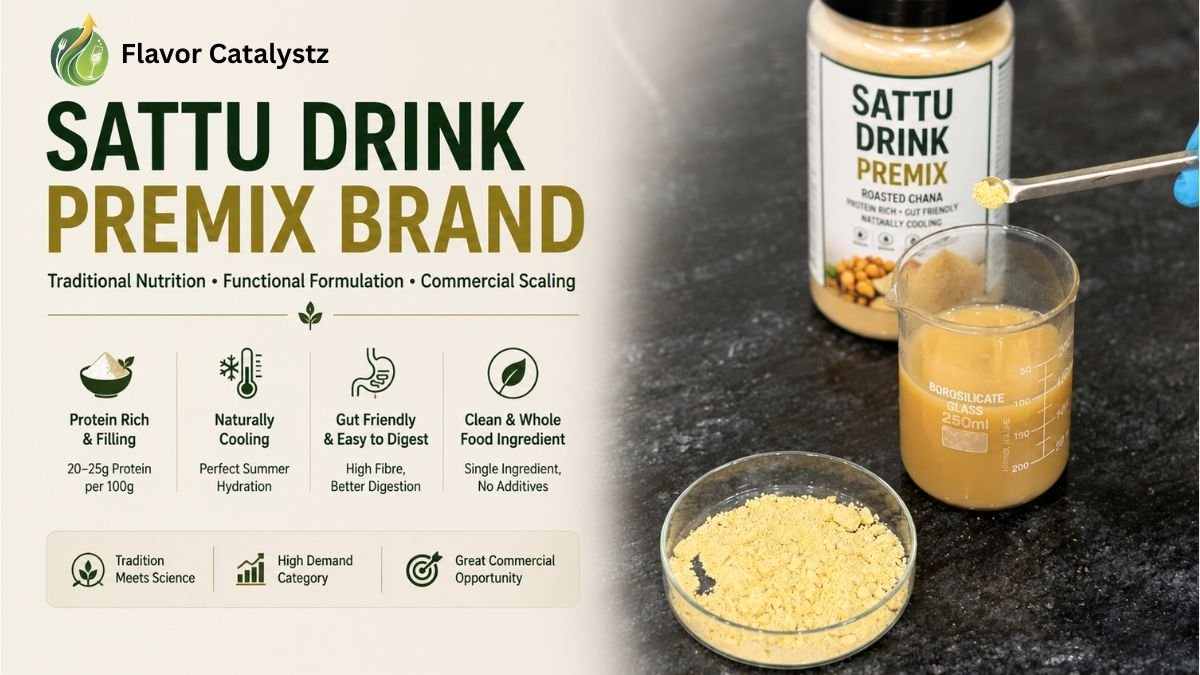
Sattu drink is protein-rich, gut-friendly, naturally cooling, and made from a single whole-food ingredient. It is, in many ways, the original Indian functional beverage. And the commercial opportunity around it — as a packaged premix, an RTD drink, or a Bihari heritage food brand — is genuinely underexplored.
This guide covers everything: the traditional recipes, the nutritional profile, the formulation science behind a commercial sattu product, and what it takes to build a sattu premix brand in India.
What Is Sattu and What Is It Made Of?
Sattu is a flour made from dry-roasting and then grinding whole black chickpeas (kala chana), sometimes blended with other roasted grains like barley (jau), maize, or wheat depending on regional tradition.
The roasting process is what makes sattu distinct from ordinary besan (gram flour). Roasting gelatinises some of the starch, reduces antinutrients, and creates the characteristic nutty, earthy flavour that raw chickpea flour lacks entirely. Sattu and besan are not interchangeable — the process, flavour, and nutritional profile are meaningfully different.
Primary variety: Chana sattu (black chickpea sattu) — the most nutritionally dense and most commonly used for the drink.
Regional blends: In some parts of Bihar and Jharkhand, sattu is made from a mix of roasted grains (barley + chana, or multi-grain) — lighter in flavour and lower in protein than pure chana sattu.
Nutritional profile of chana sattu (per 100g):
- Protein: 20–25g
- Dietary fibre: 7–10g
- Carbohydrates: 55–60g
- Fat: 2–5g
- Iron: 8–10mg
- Calcium: 80–100mg
- Energy: ~350–380 kcal
This is a genuinely impressive nutritional profile — comparable to many commercial protein products, but from a whole-food, minimally processed ingredient with zero additives.
Flavor Catalystz
Planning to launch a commercial sattu premix brand?
From dispersibility and flavour standardisation to shelf-life stability and packaging — we help founders develop scalable sattu beverage products.
Sattu Drink Benefits: Why It Works
The health benefits of sattu drink are not marketing claims — they are backed by the ingredient’s composition:
High protein for sustained energy: With 20–25g of protein per 100g, even a one-glass sattu drink (using 30–40g of sattu) delivers 6–10g of protein. This is significant for a traditional morning drink consumed without any supplement awareness.
Cooling effect (natural body coolant): Sattu is widely regarded in Ayurvedic tradition as a cooling food (thandai properties). This makes sattu sharbat a natural summer drink — the tradition of drinking namkeen sattu in the morning during Indian summers is grounded in this property.
Gut health and digestion: The high dietary fibre content (both soluble and insoluble) supports digestive health, promotes satiety, and helps regulate blood sugar — making sattu drink genuinely useful for weight management.
Good for diabetics: Sattu has a relatively low glycemic index compared to refined grain products. The combination of protein, fibre, and complex carbohydrates results in slower glucose absorption — making it one of the more diabetes-friendly traditional drinks. (Note: always consult a doctor for medical dietary guidance.)
Iron-rich: Sattu is a good plant-based source of iron, relevant for individuals dealing with iron deficiency — a common nutritional gap in India.
Good for heart health: The soluble fibre in sattu helps manage cholesterol levels, and the low fat content makes it a heart-friendly food in reasonable quantities.
Benefits of drinking sattu daily: Regular consumption supports sustained energy, digestive regularity, natural cooling in summer, and protein intake — making it one of the few traditional Indian drinks with a complete functional story.
Sattu Drink Recipe: The Two Classic Formulations
Sattu sharbat is made in two distinct styles — both are worth understanding before thinking about commercial formulation.
Namkeen (Savory) Sattu Drink
The traditional, most-consumed version. Cooling, spiced, hydrating. This is the authentic Bihari sattu sharbat that has been consumed for generations.
Ingredients (per serving, 300ml):
- Chana sattu: 3–4 tablespoons (30–40g)
- Cold water: 250ml
- Fresh lime juice: 1 tablespoon (15ml)
- Black salt (kala namak): ¼ teaspoon
- Regular salt: a pinch (adjust to taste)
- Roasted cumin powder (jeera): ¼ teaspoon
- Green chilli, finely chopped: ½ (optional, to taste)
- Fresh coriander (dhania), chopped: small handful
- Ginger, grated: ¼ teaspoon (optional)
Method: Add sattu to a glass. Add lime juice, black salt, regular salt, and cumin. Mix into a paste with a small amount of water first (prevents lumping). Add remaining cold water and stir vigorously. Add coriander and green chilli. Mix well and serve immediately over ice.
Flavour profile: Sharp, spiced, salty-sour with an earthy base. Extremely refreshing in summer. The black salt is important i— it adds the characteristic sulphurous note that defines namkeen sattu.
Commercial note: The namkeen sattu drink is the harder of the two formats to standardise commercially because of fresh ingredients (lime juice, coriander, green chilli). A commercial namkeen sattu premix would substitute fresh lime with citric acid + dried lime flavour, use standardised black salt blend, and omit fresh herbs or add dried equivalents.
Meetha (Sweet) Sattu Drink
The sweet version — quicker energy, milder flavour, more accessible to children and those who prefer sweeter drinks.
Ingredients (per serving, 300ml):
- Chana sattu: 3–4 tablespoons (30–40g)
- Cold water or milk: 250ml
- Jaggery powder or sugar: 1–2 tablespoons (to taste)
- Cardamom powder: a pinch
- A few drops of rose water (optional)
- Ice: to serve
Method: Mix sattu with jaggery and cardamom. Add a small amount of liquid to make a smooth paste. Add remaining water or milk, mix well, and serve cold.
Flavour profile: Mildly sweet, nutty, aromatic. Made with milk, it becomes a filling, protein-rich breakfast drink.
Commercial note: The meetha sattu premix format is more straightforward — standardised sattu, jaggery or sugar, cardamom, and optional flavour notes. Milk-based versions require either dried milk powder inclusion or instruction for consumer to add milk.
Bihari Sattu Drink Recipe: The Regional Specialty
The authentic Bihari sattu drink (known locally as sattu ka sharbat or sattu paani) follows the namkeen recipe above but often includes one or two region-specific additions:
- Onion: Finely chopped raw onion added directly to the glass — adds pungency and a distinctly Bihari character
- Mustard oil: A few drops added to the namkeen version — unusual to outsiders but deeply traditional
- Aam panna base: Some households mix sattu with raw mango water (aam panna) instead of plain water during peak summer — a powerful combination of cooling and sourness
These regional variations are part of the cultural depth that makes sattu interesting as a brand story. A commercial brand that genuinely honours this heritage — rather than genericising it — has a powerful authenticity advantage.
Sattu Drink Formulation: From Home Recipe to Commercial Product
This is where the blog shifts from food to business. If you are thinking about building a sattu brand, you need to understand what changes when you move from making a glass of sattu to producing it at scale.
The Core Challenge: Dispersibility
The biggest technical challenge in sattu drink formulation is dispersibility — how easily the powder mixes into water without lumping.
Traditional sattu is whisked with water using a spoon or hand-mixed vigorously. At home, this is fine. In a packaged premix, the consumer needs to be able to mix it in a glass with a spoon in 10–15 seconds without lumps. If it does not disperse easily, the product gets a bad consumer review regardless of how nutritious it is.
Commercial sattu premix formulation addresses dispersibility through:
- Particle size standardisation: Finely milling sattu to a consistent particle size (ideally 80–100 mesh) improves dispersion significantly
- Surface treatment: Some manufacturers use lecithin (a natural emulsifier) at 0.1–0.3% to improve wet-out and dispersibility
- Flow agent: Tricalcium phosphate or silicon dioxide at very low levels can be added as FSSAI-permitted anti-caking agents to prevent clumping in the premix during storage
Flavour Standardisation
Home recipes rely on fresh ingredients — lime juice, coriander, green chilli. Commercial premix must replace these with shelf-stable equivalents:
- Fresh lime juice → citric acid + natural lime flavour
- Fresh coriander → dried coriander powder (flavour is significantly milder; balance requires testing)
- Green chilli → chilli powder (standardised heat level, consistent Scoville units)
- Black salt → standardised black salt blend (consistent sulphur note across batches)
The goal is to create a premix where mixing 30g with 250ml of cold water produces a drink that tastes within acceptable range of the traditional home version. This requires multiple rounds of sensory evaluation and adjustment.
Shelf Life
A well-formulated and properly packaged sattu premix can achieve 12–18 months ambient shelf life. Key factors:
- Moisture control: Sattu is highly hygroscopic (absorbs moisture from air). Packaging must be moisture-barrier — foil-laminated pouches or sealed canisters. Sachet packaging in individual serving sizes helps maintain freshness after opening.
- Rancidity management: Sattu contains some fat (from chickpea). Over time, fat can oxidise and turn rancid — particularly in warm, humid Indian storage conditions. Good packaging (oxygen barrier), low moisture content (below 7%), and avoiding high storage temperatures extend shelf life.
- Antioxidants: Natural antioxidants like vitamin E (tocopherols) at FSSAI-permitted levels can be added to retard oxidative rancidity without affecting the clean label.
Nutritional Enhancement Options
A commercial sattu premix can be enhanced for stronger functional positioning:
- Added vitamins and minerals: Iron, calcium, B12, Vitamin D supplementation for a “fortified sattu” positioning targeting specific deficiencies common in India
- Protein boost: Pea protein or chickpea protein isolate addition to raise protein per serving to 15–20g
- Adaptogen addition: Ashwagandha extract, shatavari, or amla powder for an Ayurvedic functional positioning
Each enhancement must be checked against FSSAI’s fortification and health supplement regulations.
Sattu Premix: Commercial Formats and Market Opportunities
The sattu premix category in India is growing but still dominated by unbranded, bulk commodity sattu. The opportunity for a branded, quality-positioned premix is significant.
Format 1 — Single-serve sachets (30–40g)
Most convenient for on-the-go consumption. Easy to stock in gyms, offices, and travel contexts. Higher per-kg cost but much better consumer experience and impulse purchase potential.
Format 2 — Family/bulk canister (500g–1kg)
The standard replacement for the household sattu dabba. Targets daily-use consumers who already drink sattu at home but want a standardised, convenient option.
Format 3 — Ready-to-Drink sattu drink
A pre-mixed, bottled sattu drink. Technically challenging (sattu settles quickly in liquid, requiring stabilisers or shake-before-use instructions) but high commercial potential for quick commerce and modern trade.
Format 4 — Flavoured sattu premix variants
Beyond the classic namkeen and meetha, modern variants like sattu + chocolate (for kids), sattu + mango, or sattu + turmeric-ginger appeal to specific consumer segments without departing too far from the core.
Positioning opportunities:
- Heritage/Bihari traditional food brand
- Protein + fibre health food targeting fitness consumers
- Natural cooling summer drink
- Ayurvedic functional food (cooling, gut-supportive)
- Kids’ nutrition (high protein, whole food, natural)
Ready to Build a Sattu Brand?
Sattu is one of India’s great underrated food stories. The ingredient is exceptional — nutritious, sustainable, culturally rooted, and increasingly relevant to modern health consumers. What has been missing is a well-formulated, well-branded product that makes sattu accessible beyond the households that already know and love it.
At Flavor Catalystz, we work with founders building traditional Indian food and beverage brands — helping them take authentic ingredients like sattu and develop products that meet commercial quality standards, FSSAI compliance, and real shelf life requirements.
If you are building a sattu premix brand, an RTD sattu drink, or a traditional food brand where sattu is a key product, talk to our team today.
Related Reading:
FAQs
What is sattu drink good for?
Sattu drink is good for sustained energy, natural body cooling in summer, protein intake, digestive health (due to high fibre), blood sugar management, and iron supplementation. It is one of the most nutritionally complete traditional Indian beverages.
What is sattu made of?
Sattu is made from dry-roasted black chickpeas (kala chana) that are then finely ground into flour. Some regional varieties include a blend of roasted grains like barley, maize, or wheat along with chana.
How do you make sattu drink?
Mix 3–4 tablespoons of sattu with a small amount of water to form a smooth paste, then add 250ml of cold water. For namkeen (savory): add black salt, regular salt, cumin, lime juice, and optional spices. For meetha (sweet): add jaggery or sugar and cardamom. Stir well and serve over ice.
Can we drink sattu daily?
Yes — sattu drink consumed daily is generally considered beneficial. Regular consumption supports digestive health, provides sustained protein and energy, and has a natural cooling effect. It is a traditional morning staple in Bihar and Eastern India consumed daily without issue.
What happens if I drink sattu every day?
Consistent daily consumption of sattu typically supports stable energy levels, improved digestion, better satiety (helpful for weight management), and improved iron intake. People with kidney conditions or gout should moderate consumption due to sattu’s purine content — consult a doctor if in doubt.
Is sattu good for diabetics?
Sattu has a relatively low glycemic index and the high fibre content helps slow glucose absorption, making it a better choice than many refined carbohydrate options. Many nutritionists recommend sattu for diabetic diets, but individual responses vary — medical advice should be sought.
Can we drink sattu at night?
Yes, though traditionally sattu is a morning drink. At night, the meetha version with milk (sattu mixed in warm milk) is sometimes consumed for protein before sleep. The high fibre content may cause bloating for some if consumed in large quantities at night.
How to make sattu drink for weight loss?
Use the namkeen version without sugar — mix 2–3 tablespoons of sattu with water, lime juice, black salt, and cumin. The high protein and fibre content promotes satiety and reduces overall calorie intake. Consume in the morning before breakfast.
How to make sattu drink for muscle gain?
Increase the sattu quantity (4–5 tablespoons per serving), mix with milk instead of water, and optionally add a banana or jaggery for carbohydrate. This provides 15–20g of protein per serving alongside complex carbs — a solid post-workout recovery option.
Is sattu good for heart patients?
The soluble fibre in sattu helps manage LDL cholesterol, and the low fat and sodium content (in the plain form) makes it generally heart-friendly. However, the namkeen version with added salt should be monitored for overall daily sodium intake. Consult a cardiologist for specific guidance.
Which type of sattu is best?
Pure chana (black chickpea) sattu is the most nutritionally dense. Multi-grain sattu blends are lighter and milder in flavour. For the drink specifically, pure chana sattu gives the strongest flavour and nutritional profile.
What are the disadvantages of sattu?
Sattu is high in purines — not ideal for people with gout or kidney stones. High fibre content may cause gas or bloating for people with sensitive digestion, especially if introduced suddenly in large quantities. As with any food, moderation and individual tolerance matter.