May 2026 · 15 min read
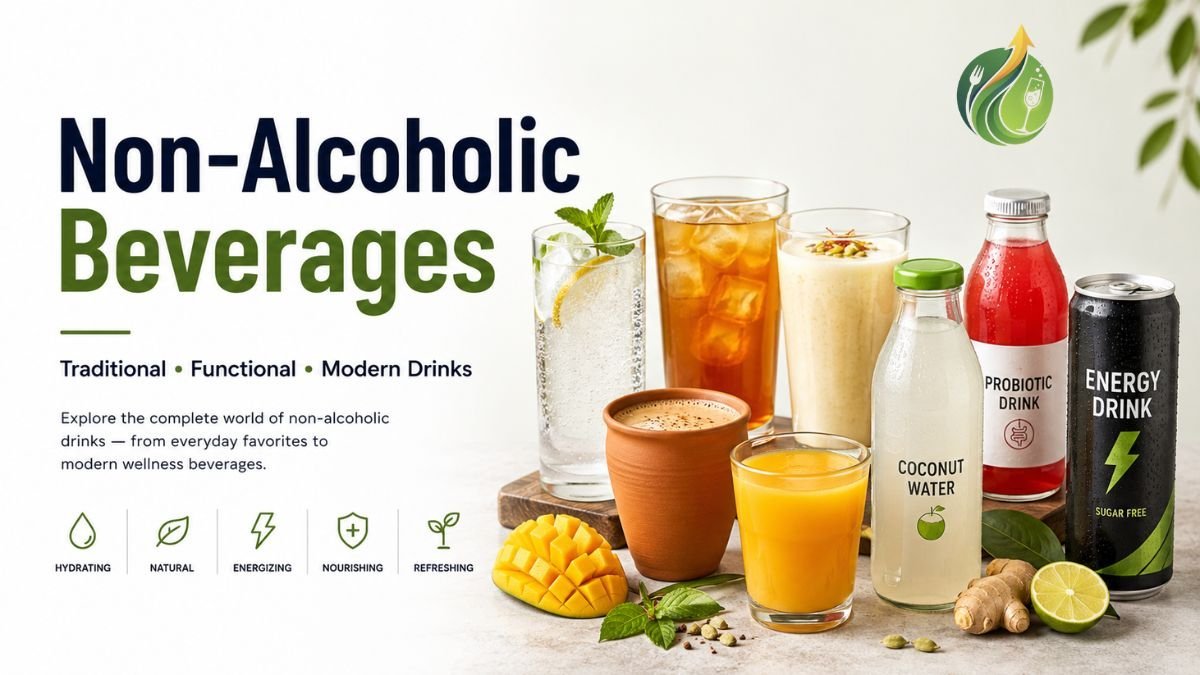
Non-alcoholic beverages are, quite simply, the drinks that define daily life for most of the world’s population. Tea in the morning, coconut water at a roadside stall, a chilled lassi at lunch, an energy drink before a gym session, and a sophisticated botanical soda at a dinner party — these are all non-alcoholic beverages, and together they form the largest single segment of the global beverage industry.
In India, the non-alcoholic beverage market is experiencing one of the most exciting growth periods in its history — driven by rising health consciousness, a resurgence of interest in traditional Indian drinks, and a new generation of brands building sophisticated, functional, and culturally rooted non-alcoholic beverages that compete with global products on quality and innovation.
This guide answers every key question about non-alcoholic beverages — what they are, what they’re called, the 3 broad types, 10+ examples, a full list of categories, top NA beverage brands in India, and what the non-alcoholic beverage development process looks like for anyone who wants to create their own.
What Is a Non-Alcoholic Beverage? Definition and Meaning
A non-alcoholic beverage is any drink that contains no alcohol or contains alcohol below the legal threshold of 0.5% ABV (Alcohol by Volume). The term encompasses an enormous range of drinks — from water and tea to functional wellness shots, from traditional Indian sharbats to sophisticated zero-proof cocktail alternatives.
What are non-alcoholic beverages called?
Non-alcoholic beverages go by several names depending on context. In the beverage industry, they are commonly referred to as NA beverages, soft drinks (though this technically refers to carbonated varieties), non-intoxicating beverages, alcohol-free drinks, or temperance beverages. In the cocktail and bar world, sophisticated non-alcoholic drinks are called mocktails, zero-proof cocktails, or spirit-free drinks. In India, the traditional category is often called sharbat, sherbet, or simply soft drink.
Under FSSAI regulations in India, non-alcoholic beverages are broadly classified under Category 14 (Beverages, excluding dairy and fruit/vegetable juices) and span over 22 sub-categories based on carbonation level, juice content, functional ingredients, and processing method.
Flavor Catalystz
Spotted a non-alcoholic beverage opportunity in India — and ready to build it?
Whether it’s a traditional Indian sharbat, a probiotic drink, or a zero-proof alternative — we take your concept through formulation, FSSAI compliance, and commercial manufacturing.
3 Types of Non-Alcoholic Beverages: The Core Classification
While there are dozens of sub-categories, non-alcoholic beverages are broadly divided into 3 fundamental types based on their primary character:
Type 1: Stimulating Non-Alcoholic Beverages
These are non-alcoholic beverages that contain naturally occurring stimulants — primarily caffeine, theobromine, or adaptogenic compounds — that produce a mild physiological effect of alertness or energy. They are the most consumed non-alcoholic beverages globally.
Examples: Tea (chai), coffee, RTD cold brew, energy drinks, guarana-based beverages, matcha drinks, green tea RTD, kawa (kava-based beverages).
Type 2: Refreshing / Thirst-Quenching Non-Alcoholic Beverages
These are non-alcoholic beverages primarily consumed for hydration, refreshment, and sensory pleasure. This is the largest commercial sub-type by volume — encompassing water, sodas, juices, traditional drinks, and most RTD beverages. In India, this type dominates the summer beverage market.
Examples: Packaged water, carbonated soft drinks, fruit juices, Aam Panna, Shikanji, Kokum Sharbat, nimbu paani, jeera soda, lassi, chaas, coconut water, flavored soda.
Type 3: Nourishing / Nutritive Non-Alcoholic Beverages
These are non-alcoholic beverages consumed primarily for nutritional or functional benefit. They are the fastest-growing type globally and in India, driven by increasing awareness of the link between diet and health. This type includes dairy-based drinks, plant-based milks, protein drinks, probiotic beverages, and Ayurvedic functional shots.
Examples: Flavored milk, thandai, sattu drink, probiotic chaas, whey protein drinks, oat milk, nut milk beverages, turmeric shots, ashwagandha shots, electrolyte ORS drinks.
Complete Types of Non-Alcoholic Beverages: 12-Category Breakdown
Beyond the 3 broad types, non-alcoholic beverages are commercially classified into 12 distinct categories. Here is the complete breakdown with Indian market context:
| Category | Sub-type | Indian Examples | Market Trend |
| Packaged Water | Still, sparkling, flavored | Bisleri, Aquafina, Himalayan | Steady growth; flavored water rising |
| Carbonated Soft Drinks | Cola, lemon, orange, masala soda | Thums Up, Limca, Lahori Zeera | Declining sugar; sugar-free rising |
| Fruit Juices & Nectars | NFC, from concentrate, nectar | Real, Tropicana, Frooti | Premium NFC gaining; mango dominant |
| Traditional Indian Drinks | Sharbat, panna, jaljeera, thandai | Paper Boat, regional D2C brands | Fastest-growing in premium segment |
| Dairy Beverages | Flavored milk, lassi, chaas | Amul, Mother Dairy, Heritage | Protein-fortified variants emerging |
| Tea & Coffee RTD | Cold brew, iced tea, chai RTD | Rage Coffee, Raw Sugar, Nestea | Cold brew + oat milk trending |
| Energy & Sports Drinks | Energy, isotonic, electrolyte | Sting, Red Bull, Gatorade | High growth; D2C challengers |
| Functional / Wellness | Immunity, probiotic, adaptogen | Emerging D2C, Dabur, ITC | Top growth in urban premium |
| Plant-Based Beverages | Oat milk, nut milk, soy milk | Oatly, Epigamia, Blue Tokai oat | Nascent; rapid adoption Gen Z |
| NA Spirits & Mocktails | NA gin, NA beer, zero-proof cocktail | Coolberg, Jimmy’s Cocktails | Sober-curious trend driving growth |
| Probiotic & Fermented | Kombucha, kefir, kanji | Nomad Food, regional brands | Gut-health premium positioning |
| Wellness Shots | Turmeric, ginger, ashwagandha shots | Emerging brands, Healthvit | Small format; high margin; D2C |
10 Examples of Non-Alcoholic Beverages (With Full Details)
Here are 10 well-known examples of non-alcoholic beverages with their category, origin, and what makes each commercially relevant in the Indian market:
Chai (Masala Tea)
Category: Stimulating | Dairy + Spice Beverage
India’s single most consumed non-alcoholic beverage by volume. Masala chai — black tea brewed with milk, sugar, cardamom, ginger, and spices — is consumed by over 800 million Indians daily. The RTD chai category is one of the fastest-growing formats in the Indian packaged beverage market.
Commercial Opportunity: RTD masala chai in aseptic carton or chilled PET; oat milk chai variant for urban premium segment.
Coconut Water
Category: Refreshing | Natural Hydration Beverage
One of the purest forms of natural non-alcoholic beverage, coconut water is India’s original isotonic drink. Rich in electrolytes (potassium, magnesium, sodium), it has seen massive RTD commercialization. The global packaged coconut water market is growing at 20%+ CAGR.
Commercial Opportunity: Flavored coconut water (mango, litchi), coconut water + electrolyte blend, coconut water-based probiotic drinks.
Aam Panna
Category: Refreshing | Traditional Indian Beverage
Raw mango-based non-alcoholic beverage with kala namak, jeera, and mint. Deeply cultural, widely consumed in North India and Maharashtra during summer. Paper Boat pioneered its RTD commercialization; the market remains significantly underpenetrated.
Commercial Opportunity: Premium glass bottle RTD; sugar-free variant; institutional supply (airlines, hotels, HoReCa).
Lassi
Category: Nourishing | Dairy-Based Beverage
Churned yogurt-based non-alcoholic beverage, sweet or salty, originating from Punjab. One of India’s most beloved traditional drinks. The commercial lassi market is dominated by regional dairy brands but has significant premiumization headroom. Rose lassi, mango lassi, and probiotic lassi are high-potential variants.
Commercial Opportunity: Premium glass bottle lassi; probiotic-fortified variant; diaspora export (US, UK, UAE).
Energy Drink
Category: Stimulating | Functional Beverage
Caffeinated non-alcoholic beverage with additional stimulants (B vitamins, taurine, guarana). India’s energy drink market is growing rapidly, led by Sting (PepsiCo) at the mass end and Red Bull at the premium end. The market is estimated at ₹3,000+ crore and growing at 20%+ annually.
Commercial Opportunity: Natural energy drink with Ayurvedic actives (ashwagandha, brahmi); sugar-free RTD energy; plant-based energy.
Kombucha
Category: Nourishing | Fermented Probiotic Beverage
Fermented tea-based non-alcoholic beverage with live probiotic cultures. While still nascent in India, kombucha is growing rapidly in urban premium retail and D2C. Global kombucha market is projected to reach USD 9 billion by 2030. Indian brands like Nomad Food Project are building this category.
Commercial Opportunity: Indian flavor profiles (kokum, rose, tulsi kombucha); premium glass format; gut-health positioning.
Kokum Sharbat
Category: Refreshing | Traditional Indian Beverage
Non-alcoholic beverage made from Kokum fruit (Garcinia indica), native to Goa and the Konkan coast. Deep magenta-purple color, tangy-cooling flavor, and strong digestive benefit profile. One of India’s most under-commercialized traditional non-alcoholic beverages with enormous premium potential.
Commercial Opportunity: Premium RTD in 200ml glass; Goa traditional drink export to diaspora; Solkadhi (kokum + coconut milk) variant.
Cold Brew Coffee
Category: Stimulating | RTD Coffee Beverage
Coffee brewed with cold water over 12–24 hours — producing a smoother, less acidic non-alcoholic beverage than hot-brewed coffee. India’s cold brew market is growing at 25%+ CAGR, driven by urban millennials and Gen Z. Rage Coffee, Blue Tokai, and several D2C brands are leading this segment.
Commercial Opportunity: Single-origin Indian cold brew; oat milk cold brew; cold brew + adaptogens (ashwagandha, lion’s mane).
Sattu Drink
Category: Nourishing | Functional Grain Beverage
A traditional non-alcoholic beverage from Bihar, UP, and Bengal — made by dissolving roasted gram (Bengal chickpea) flour in cold water with lemon, kala namak, and jeera. High in protein (20–25g per glass), fiber, and minerals. One of India’s most underrated functional beverages with genuine protein-drink market potential.
Commercial Opportunity: RTD protein drink; sports nutrition positioning; sugar-free variant; diaspora market.
Non-Alcoholic Beer
Category: Refreshing | NA Spirit Alternative
Beer-style non-alcoholic beverage (< 0.5% ABV) that delivers the taste and ritual of beer without alcohol. India’s NA beer market is early-stage but growing fast, led by Coolberg, which has proven consumer willingness to pay a premium for a sophisticated non-alcoholic beverage alternative. The global NA beer market is growing at 7–9% CAGR.
Commercial Opportunity: Indian craft NA beer variants (mango, ginger, cardamom); NA beer for dry states distribution; corporate gifting segment.
Top Non-Alcoholic Beverage Brands in India
India has a rich and diverse landscape of non-alcoholic beverage brands — from global giants to homegrown innovators. Here is a segmented overview of the top NA beverage brands across categories:
| Segment | Top Brands | Positioning |
| Carbonated Drinks | Thums Up, Limca, Sprite, Pepsi, 7UP, Appy Fizz | Mass market; cola + lemon flavors dominant |
| Packaged Water | Bisleri, Aquafina, Kinley, Himalayan, Vedica | Commodity to premium positioning |
| Fruit Juices | Real (Dabur), Tropicana (PepsiCo), Frooti (Parle) | Ambient shelf; NFC premium growing |
| Traditional Indian Drinks | Paper Boat (Hector), Lahori Zeera, Rooted Actives | Premium, cultural, D2C-first brands |
| Energy Drinks | Sting, Red Bull, Monster, Charged (Thums Up) | Mass to ultra-premium; high-margin |
| Dairy Beverages | Amul, Mother Dairy, Epigamia, Nandini, Heritage | Mass dairy to premium probiotic |
| NA Beer/Spirits | Coolberg, Jimmy’s Cocktails, Bira91 NA | Sober-curious, premium bars, gifting |
| Functional/Wellness | Dabur Hajmola, Health+, emerging D2C brands | Ayurvedic actives, gut health, immunity |
| Cold Brew/RTD Coffee | Rage Coffee, Blue Tokai, Third Wave Coffee | Urban premium; D2C and quick commerce |
Non-Alcoholic Beverage Market Size in India (2026)
The Indian non-alcoholic beverage market is one of the largest and fastest-growing in Asia-Pacific. Understanding the market size and growth trajectory is essential for anyone developing, investing in, or marketing non-alcoholic beverages in India:
Non-Alcoholic Beverage Development: Turning an Idea Into a Product
Non-alcoholic beverage development is the process of taking a drink concept — a traditional Indian recipe, a functional health drink idea, a zero-proof cocktail alternative — and engineering it into a commercially scalable, shelf-stable, FSSAI-compliant product. This is where beverage science meets market strategy.
The non-alcoholic beverage development process at Flavor Catalystz covers:
- Concept validation and flavor profiling against market benchmarks
- Recipe formulation using FSSAI-approved, commercially sourced ingredients
- pH optimization, Brix standardization, and preservation technology selection
- Stability and accelerated shelf life testing (physical + chemical + microbiological)
- FSSAI regulatory compliance — product categorization, label review, additive compliance
- Contract manufacturer identification and scale-up support
Whether you’re developing a traditional non-alcoholic beverage like Kokum Sharbat or a functional drink like a probiotic chaas, the development roadmap is the same. Read our detailed non-alcoholic beverage development guide for a full walkthrough.
Building a Non-Alcoholic Beverage Brand in India? Start Here.
The non-alcoholic beverage opportunity in India is real, it is large, and it is accessible to well-prepared founders and brands. The entry barrier is not capital — it is the quality of your formulation, the authenticity of your product, and the compliance of your processes. That is exactly where Flavor Catalystz works.
We help you:
- Develop a non-alcoholic beverage formulation that is shelf-stable, authentic, and FSSAI-compliant
- Choose the right processing technology (hot fill, aseptic, UHT, cold fill) for your product type
- Integrate functional ingredients (probiotics, adaptogens, Ayurvedic actives) correctly and within legal claim boundaries
- Connect to certified contract manufacturers across India for pilot and commercial production
- Navigate FSSAI licensing, label compliance, and health claim regulations from day one
For global NA beverage market data, see the Ministry of Food Processing Industries (MoFPI) Beverages Sector Profile. For academic reference on non-alcoholic beverage formulation, see Tireki (2021) — A review on packed non-alcoholic beverages, ScienceDirect.
Explore More From Flavor Catalystz
- Traditional Drink Formulation — India’s Heritage Beverages Go Commercial
- Functional Beverage Development India
- Cold Drink Recipe Formulation
- Types of Beverages: 20 Popular Drink Categories
- Beverage Product Development: From Concept to Shelf
Conclusion: Non-Alcoholic Beverages Are India’s Biggest Beverage Opportunity
Non-alcoholic beverages are not just an alternative to alcohol — they are the primary beverage category for over a billion Indians, and the innovation happening in this space right now is more exciting than at any point in the industry’s history. From ancient sharbats being rediscovered to probiotic drinks solving modern gut-health problems, from plant-based milks entering FMCG shelves to sophisticated NA spirits finding a place at cocktail bars, the non-alcoholic beverage category is expanding in every direction simultaneously.
Whether you are a consumer looking to understand what you’re drinking, a student researching the beverage industry, or a founder ready to build the next great non-alcoholic beverage brand in India — the opportunity is here, and the time is now.
FAQs: Non-Alcoholic Beverages
Q1. What is a non-alcoholic beverage?
A non-alcoholic beverage is any drink that contains no alcohol or contains alcohol below 0.5% ABV (Alcohol by Volume). The category includes water, tea, coffee, fruit juices, carbonated soft drinks, energy drinks, traditional Indian drinks like Aam Panna and Shikanji, dairy beverages like lassi and chaas, probiotic drinks like kombucha, and sophisticated zero-proof alternatives to spirits and beer. Non-alcoholic beverages are the most widely consumed category of drinks globally and in India.
Q2. What are non-alcoholic beverages called?
Non-alcoholic beverages are called by many names depending on context: soft drinks (in common usage, often refers specifically to carbonated non-alcoholic beverages), NA beverages (industry shorthand), alcohol-free drinks, zero-proof drinks (in bar/cocktail contexts), mocktails (for cocktail-style NA drinks), temperance beverages (traditional term), and simply non-intoxicating beverages. In India, traditional non-alcoholic beverages are called sharbat, sherbet, panna, chaas, lassi, or simply cold drink.
Q3. What are the 3 types of non-alcoholic beverages?
The 3 broad types of non-alcoholic beverages are: (1) Stimulating beverages — contain caffeine or other mild stimulants; examples include tea, coffee, energy drinks, and cold brew; (2) Refreshing/thirst-quenching beverages — consumed primarily for hydration and sensory pleasure; examples include water, sodas, fruit juices, traditional Indian drinks, lassi, and coconut water; (3) Nourishing/nutritive beverages — consumed for nutritional or functional benefit; examples include flavored milk, protein drinks, probiotic beverages, wellness shots, and Ayurvedic functional drinks.
Q4. What are 10 examples of non-alcoholic beverages?
10 well-known examples of non-alcoholic beverages: (1) Masala Chai — India’s most consumed NA beverage; (2) Coconut Water — natural isotonic; (3) Aam Panna — raw mango traditional drink; (4) Lassi — yogurt-based dairy drink; (5) Energy Drink — caffeinated functional drink; (6) Kombucha — probiotic fermented tea; (7) Kokum Sharbat — Goa traditional digestive drink; (8) Cold Brew Coffee — smooth cold-extracted coffee; (9) Sattu Drink — protein-rich grain-based drink; (10) Non-Alcoholic Beer — beer-style drink under 0.5% ABV.
Q5. Which are non-alcoholic beverages in India?
India’s non-alcoholic beverages span a wide range: traditional drinks (Aam Panna, Shikanji, Kokum Sharbat, Thandai, Jaljeera, Sattu Drink, Neer Mor, Solkadhi), dairy beverages (Lassi, Chaas, flavored milk), carbonated drinks (Thums Up, Limca, Appy Fizz, Lahori Zeera), packaged water (Bisleri, Aquafina), fruit juices (Real, Tropicana, Frooti), energy drinks (Sting, Red Bull), and emerging categories like cold brew coffee, kombucha, NA beer (Coolberg), and functional shots.
Q6. What is a non-distilled non-alcoholic beverage?
A non-distilled non-alcoholic beverage is any NA drink that is produced without the distillation process — which means the vast majority of non-alcoholic beverages consumed in India and globally. Non-distilled non-alcoholic beverages include fruit juices (extracted, not distilled), carbonated soft drinks (formulated with water and flavor compounds), dairy beverages (pasteurized, not distilled), traditional Indian drinks (cooked or blended), probiotic beverages (fermented, not distilled), and energy drinks. The distinction matters mainly in FSSAI product categorization and HS code classification for import/export.
Q7. What are the top non-alcoholic beverage brands in India?
The top non-alcoholic beverage brands in India across segments include: Bisleri (packaged water), Thums Up / Limca / Sprite (CSD — Coca-Cola India), Pepsi / Sting / Tropicana (PepsiCo / Varun Beverages), Frooti / Appy Fizz (Parle Agro), Real Juices (Dabur), Paper Boat (Hector Beverages — traditional drinks), Lahori Zeera (regional challenger), Amul / Mother Dairy (dairy beverages), Coolberg (NA beer), Red Bull / Monster (energy drinks), and Rage Coffee (cold brew).
Q8. What is non-alcoholic beverage development?
Non-alcoholic beverage development is the end-to-end process of creating a commercially viable, shelf-stable, FSSAI-compliant non-alcoholic drink from a concept or recipe. It involves flavor formulation using food-grade ingredients, pH and Brix standardization, preservation and shelf life engineering, stability testing, regulatory compliance, and manufacturing scale-up. In India, professional non-alcoholic beverage development partners like Flavor Catalystz provide these services to startups, D2C brands, and FMCG companies who want to bring new NA beverages to market efficiently and compliantly.