May 2026 · 15 min read
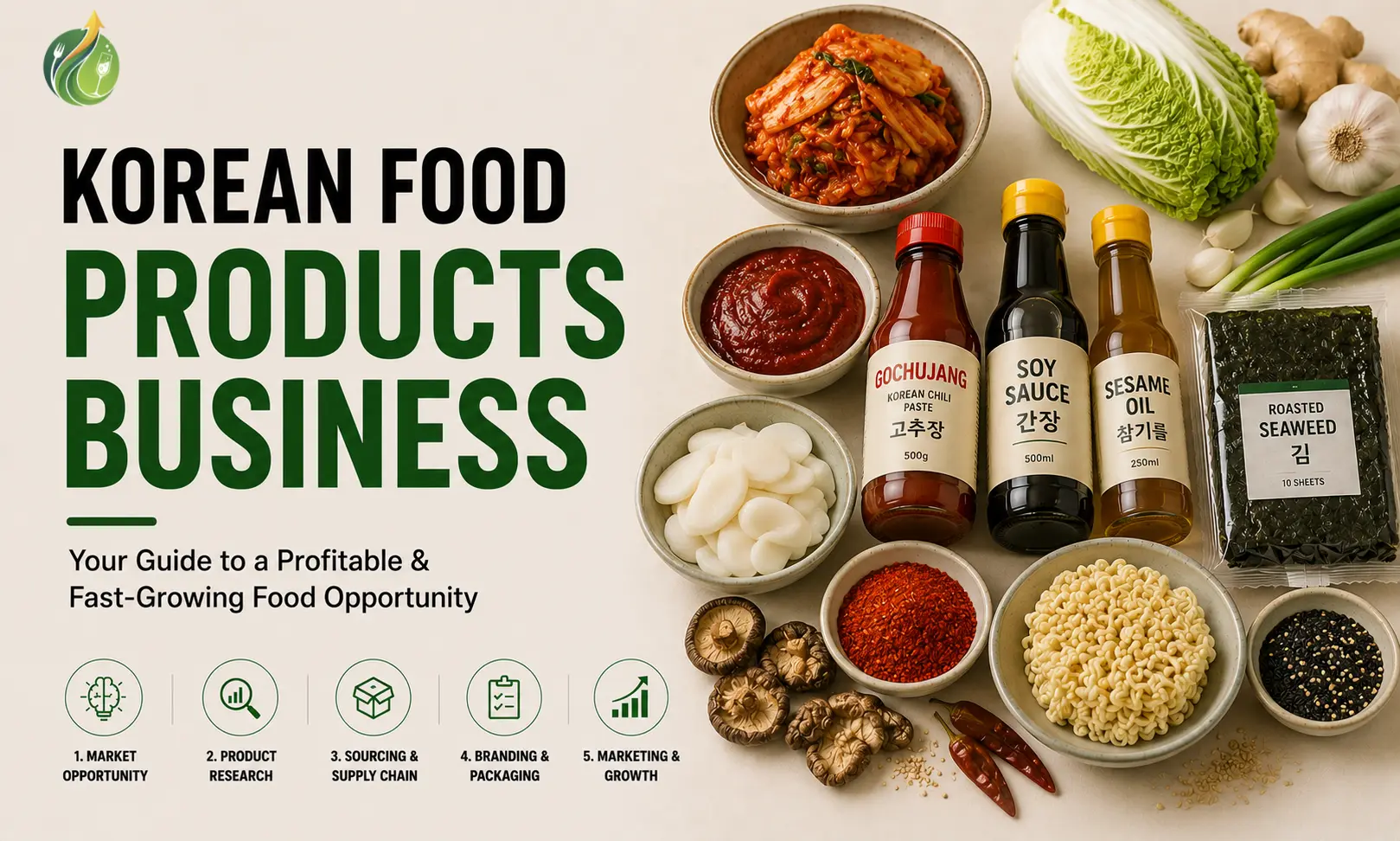
Korean food has moved from K drama scenes to Indian shopping carts. According to NielsenIQ, the Korean noodles market in India jumped from Rs 2 crore in 2021 to over Rs 65 crore by 2023, a 32x growth in two years. Zepto data shows Asian and Korean brands grew 400 percent in six months ending May 2023. Indian instant noodle buyers now pick up Buldak, Shin Ramyun, and Samyang as casually as a pack of Maggi.
This creates a real opening for entrepreneurs. The natural question is: can you actually develop, manufacture, and sell Korean food products from India, or do you have to import everything from Seoul or Busan?
The short answer is yes, you can. Brands like Masterchow, WickedGud, Wai Wai, and even Nestle (with Maggi Korean BBQ) are already doing it through food formulation. This guide breaks down how, what products work, what licenses you need, and how to position your brand across retail, D2C, quick commerce, HoReCa, and exports.
Start NUTRACEUTICAL BRAND
Launch Your Korean Food Brand in India
From recipe formulation and FSSAI Central License to GMP manufacturing, compliant packaging, and quick commerce launch, our food product development team helps you build a market ready nutraceutical brand.
Korean Food Market in India: How Big is the Opportunity
India’s instant noodles market alone was valued at USD 1.59 billion in 2025 and is forecast to grow to USD 3.34 billion by 2031 at a CAGR of 13.18 percent (Mordor Intelligence, 2026). Within this, Korean spicy variants are projected to grow at the highest 13.27 percent CAGR through 2031.
Some key data points worth knowing before you plan a product:
- Korean food exports from South Korea to India touched USD 57.7 million in 2023, up 60 percent from 2018 (Korea Agro Fisheries and Food Trade Corp).
- Ramyeon was the top Korean food export to India in the first half of 2024, crossing USD 8 million in just six months.
- Korean noodle penetration in Indian households rose from 2 percent in July 2020 to 5.7 percent by July 2023 (Kantar FMCG Pulse).
- 53 percent of Indian consumers said they are willing to pay more for instant noodles with new flavours (Mintel GNPD).
- The global K Food market hit USD 13.6 billion in 2025, with ramyeon, kimbap, tteokbokki, and K BBQ driving most of the volume (Seoulz, 2026).
Tier 1 cities like Delhi NCR, Bengaluru, Mumbai, Chennai, and Hyderabad lead this demand. But quick commerce is pulling Korean SKUs deeper into Tier 2 markets like Pune, Jaipur, and Lucknow as well.
Can You Develop Korean Food Products in India?
Yes. India has the food processing infrastructure, the FSSAI framework, and a growing base of contract manufacturers who can produce Korean style products at scale. You do not need to import every finished SKU. You can manufacture locally, source ingredients smartly, adapt recipes for Indian palates, and price competitively.
Three working models exist today:
1. Full Local Manufacturing
You set up or contract a manufacturer in India to produce Korean style products using local and imported ingredients. This is how Masterchow runs its Korean sauce and noodle range. It gives you cost control, faster restocking, and lower MRP than imported brands.
2. Import and Distribute
You import finished Korean products from South Korea under the India Korea CEPA agreement, which lowers duty on several food categories. This works for premium positioning but ties your margins to the rupee won exchange rate and shipping cycles.
3. Hybrid Model
You import key ingredients like gochujang base, gochugaru, or Korean rice cake from Korea, and finish, mix, or repack them in India. Many fusion brands and D2C startups use this route to balance authenticity and cost.
Top Korean Food Products to Sell in India
Not every Korean SKU works in India. The winners cluster around a few categories: spicy noodles, fermented sauces, snack rice cakes, frozen meal kits, and ready to eat fusion items. Here is what is moving fastest right now.
| Product | Why It Sells in India | Best Channels |
| Korean Style Instant Ramen | Bold spice profile matches Indian taste, quick to cook | Quick commerce, modern trade, D2C |
| Gochujang and Ssamjang Sauces | Used in home cooking, fusion recipes, HoReCa kitchens | D2C, marketplaces, gourmet retail |
| Kimchi (Cabbage and Radish) | Growing interest from health and gut focused buyers | Cold chain D2C, premium retail, cafes |
| Tteokbokki Rice Cakes | Street food popularity from K dramas | Quick commerce, frozen retail, K cafes |
| Korean Style Cup Noodles | Convenient, premium positioning, gifting friendly | Quick commerce, college towns, modern trade |
| Soju Style Beverages and Mocktails | Mild flavoured drinks for young consumers | Modern trade, HoReCa, cafes |
| Korean Snacks (Honey Butter Chips, Seaweed Snacks) | Strong impulse purchase potential | Quick commerce, kirana, modern trade |
| Frozen Kimbap and Mandu | Convenient meal kit positioning | Frozen retail, D2C cold chain, HoReCa |
| Korean BBQ Marinades | Cross over appeal for tandoor and grill buyers | Marketplaces, modern trade, butchers |
| Banana Milk and Korean Style Drinks | Gen Z and K Pop fan base | Quick commerce, college campuses |
The smartest entry point for most new brands is sauces and noodles. Both have predictable manufacturing, long shelf life, and easier compliance compared to fresh kimchi or frozen items.
How to Start a Korean Food Brand in India: Step by Step
1. Pick Your Product Category and Positioning
Decide if you are building a mass market spicy noodle brand, a premium gourmet sauce label, or a fusion ready to cook line. Each path needs a different MRP, packaging style, and channel mix. Avoid trying to do all three in your first year.
2. Study the Indian Palate
Korean food in India sells best when it keeps the heat and umami but adjusts garlic, fish sauce, and pork ingredients. Look at how Nongshim launched Shin Ramyun Chicken in 2023 to replace beef variants, and how Samyang Buldak grew on its bold chicken flavour profile.
3. Build the Recipe and Product
This is where most founders stumble. Authentic Korean recipes need fermented elements, precise spice blends, and ingredient ratios that hold flavour through cooking, storage, and reheating. Working with food product development specialists who understand both Korean technique and Indian sourcing makes this faster.
4. Choose Your Manufacturing Model
You can own a unit, contract manufacture with an Indian food processor, or do private label sourcing from Korean OEMs. Most new brands start with contract manufacturing in India to keep costs predictable.
5. Source Ingredients Smartly
Some ingredients need to be imported (gochugaru flakes, specific noodle wheat, sesame oil grades, dashi powders), while others can be sourced locally (chillies, rice flour, vegetables, packaging). The right import to local mix sets your cost of goods.
6. Register Your Business and Get Licenses
Set up a Private Limited or LLP. Apply for FSSAI Central License through the FoSCoS portal (Rs 7,500 plus GST per year). If you import, also apply for Import Export Code (IEC) and the FSSAI Central License for importer category.
7. Design Packaging and Branding
Use bold Korean style typography, hangul accents, and high contrast colours. Avoid copying existing Korean brand designs to stay out of trademark trouble. All packaging must follow FSSAI labelling rules, including a 14 digit license number and a clear veg or non veg dot.
8. Run Pilot Production and Test Market
Launch a small batch in two or three cities. Test through Amazon, Zepto, and your own Shopify store before pushing into modern trade. Use this phase to fine tune spice levels, packaging, and pricing.
9. Scale Distribution
Once you cross your first 5,000 to 10,000 units sold, move into modern trade, HoReCa supply, and quick commerce expansion across Tier 1 and Tier 2 cities.
FSSAI Compliance for Korean Food Products
Every Korean food product sold in India must comply with the Food Safety and Standards Act, 2006. Whether you manufacture locally or import finished goods, FSSAI rules apply.
Licenses You Need
- FSSAI Central License for manufacturers (Rs 7,500 plus GST per year)
- FSSAI Central License for importers if you ship finished products from Korea
- Import Export Code (IEC) from DGFT for any cross border movement
- GST registration and trade license
- AGMARK or organic certification if you market organic Korean items
Labelling Rules to Follow
- Product name in English plus optional Korean script
- Complete ingredients list in descending order of weight
- Net quantity, batch number, and manufacturing date
- Best before or use by date
- Nutritional information per 100 g or 100 ml
- Allergen declaration (wheat, soy, fish, sesame, etc.)
- Country of origin for imported products
- FSSAI logo with 14 digit license number
- Veg or non veg dot symbol (very important since many Korean products contain fish or shellfish)
Key Compliance Watchouts
Most Korean recipes use fish sauce, anchovy extract, dried shrimp, or pork derivatives. These must be declared clearly. Vegetarian Indian buyers reject products with hidden non veg ingredients, and FSSAI fines for mis labelling can be steep. If you want to target vegetarian buyers, reformulate using vegan alternatives like miso, kelp dashi, or mushroom umami bases.
Sourcing Ingredients for Korean Food Products
Sourcing is the single biggest cost driver in this business. Your decisions here decide whether you can sell at Rs 80 a pack like Wai Wai or Rs 300 a pack like Samyang.
Ingredients That Can Be Sourced Locally
- Rice and wheat flour (India is the largest rice producer)
- Indian red chillies (Kashmiri or Byadgi can substitute gochugaru in some recipes)
- Garlic, ginger, soybeans
- Sugar, salt, vinegar, vegetable oils
- Packaging materials and printing
Ingredients Usually Imported from Korea or Asia
- Authentic gochugaru (Korean chilli flakes) for true flavour
- Gochujang fermented chilli paste base
- Korean rice cakes (tteok)
- Korean style soy sauce, sesame oil, and ssamjang base
- Dried seaweed (gim), dashi, and specialty noodle wheat
The India Korea CEPA agreement lowers duty on several agricultural and processed food items, making imports from Korea more cost effective than from third countries. Work with a customs clearing agent who has experience handling Korean food imports.
Investment and Pricing for a Korean Food Brand
Investment depends on whether you import finished goods, manufacture locally, or build a fresh kimchi or frozen cold chain business. Here is a working range for the most common models.
| Expense Head | Import and Distribute Model | Local Manufacturing Model |
| Business registration and trademark | Rs 25,000 to Rs 60,000 | Rs 25,000 to Rs 60,000 |
| FSSAI Central License | Rs 8,850 per year | Rs 8,850 per year |
| Import Export Code (IEC) | Rs 500 to Rs 2,000 | Optional |
| Product development and testing | Rs 50,000 to Rs 1.5 lakh | Rs 1.5 lakh to Rs 4 lakh |
| First container or production batch | Rs 8 lakh to Rs 25 lakh | Rs 5 lakh to Rs 15 lakh |
| Customs and logistics | Rs 2 lakh to Rs 5 lakh per shipment | Rs 50,000 to Rs 1.5 lakh per batch |
| Packaging and branding | Rs 1 lakh to Rs 4 lakh | Rs 1.5 lakh to Rs 5 lakh |
| Marketing and launch | Rs 3 lakh to Rs 15 lakh | Rs 5 lakh to Rs 20 lakh |
| Working capital (3 months) | Rs 5 lakh to Rs 15 lakh | Rs 8 lakh to Rs 25 lakh |
| Estimated total range | Rs 20 lakh to Rs 65 lakh | Rs 22 lakh to Rs 75 lakh |
MRP for imported Korean noodles in India sits between Rs 90 and Rs 200 per pack, while locally manufactured Korean style noodles retail at Rs 35 to Rs 70 per pack. Sauces sell between Rs 250 and Rs 550 for a 300 ml bottle. Gross margins in Korean food brands range from 40 to 55 percent for noodles and 55 to 65 percent for sauces and condiments.
Localising Korean Food for Indian Buyers
Authentic does not always mean profitable. Some of the biggest Korean food wins in India came from smart localisation. Nongshim launched Shin Ramyun Chicken because beef variants miss a large chunk of the Indian market. Samyang made a vegetarian Buldak version. Masterchow keeps its Korean sauces vegan and made for stir fries that Indian cooks already do at home.
| Authentic Element | Common Indian Adaptation | Why It Works |
| Beef or pork base | Chicken, paneer, or vegetable base | Covers a far larger consumer base in India |
| Fermented fish sauce | Soy or mushroom based umami | Allows clean vegetarian or vegan claim |
| Very high heat (Buldak level) | Adjustable spice tiers (mild, hot, extreme) | Lets buyers self select tolerance |
| Alcohol in marinades | Vinegar or fruit juice substitutes | Increases accessibility for Indian households |
| Large pack sizes | Single serve, trial sized SKUs | Lower price point for first time buyers |
| Authentic gochugaru only | Blend of Kashmiri chilli and gochugaru | Cuts cost without losing colour and depth |
Do not over Indianise. Buyers who pick Korean products want a Korean experience. The trick is to remove blockers (non veg, alcohol, extreme heat) without removing identity.
Distribution Channels for Korean Food Brands
Korean food in India sells through five main channels. Pick two strong ones at launch and add the rest as you grow.
Quick Commerce
Blinkit, Zepto, Swiggy Instamart, BB Now, and Flipkart Minutes are the fastest growing channels for Korean noodles and snacks. Premium impulse positioning works best here. Listing fees are modest, but margins after commission and free delivery sit at 18 to 28 percent.
Marketplaces
Amazon, Flipkart, BigBasket, and JioMart give you national reach with low operational lift. Korean specialty stores like Korikart, Daily Objects, and ASF Korea Mart also list third party brands.
D2C Website
Highest margin channel and best for building a loyal base. Bundle sauces, noodles, and ready to cook kits for higher AOV. Use influencer partnerships with K Pop fan communities for early traction.
Modern Trade
Reliance, DMart, Spencer’s, Star Bazaar, and Foodhall stock Korean SKUs in metro stores. Listing fees, slotting charges, and a strong distributor are essential. Expect 90 to 120 day payment cycles.
HoReCa and Korean Restaurants
Hotels, Korean BBQ restaurants, cafes, and cloud kitchens buy sauces, kimchi, marinades, and noodle bases in bulk. This channel offers steady volume but compresses margins to 25 to 35 percent.
Exports
Indian made Korean style products are starting to find buyers in the Middle East, UK, and parts of Africa. The Indian Council for Cultural Relations and APEDA support food exports through buyer seller meets.
Challenges to Plan For
- Cold chain for kimchi: Fresh kimchi needs refrigerated storage and transport, which adds 15 to 25 percent to cost.
- Ingredient sourcing volatility: Gochugaru, dashi, and Korean wheat prices fluctuate with currency and crop yields.
- Vegetarian compliance: Most authentic Korean recipes use animal derivatives that need to be reformulated for the Indian market.
- Pricing pressure: Imported Korean brands like Nongshim and Samyang anchor consumer expectations at Rs 90 to Rs 200, making the Rs 50 to Rs 80 Indian segment crowded.
- Halal and certification needs: Some buyer segments and export markets demand halal certification, which adds cost and audit cycles.
- Shelf education: Many Tier 2 and Tier 3 buyers still need basic cooking instructions. Investing in QR coded recipe videos helps conversion.
- FSSAI label rejections: Mis labelled veg or non veg dots, missing allergen info, and Korean only text are the top reasons for marketplace delistings.
Building a Korean Food Brand in India
Korean food is past its trend phase in India. Penetration is climbing, distribution is wide, and quick commerce has made even niche SKUs accessible in 10 minutes. The next wave of winners will be brands that combine real Korean flavour with smart Indian adaptation, FSSAI clean labels, and a tight channel mix.
Flavor Catalystz works with emerging brands on recipe formulation, taste matching, ingredient localisation, and FSSAI compliant labelling for Korean style products.
Start with two or three products in a category you understand well. Build the recipe with a partner who can balance authenticity with local sourcing. Get the FSSAI Central License before you print a single pouch. And let consumer feedback guide your expansion rather than your assumptions.
Frequently Asked Questions
Is Korean food business profitable in India?
Yes. Korean noodles grew 32x between 2021 and 2023, and Korean spicy variants are forecast to grow at 13.27 percent CAGR through 2031. Gross margins range from 40 to 55 percent for noodles and 55 to 65 percent for sauces.
Can I manufacture Korean food in India?
Yes. India has the food processing infrastructure, contract manufacturers, and FSSAI framework to produce Korean style noodles, sauces, snacks, and meal kits locally. Brands like Masterchow already do it.
How much investment is needed to start a Korean food brand in India?
Between Rs 20 lakh and Rs 75 lakh for most working models. Pure import and distribute brands can start near the lower end, while local manufacturing with a wider SKU range sits closer to the upper end.
What license do I need to sell Korean food in India?
An FSSAI Central License is mandatory. If you import finished products, you also need an FSSAI importer license and an Import Export Code (IEC) from DGFT.
Which Korean food product sells the most in India?
Instant ramen leads the category, with Samyang Buldak, Nongshim Shin Ramyun, and Ottogi Jin Ramen as the top selling brands. Sauces, snacks, and rice cakes follow.
Can I import Korean food directly from South Korea?
Yes. Under the India Korea CEPA agreement, several food categories have lower duties. You need an FSSAI importer license, IEC, and a customs clearing agent familiar with Korean food shipments.
Is there demand for vegetarian Korean food in India?
Yes, and it is one of the biggest opportunity gaps. Most authentic Korean recipes use fish, pork, or beef bases. Vegetarian or vegan Korean SKUs (using mushroom dashi, soy umami, or kelp) face less competition.
How do I price my Korean food product in India?
Imported Korean noodles sell at Rs 90 to Rs 200 per pack and locally made versions at Rs 35 to Rs 70. Sauces retail at Rs 250 to Rs 550 for 300 ml. Match your MRP to your channel and target buyer.
Do I need halal certification for Korean food in India?
Not mandatory by law in India, but recommended if you want to target Muslim majority cities or export to Middle Eastern and Southeast Asian markets.
Where can I sell my Korean food brand?
Quick commerce (Blinkit, Zepto, Instamart), marketplaces (Amazon, Flipkart, BigBasket), D2C website, modern trade (Reliance, DMart), HoReCa, and Korean specialty stores like Korikart.
How long does it take to launch a Korean food brand in India?
If you go the contract manufacturing route, you can launch in 3 to 5 months. Setting up your own production unit takes 9 to 18 months. Imports usually need 2 to 4 months from license to first shipment.