May 2026 · 14 min read
There is a drink that every Indian knows, almost no organised brand has done justice to, and that the market is now actively ready for.
Jaljeera.
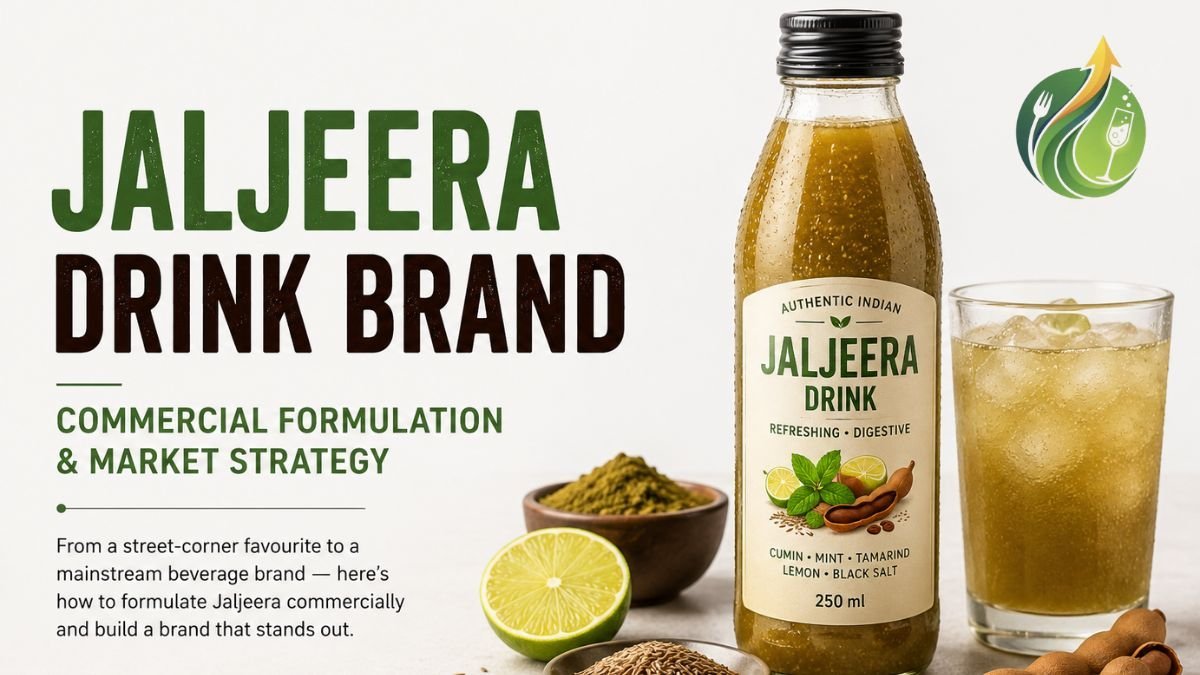
Walk into any street corner in Delhi, Lucknow, or Jaipur and you will find a vendor mixing it fresh — tamarind, cumin, mint, black salt, coriander, lemon, and a dozen other ingredients depending on their personal recipe. Drink it cold with ice and it hits every flavour note simultaneously: sour, savoury, cooling, slightly spiced, deeply refreshing. It is one of the most sophisticated flavour profiles in the Indian culinary repertoire, and it exists almost entirely outside the organised beverage market.
That is the opportunity.
This guide is for founders who want to take jaljeera from a pavement staple to a commercial beverage brand — and do it properly.
Why Jaljeera Is Commercially Ready Right Now
The timing for a jaljeera brand has never been better, and I say that based on what I am seeing from founders approaching us for beverage development work.
The urban Indian consumer is actively seeking beverages that are authentically Indian, naturally functional, and genuinely flavourful — not artificially flavoured imitations. Jaljeera delivers on all three. It has a natural digestive story (cumin, coriander, mint, tamarind are all traditionally associated with gut health), a complex flavour profile that rewards the palate, and a cultural familiarity that needs no consumer education.
The competition in the organised category is essentially zero. There are a handful of jaljeera powder and masala brands (Everest, MDH), but bottled, ready-to-drink jaljeera as a consumer brand barely exists. This is a category creation opportunity, not a competitive battle — which is far more interesting from a brand-building standpoint.
The broader revival of traditional Indian drinks is clearly visible in beverage industry trends data — shikanji, aam panna, thandai, and chaas are all seeing organised market interest. Jaljeera is arguably the most complex and distinctive of this group, which makes it the most differentiated.
Understanding the Jaljeera Flavour Profile: What You Are Working With
Before you can formulate a commercial jaljeera drink, you need to understand what makes jaljeera taste like jaljeera. This is not a simple task — the flavour profile is genuinely complex.
Tamarind — The backbone of jaljeera’s sourness. Different from lemon or citric acid; tamarind sourness comes with a natural sweetness, body, and depth. It is what gives jaljeera its characteristic “thick” tartness as opposed to the sharp, thin sourness of citrus.
Cumin (jeera) — Earthy, warm, and slightly smoky when roasted. This is the defining aromatic note. Roasted cumin has a different and more complex character than raw cumin, and the roasting degree affects the final flavour significantly.
Coriander — Fresh, citrusy, slightly floral. Balances the earthiness of cumin.
Mint — Cooling and fresh. The menthol character creates the sensation of coolness that makes jaljeera so effective as a summer drink.
Black salt (kala namak) — The sulphur notes of black salt add a uniquely Indian savoury character that cannot be replicated with regular salt. It is also what links jaljeera to chaat masala, giving it that familiar “street food” edge.
Ginger — Warmth and a slight heat. Adds complexity and rounds out the digestive functional story.
Lemon or amchur (dry mango powder) — Additional acid and fruity tartness.
Black pepper — A background heat note that builds slowly.
What makes jaljeera hard to commercialise is that many of these components are volatile — their flavours fade, transform, or interact with other ingredients over time. Building a formula where all of these notes are in balance at month one, and still in balance at month nine, is the core technical challenge.
Commercial Formulation: Building a Stable Jaljeera Product
Choosing Your Format
The format you choose significantly shapes your formulation approach:
Ready-to-drink (RTD) liquid — The most direct consumer experience. Highest production cost per unit but the most compelling product for retail and quick commerce. The technical challenge of maintaining flavour integrity over shelf life is greatest in this format.
Concentrate or syrup — A 3x or 5x concentrate that the consumer dilutes with water or soda. Lower COGS per serving, easier shelf life management, interesting for e-commerce and food service. The experience is slightly less premium but very practical.
Powder sachet — The lowest cost format. Excellent shelf life, easy logistics, and a strong fit for on-the-go occasions (office, travel, post-meal). The flavour complexity of jaljeera is somewhat compressed in powder format but it is absolutely achievable with the right encapsulation technology.
Carbonated jaljeera soda — In my view, the most commercially exciting format. Sparkling jaljeera is genuinely novel — the effervescence amplifies the refreshing character of the drink and creates a direct competitor to both colas and “fancy” sodas. The formulation and production complexity is higher, but the product is immediately differentiated. See our aerated drinks recipe formulation guide for context on carbonated production.
Ingredient Strategy for a Commercial Formula
Tamarind — Use commercially produced tamarind concentrate (standardised Brix) rather than raw tamarind extract, which varies significantly in acidity and flavour from batch to batch. Tamarind concentrate from South Indian processors is available in food-grade, standardised form and is the right choice for consistent commercial production.
Cumin — Roasted cumin oleoresin or water-dispersible cumin extract gives you the roasted character in a stable, consistent, and easy-to-use form. Raw cumin powder settles, creates visual inconsistency in the final product, and varies in potency between batches. For the most authentic character, some formulators blend a small amount of roasted cumin powder with the oleoresin — but this requires a very fine powder and a good stabiliser system to manage settling.
Mint — Peppermint oil (natural) is your most stable option. It is concentrated, consistent, and well-controlled. The challenge is that mint notes do fade over shelf life, so your initial level needs to be calibrated slightly higher than what you want at the point of consumption, accounting for expected fade.
Ginger — Fresh ginger extract or steam-distilled ginger essential oil. Both work; the essential oil is more stable over shelf life, while the extract gives a more “fresh ginger” character.
Black salt — The most distinctive and challenging ingredient. It is powerful, and small variations in quantity create significant flavour shifts. At commercial scale, weigh it precisely and define your acceptable range tightly. Consistency here is what separates a great-tasting batch from a rejected one.
Acidulant — A blend of tamarind’s natural acids with citric acid and a small amount of tartaric acid creates the most authentic jaljeera acid profile. Pure citric acid alone tastes thin and sharp in a jaljeera context.
Sweetener — Most jaljeera is lightly sweetened. Traditional recipes use very little added sugar; the sweetness comes primarily from tamarind. For a commercial product, a small amount of sugar (5–8° Brix) rounds out the profile without making it a sweet drink. Sugar-free variants using stevia or monk fruit are viable and commercially attractive for the wellness-focused positioning.
Stabiliser — For a liquid RTD with tamarind concentrate and any powder components, a hydrocolloid system is needed to prevent settling and maintain homogeneity. Xanthan gum or a pectin-xanthan blend works well within FSSAI-permitted levels.
Preservative — For a shelf-stable RTD at ambient temperature, potassium sorbate and/or sodium benzoate within FSSAI limits, combined with the natural acidity of the product (tamarind + citric acid should bring you to pH 3.5–4.0), provides adequate preservation.
Stability: The Most Underestimated Part of Jaljeera Development
Let me be very direct about this: jaljeera’s flavour complexity is exactly what makes it vulnerable to instability over time.
The volatile aromatic compounds in cumin, mint, coriander, and ginger are what make jaljeera taste alive. They are also what degrade fastest during heat processing and storage. The sulphur compounds in black salt can interact with other ingredients. The tamarind concentrate can oxidise and darken. The mint freshness can fade to a vaguely medicinal flat note.
This means your stability testing programme is not optional — it is the most important investment you make in this product before launch.
Accelerated shelf life testing (40°C / 75% RH): Run samples monthly for 3–4 months. Each month of accelerated testing approximates roughly 3 months of real-time ambient storage. You are checking: pH, colour (Lab* colour space measurement), turbidity/settling, microbial count, and — most importantly — trained sensory panel evaluation.
Real-time stability: Run parallel real-time samples at 25°C alongside your accelerated testing. Use this for your final shelf life claim.
Freeze-thaw stability: If your product will be stored or transported in conditions where freezing is possible (cold chain logistics), run freeze-thaw cycles to ensure no phase separation or texture change occurs.
Target for a commercial RTD: 9–12 months ambient shelf life. This is achievable with the right formulation, processing, and packaging — but it requires proper development work to get there.
FSSAI Classification and Compliance
Jaljeera is classified under non-carbonated flavoured beverages or spiced beverages under FSSAI regulations. The exact sub-category depends on your fruit content (tamarind is a fruit, and its concentration in your formula determines your fruit content percentage) and your specific ingredient list.
Key compliance requirements:
Ingredient permissions: Every ingredient — including tamarind concentrate, cumin extract, mint oil, black salt, ginger extract, acidulants, preservatives, and any colours — must be on the FSSAI-approved additives list and within permitted use levels. This sounds straightforward but requires careful verification, especially for botanical extracts where the specific form (extract vs oleoresin vs essential oil) matters.
Label mandatory declarations: Product name, complete ingredient list in descending order of weight, nutritional information (per 100ml and per serving), FSSAI license number, best before date, net quantity, manufacturer details, batch number, and country of origin. For a spiced beverage with tamarind, you should also check if any allergen declarations are required.
Preservative declaration: Sodium benzoate and potassium sorbate must be declared on the label if used. This is non-negotiable and affects your “clean label” positioning if that is part of your brand story.
No medicinal claims: You cannot claim jaljeera “cures indigestion” or “treats acidity.” Functional language like “supports digestive wellness” or “naturally refreshing with digestive spices” is generally acceptable as long as it is not framed as a disease treatment claim.
Our full guide on FSSAI beverage compliance covers the classification and labelling process in detail.
Packaging: What Works for a Jaljeera Brand
Glass bottle (200ml) — My top recommendation for a premium jaljeera brand. The aesthetics signal authenticity and quality. Glass does not interact with the product’s flavour, which matters for a product with as many volatile compounds as jaljeera. The weight and logistics cost are higher, but the brand perception is significantly better. Works best for D2C, premium modern trade, and food service.
Aluminium can (250ml) — The modern format. Strong shelf life, good brand real estate on the can surface, and immediately positions you in the functional beverage space rather than the traditional drink space. Works well on quick commerce and in modern trade.
PET bottle (250ml, 300ml) — The most cost-effective and widely available option. Less premium in perception but the most accessible for a broad consumer market. Good starting point if you are cost-constrained.
Powder sachet (8g–12g) — A genuinely strong format for jaljeera given the cultural habit of “jaljeera masala” sachets. Position it as the premium, clean-label version of traditional jaljeera masala — same occasion, better ingredients, more consistent result. Excellent D2C and gifting format.
Go-to-Market: How to Build a Jaljeera Brand
Positioning Options
The digestive wellness angle — “India’s original digestive drink, now in a bottle.” This is the most commercially defensible positioning because it links jaljeera to a health function that consumers already believe in. It also differentiates you from both cola and generic fruit drinks.
The street food authenticity angle — “The chaat counter in a can.” Leans into nostalgia and the emotional connection people have with street jaljeera. Works well for an urban consumer who grew up eating chaat.
The sophisticated Indian mixer angle — Positioning jaljeera as a non-alcoholic cocktail base or a sophisticated mixer. This is an interesting and relatively unexplored angle — jaljeera mixed with sparkling water, served over ice in a highball glass, is genuinely excellent. Works well for the restaurant and bar channel and for the premium D2C consumer.
Channel Strategy
For launch, I would focus on:
Quick commerce (Blinkit, Zepto, Swiggy Instamart) — The fastest way to reach urban consumers who will actually try an artisanal jaljeera brand. Low friction, fast delivery, and the impulse-purchase dynamic works in your favour.
D2C (your own website or WhatsApp commerce) — Essential for building a direct relationship with your early adopters, gathering feedback, and building the brand story without retail middlemen.
Premium food service — Cafés, restaurants, and cloud kitchens in Delhi, Mumbai, Bangalore, Hyderabad. Jaljeera works brilliantly as a post-meal drink in Indian restaurants and as a mocktail at cafés. This channel builds brand credibility and creates consumer familiarity before retail.
Instagram and short-form video content — Jaljeera has extraordinary content potential. A well-shot video of jaljeera being poured over ice, the fizz rising through the tamarind-tinted liquid, the moment of first taste — this is shareable content. Invest in good content before you invest in paid advertising.
For a broader understanding of the commercial landscape for traditional Indian beverages, our guide on traditional drinks provides useful context.
Manufacturing: Finding Your Co-Packer
Jaljeera has a moderately complex manufacturing profile — the multi-ingredient blending, the pH sensitivity, and the flavour stability requirements mean you need a co-packer with experience in spiced and acidic beverages, not just a generic beverage manufacturer.
What to specify when briefing a co-packer:
- Target pH range and how it will be verified in-process
- Blending sequence (which ingredients go in first matters for stability)
- Pasteurisation time-temperature profile
- Filling format (hot fill, cold fill, or aseptic)
- In-process QC checkpoints (pH, Brix, colour, sensory)
Your formula must be protected under an NDA before you share it. This is true for every beverage brand working with a co-packer, but especially important for a product like jaljeera where the formula is your primary competitive advantage.
Our guide on beverage contract manufacturing covers how to select and manage a co-packing partner in detail.
Budget: What It Actually Costs
Here is a realistic cost breakdown for launching a commercial jaljeera brand:
| Stage | Estimated Cost |
| Formulation and R&D | ₹80,000 – ₹2,00,000 |
| Stability and shelf life testing | ₹40,000 – ₹1,00,000 |
| Packaging design (label/bottle/can artwork) | ₹40,000 – ₹1,20,000 |
| First production batch (co-packer) | ₹1,50,000 – ₹5,00,000 |
| FSSAI registration and compliance | ₹20,000 – ₹60,000 |
| Launch marketing (D2C, content, quick commerce setup) | ₹1,00,000 – ₹3,00,000 |
| Working capital (6 months) | ₹3,00,000 – ₹8,00,000 |
Realistic total for a properly executed launch: ₹7,30,000 – ₹19,80,000
The formulation and stability investment is non-negotiable. Every rupee you save by skipping proper testing creates a much larger risk — either a product recall, a reformulation after launch, or a brand reputation problem from inconsistent quality. Understand your full cost structure by reading our beverage formulation cost breakdown before you commit to a launch plan.
The Opportunity Summary
Jaljeera is a genuinely empty category in organised Indian beverages. The flavour is complex and distinctive, the functional story is authentic, the consumer recognition is universal, and the competition is essentially non-existent at the brand level. The technical challenges — primarily around formulation stability and flavour preservation at commercial scale — are real but entirely solvable with proper investment in R&D.
The founders who build this category over the next two to three years will be the ones who own it. The ones who try to shortcut the formulation and compliance process will spend more money fixing problems than it would have cost to do it right the first time.
If you want to build a jaljeera brand the right way, talk to our team at FlavorCatalystz. We work with beverage brands at every stage — from the initial formulation brief through manufacturing and commercial launch.
Start by reviewing our beverage formulation services and our beverage consultant overview to understand what working with us looks like. You can also read our broader guide on how to start a beverage brand in India for context on the full journey ahead.
Jaljeera deserves a great brand. Build it properly.
FAQs
1. What is Jaljeera made of?
Jaljeera is traditionally made using cumin, tamarind, mint, black salt, coriander, lemon, and digestive spices.
2. Can Jaljeera be launched as a commercial beverage?
Yes, Jaljeera can be developed as an RTD drink, concentrate, powder sachet, or carbonated beverage.
3. Which packaging works best for Jaljeera drinks?
Glass bottles and aluminum cans work best for premium Jaljeera beverage brands.
4. Is Jaljeera considered a functional beverage?
Yes, Jaljeera is often positioned as a digestive and refreshing functional Indian beverage.
5. Do Jaljeera drinks require FSSAI approval?
Yes, FSSAI compliance is mandatory for manufacturing and selling Jaljeera beverages in India.
6. What is the shelf life of a Jaljeera drink?
A properly formulated Jaljeera RTD beverage can achieve 9–12 months shelf life.
7. Can Jaljeera be made sugar-free?
Yes, sugar-free Jaljeera formulations using stevia or other sweeteners are commercially viable.
8. What is the cost to launch a Jaljeera beverage brand?
A commercial Jaljeera brand launch can typically cost between ₹7 lakh and ₹20 lakh depending on scale and packaging.