May 2026 · 12 min read
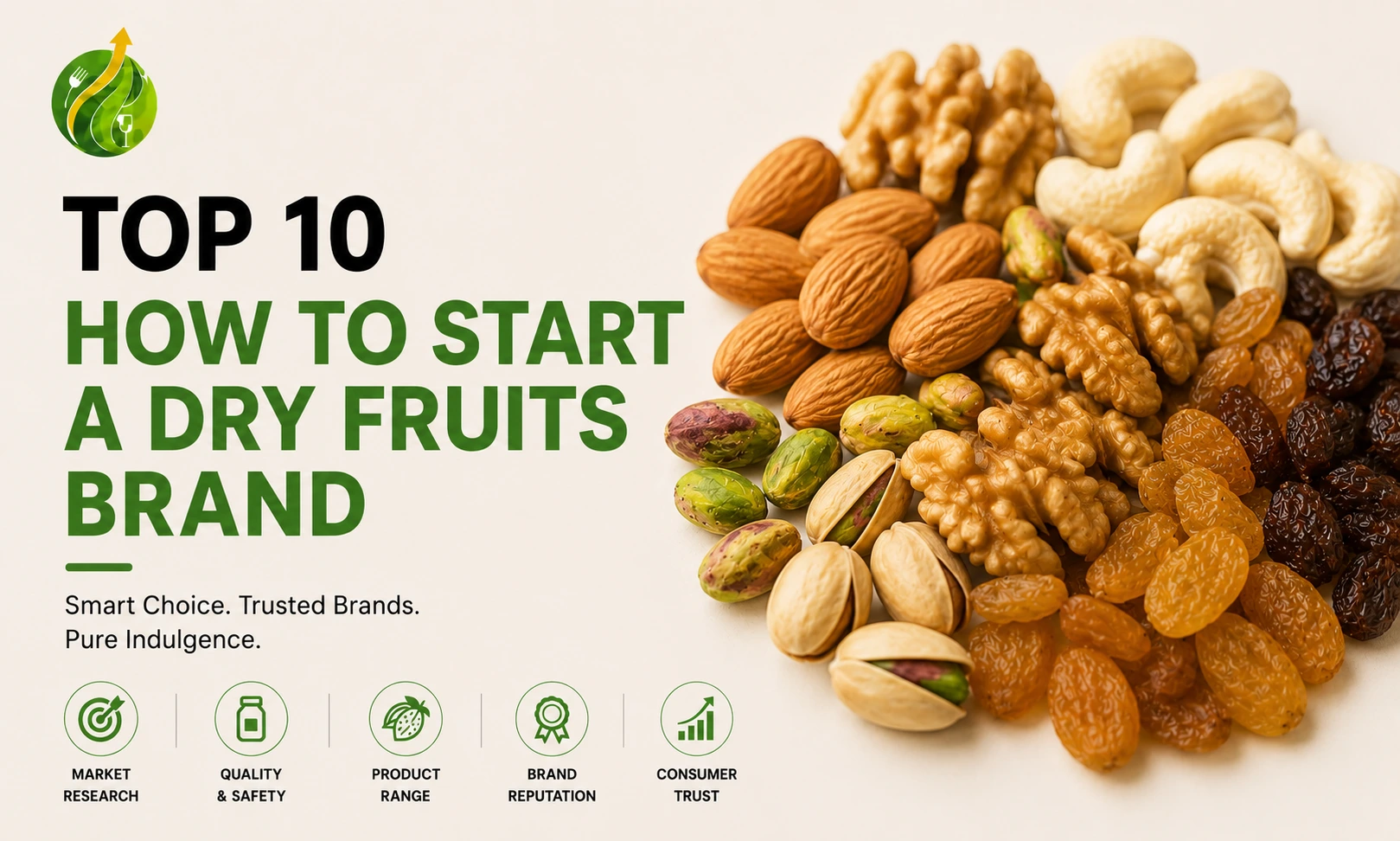
Dry fruits have always been part of Indian food culture. They are eaten as a daily health snack, used in cooking and baking, given as gifts during festivals and weddings, and considered a symbol of health and prosperity. What has changed in recent years is the scale and nature of the opportunity.
Where dry fruits were once sold loose by weight in traditional stores, the market has shifted toward branded, packaged products. Consumers want to know what they are buying, where it came from, and that it is fresh and properly stored. A dry fruits brand that solves the quality and packaging problem that plagues the unorganized market has a real business to build.
India is the world’s third-largest producer of dry fruits, and the domestic market is growing fast. The dry fruits market in India is projected to reach Rs. 1,011 billion by 2029. This guide walks you through every step of starting a dry fruits brand in 2026 from sourcing and food product development to FSSAI compliance, packaging, and marketing.
Why Start a Dry Fruits Brand in India Right Now
The timing is genuinely good for new entrants in the dry fruits category for several reasons.
Health Awareness Is at an All-Time High
Almonds, walnuts, cashews, pistachios, and dates are firmly established in the Indian consumer’s understanding of healthy food. Fitness influencers, nutritionists, and lifestyle content consistently recommends dry fruits. This consumer education has already been done — you do not need to convince people that dry fruits are good for them.
The Unorganized Market Leaves Room for Brands
A significant portion of dry fruits in India is still sold loose, by weight, in small shops and mandis. This unorganized market is large, but it has problems — inconsistent quality, poor storage, no clear sourcing information, and no brand accountability. A branded, well-packaged product that solves these problems can command a 30 to 50 percent premium over loose dry fruits in the same locality.
Festival and Gifting Demand Is Consistent
Dry fruit gifting during Diwali, Eid, Navratri, and weddings is a deeply ingrained cultural practice. Premium dry fruit gift boxes are a standard corporate gifting item. This seasonal demand creates high-value revenue spikes that a well-prepared brand can plan for and capitalize on.
E-Commerce Has Opened National Distribution
Amazon, Flipkart, and quick commerce platforms have made it possible for a small dry fruits brand to sell to customers across India from day one. You do not need a national distribution network or an offline retail presence to build a national brand. This dramatically lowers the capital barrier to entry.
| Opportunity Factor | Why It Matters |
| Large unorganized market | Branding and quality create genuine differentiation |
| Rising health awareness | Consumer education is already done by media and influencers |
| Festival gifting culture | Predictable seasonal revenue spikes |
| E-commerce access | National reach without offline distribution network |
| Long shelf life | Low wastage risk compared to other food categories |
| India is top 3 producer | Domestic sourcing keeps raw material costs manageable |
Business Models for a Dry Fruits Brand
Before you start, decide which business model fits your resources, location, and goals. Each model has different capital requirements, margins, and growth trajectories.
Model 1: Retail Dry Fruits Brand (Online First)
You source dry fruits in bulk from reliable wholesalers or directly from farms, repack them into your branded packaging in food-safe pouches or boxes, and sell through Amazon, Flipkart, your own website, or quick commerce platforms. This is the most common starting model for new entrepreneurs and can be started with Rs. 3 lakh to Rs. 10 lakh.
Model 2: Premium Gifting Brand
Focus on curated gift hampers and premium packaging for the gifting segment festivals, corporate gifts, and weddings. Margins are significantly higher in this segment because customers pay for presentation and curation, not just the dry fruits themselves. A well-designed Diwali hamper priced at Rs. 1,000 might have a production cost of Rs. 400 to Rs. 500, giving a 50 to 60 percent gross margin.
Model 3: Wholesale or B2B Supply
Supply dry fruits in bulk to sweet shops, bakeries, restaurants, hotels, and food processing companies. Margins are lower per kilogram than retail, but volumes are significantly higher and you spend less on packaging and marketing. This model requires established supplier relationships and working capital for inventory.
Model 4: Specialty or Organic Dry Fruits
Focus on a differentiated niche — organic certified dry fruits, exotic varieties not commonly available in India (goji berries, hazelnuts, pecans), or regionally sourced products (Kashmir walnuts, Nashik raisins, Kutch dates). This model commands premium pricing and attracts health-conscious urban consumers willing to pay more for provenance and certification.
| Business Model | Starting Capital | Profit Margin | Best Suited For |
| Online retail brand | Rs. 3–10 lakh | 20–35% | New entrepreneurs, home-based start |
| Premium gifting brand | Rs. 5–15 lakh | 40–60% on hampers | Design-minded founders, festive focus |
| B2B wholesale | Rs. 10–25 lakh | 8–18% per kg | People with hospitality or food industry connections |
| Specialty or organic | Rs. 5–20 lakh | 35–55% | Founders with organic farming or sourcing background |
Where to Source Dry Fruits in India
Sourcing is the foundation of a dry fruits business. The quality of what you source determines your product quality, and the reliability of your supplier determines whether you can meet orders consistently.
Wholesale Markets
The largest dry fruits wholesale markets in India are in Delhi (Khari Baoli in Chandni Chowk), Mumbai, and Ahmedabad. These markets have established suppliers with a wide variety of dry fruits at competitive prices. For a new brand, visiting these markets, meeting suppliers face-to-face, sampling products, and building a relationship with two or three reliable vendors is the recommended approach.
Direct Farm Sourcing
For brands positioning on provenance and freshness, direct farm sourcing is the premium option. Kashmir is known for walnuts and saffron almonds. Nashik (Maharashtra) produces high-quality raisins. Rajasthan is a source of dried dates and figs. Kutch in Gujarat is known for premium dry dates (Kharek). Sourcing directly from farmers or from farmer-producer organizations (FPOs) eliminates middlemen and gives you better cost control and sourcing story.
Import Sourcing
California almonds, Iranian pistachios, Chilean walnuts, and Turkish apricots are popular imported varieties in the premium segment. Importers in Mumbai and Delhi can supply these. Import-sourced dry fruits command a higher price from consumers and also involve higher procurement costs, customs duties, and longer lead times. For a starting brand, a mix of domestic and select imported varieties is the most practical approach.
| Dry Fruit | Key Production Region in India | Common Import Origin |
| Almonds | Kashmir, Himachal Pradesh | USA (California) |
| Cashews | Goa, Kerala, Maharashtra | Vietnam, East Africa |
| Walnuts | Kashmir, Uttarakhand | Chile, USA |
| Raisins | Nashik (Maharashtra) | Afghanistan, Iran |
| Pistachios | Limited domestic production | Iran, USA |
| Dates | Kutch, Gujarat; Rajasthan | Saudi Arabia, UAE |
| Dried figs | Maharashtra | Turkey |
Packaging for a Dry Fruits Brand
In the dry fruits business, packaging is not just functional — it is a major driver of perceived quality and brand positioning. Consumers consistently associate better-packaged dry fruits with higher quality, even when the product inside is similar.
Resealable Zipper Pouches
The most practical packaging for retail dry fruits. Zipper pouches are lightweight, cost-effective, moisture-resistant, and allow consumers to reseal after opening — which extends freshness. Food-grade matte or kraft zipper pouches with a transparent window (so consumers can see the product) communicate quality and cleanliness. Available from flexible packaging suppliers in Gujarat, Delhi, and Maharashtra.
Vacuum-Sealed Pouches
Vacuum sealing removes air from the pouch before sealing, significantly extending shelf life and maintaining freshness. Premium dry fruit brands use vacuum-sealed packaging to differentiate on quality. The vacuum packaging equipment costs Rs. 15,000 to Rs. 50,000 for small-scale operations.
Premium Gift Boxes
Rigid cardboard boxes with dividers, wooden crates with individual compartments, and premium tin boxes are used for the gifting segment. These are significantly more expensive per unit than pouches but the retail price premium more than compensates. A Rs. 150 packaging cost on a Rs. 800 to Rs. 1,200 gift box is entirely justified by the margin.
What to Print on Your Labels
FSSAI regulations require: brand name, product name, ingredient list, nutritional information per 100g and per serving, FSSAI license number, net weight, batch number, manufacturing and best-before dates, and allergen declarations. For nuts, the allergen declaration (Contains: Tree Nuts or Contains: Cashews) is mandatory. Storage instructions (store in a cool, dry place, away from direct sunlight) should also appear.
FSSAI Compliance for a Dry Fruits Business
FSSAI compliance is non-negotiable for any food business in India, including dry fruits.
- FSSAI Basic Registration: Required for businesses with annual turnover below Rs. 12 lakh. Apply online at the FSSAI portal.
- FSSAI State License: Required for medium-scale businesses with turnover between Rs. 12 lakh and Rs. 20 crore.
- FSSAI Central License: Required for large manufacturers or businesses involved in import or export.
- GST Registration: Mandatory once your business crosses the applicable turnover threshold (Rs. 20–40 lakh depending on state and business type). Required immediately if you sell on online marketplaces.
- Trade License: Issued by the local municipal corporation for operating a commercial business from a physical premises.
- Trademark Registration: Not mandatory but strongly recommended. Registering your brand name and logo prevents others from copying your identity.
- Import Export Code (IEC): Required if you plan to import dry fruits from overseas or export them. Apply through the Directorate General of Foreign Trade (DGFT).
Pricing Your Dry Fruits Products
Setting the right price involves balancing profitability with market competitiveness. Dry fruit prices fluctuate based on seasonal availability, global supply, import duties, and currency exchange rates — so your pricing strategy needs to account for these variables.
Cost-Plus Pricing
Calculate your total cost per unit including raw material, packaging, labor, logistics, FSSAI compliance, and marketing. Add your desired margin on top. For a retail brand selling online, a margin of 15 to 30 percent above total cost is typical before platform fees and discounts.
Competitive Pricing
Check prices on Amazon and Flipkart for comparable products by established brands. New brands typically need to price at or slightly below established brands to drive trial. Once you have accumulated reviews and repeat buyers, you can gradually move toward a premium price.
| Dry Fruit | Wholesale Price Range (per kg) | Branded Retail Price Range (per kg) |
| Almonds (domestic) | Rs. 700–900 | Rs. 1,200–1,600 |
| Cashews (W320 grade) | Rs. 650–850 | Rs. 1,000–1,400 |
| Walnuts (Kashmiri) | Rs. 900–1,200 | Rs. 1,400–2,000 |
| Pistachios (Iranian) | Rs. 1,000–1,400 | Rs. 1,600–2,400 |
| Raisins (Nashik) | Rs. 150–250 | Rs. 350–600 |
| Dates (Kutch) | Rs. 200–400 | Rs. 500–900 |
Marketing a Dry Fruits Brand in India
Online Marketplace Listings
Amazon and Flipkart are your most important channels to start. Invest in good product photography (close-up shots showing texture and quality), write detailed product descriptions that include sourcing origin, freshness, and nutritional information, and actively gather customer reviews. The first 50 reviews on Amazon are critical for organic ranking.
Festival Season Planning
Plan your inventory and marketing well in advance for Diwali, Eid, and Christmas. Stock up on gift box packaging in September for Diwali. Offer limited-edition festive hampers with custom messaging and premium presentation. Festival season can account for 30 to 40 percent of annual revenue for a dry fruits brand.
Social Media and Health Content
Instagram and YouTube are the most effective platforms for dry fruits brands. Create content around health benefits of specific nuts, recipe ideas using dry fruits, sourcing stories, and behind-the-scenes of your operations. Collaborating with nutritionists, fitness influencers, and food bloggers gives you credible third-party endorsements.
Corporate and Institutional Gifting
Register your brand with corporate gifting platforms and reach out directly to HR teams at companies for Diwali gifting. Corporate gifting orders are typically large (100 to 5,000 boxes at a time) and provide excellent cashflow. Premium packaging and custom corporate branding options make this channel especially attractive.
| Channel | Investment Level | Best Season | Key Action |
| Amazon / Flipkart | Medium (listing + ads) | Year-round | Good photography, early review building |
| Festival gifting | Medium (inventory + packaging) | Oct–Nov (Diwali) | Custom hampers, early outreach |
| Corporate gifting | Low (outreach effort) | Sep–Nov | Register on gifting platforms |
| D2C website | Medium (website + ads) | Year-round | Subscription options, bundle pricing |
| Quick commerce | Low (listing) | Year-round | Small pack sizes for trial |
Common Challenges and How to Handle Them
Quality Consistency From Suppliers
Dry fruit quality varies by season, batch, and storage conditions. Always request a sample before placing a large order with a new supplier. Test for freshness (smell, texture, no rancidity), check for uniformity of size and color, and ask about storage conditions. Building relationships with two or three reliable suppliers reduces dependency risk.
Moisture and Storage Management
Dry fruits are extremely sensitive to moisture. Improper storage causes them to go soft, develop mold, or become rancid far before the expiry date. Your storage facility must be cool, dry, well-ventilated, and free from moisture. Use food-grade storage containers and moisture absorbers in packaging where necessary.
Seasonal Price Fluctuations
Cashew prices, almond prices, and pistachio prices are all subject to significant seasonal and global market fluctuations. If you buy large quantities at high prices and the market softens, your margins compress. Buying in smaller, more frequent batches reduces this risk for a starting brand, even though per-unit costs are slightly higher.
Competition From Established Brands
Brands like Nutraj, Tata Sampann, Vedaka (Amazon), and established D2C players have strong online presence. Competing purely on price against these brands is difficult. Differentiate on a specific quality story (direct farm sourcing, organic certification, unique varieties), better packaging, or a specific customer segment (corporate gifting, health enthusiasts, children).
Frequently Asked Questions
What dry fruits sell the most in India?
Almonds, cashews, and raisins are the highest-volume dry fruits in India. Walnuts and pistachios are popular in premium and gifting segments. For a new brand, starting with these five core SKUs gives you broad coverage of what most consumers actually want to buy.
Can I start a dry fruits business from home?
Yes, you can start small from home with basic packaging equipment, but you will need an FSSAI license even for home-based food businesses. You will also need a clean, dry, pest-free storage area. Many successful dry fruits brands started from home and scaled to warehouses as the business grew.
How do I package dry fruits to keep them fresh?
Use food-grade, airtight, moisture-resistant packaging — resealable zipper pouches or vacuum-sealed bags are the most common options. Store packaged products in a cool, dry place away from direct sunlight. For premium products, vacuum sealing significantly extends shelf life by removing oxygen that causes oxidation and rancidity.
What is the shelf life of packaged dry fruits?
Properly packaged dry fruits have a shelf life of 6 to 24 months depending on the variety and packaging method. Cashews and walnuts have higher fat content and shorter shelf life (6 to 12 months). Raisins and dates can last 18 to 24 months in good packaging. Always print the manufacturing date and best-before date clearly on the label.