Jul 2026 · 9 min read
A new consumer has quietly entered the beverage market — and most Indian brands have not yet noticed.
GLP-1 receptor agonist medications — semaglutide (Ozempic, Wegovy), tirzepatide (Mounjaro) — are now being prescribed to millions of people globally for weight management and type 2 diabetes. In India, these medications are available and their use is growing, particularly among urban upper-income consumers managing obesity and metabolic health.
These medications work by mimicking GLP-1 (glucagon-like peptide-1), a gut hormone that suppresses appetite, slows gastric emptying, and reduces food intake. They are highly effective — but they come with a specific nutritional challenge: users eat dramatically less food, which means they must be very intentional about the nutritional quality of what they do consume.
The GLP-1 user is a consumer who:
- Has dramatically reduced appetite and eats 30–50% less than before
- Needs high protein, high micronutrient density from small volumes
- Is nauseous with heavy, fatty, or very sweet foods
- Needs easy-to-consume, gentle beverages that do not exacerbate nausea
- Is motivated, health-literate, and willing to pay for products that support their health journey
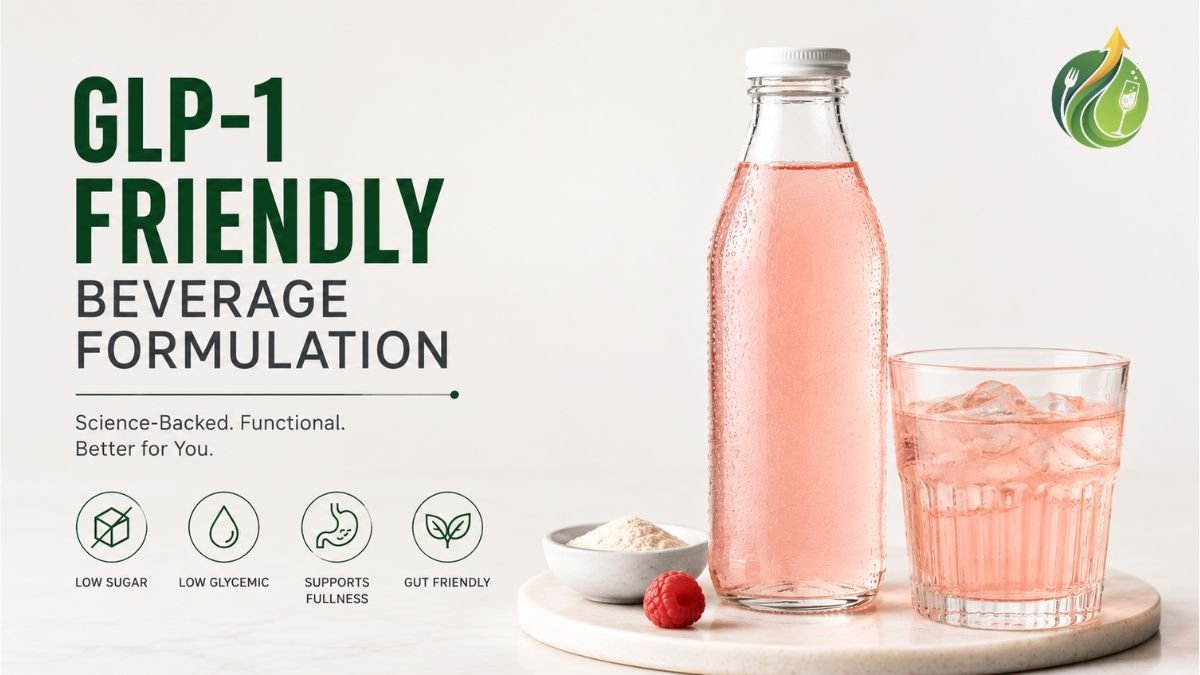
This consumer is creating a new functional beverage category — “GLP-1 friendly” or “appetite-conscious” drinks — and the Indian market is at the beginning of this trend.
Building a High-Protein or GLP-1 Friendly Beverage?
Creating a beverage for today’s appetite-conscious consumer requires much more than adding protein. From ingredient selection and flavour optimisation to micronutrient fortification, shelf-life validation, and FSSAI-compliant positioning, every formulation decision impacts commercial success. Work with Flavor Catalystz to develop a product that’s science-backed, consumer-ready, and built for scale.
Understanding the GLP-1 Consumer’s Nutritional Needs
Before formulating for this consumer, understand what their medical and nutritional reality looks like:
Dramatically reduced food intake: GLP-1 medication users typically reduce their caloric intake by 30–50%. This means the nutrients they do consume must be highly concentrated and high quality.
Protein priority is critical. When eating significantly less, muscle mass preservation requires adequate protein intake. Most GLP-1 users are advised to consume 60–100g protein daily — which is challenging when eating 30–50% less food. High-protein beverages that are easy to drink are enormously valuable for this consumer.
Nausea sensitivity. GLP-1 medications cause nausea as a common side effect, particularly during dose escalation. Heavy, fatty, overly sweet, or very fibrous beverages can exacerbate nausea. Light, gentle, easily digestible beverages are preferred.
Micronutrient gaps. Eating less means consuming fewer vitamins and minerals. B12, iron, calcium, zinc, and folate deficiencies are common in GLP-1 users over time. A beverage that provides meaningful micronutrient contribution per small serving addresses this gap.
Hydration need. Reduced appetite can also mean reduced thirst awareness. GLP-1 users can become dehydrated without realising it — hydration beverages that are gentle and palatable are particularly useful.
Blood sugar management. GLP-1 medications are often prescribed for type 2 diabetes alongside weight management. Low glycaemic index, low sugar beverages are strongly preferred.
What Makes a Beverage “GLP-1 Friendly”?
The term “GLP-1 friendly” is not a regulatory category — it is a consumer marketing framework. A GLP-1 friendly beverage typically has:
- High protein per serving: 15–25g protein in a small, easy-to-drink format
- Low calorie: 70–120 kcal maximum — the consumer’s total daily caloric intake is reduced, so calories per beverage must be efficient
- Zero or minimal sugar: GLP-1 users are often diabetic or managing insulin resistance — sugar is a concern
- Gentle on digestion: Low fat, low fibre in individual serving, easily absorbed
- Fortified with micronutrients: B12, iron, zinc, calcium, Vitamin D — addressing the gap from reduced food intake
- Small, convenient format: A user who can barely eat 800 kcal/day will not consume a 500ml beverage if it feels overwhelming. 200–300ml formats are preferred
GLP-1 Friendly Beverage Formulation: Practical Templates
Template 1: High-Protein Hydration Drink (Primary Format)
This is the most commercially direct GLP-1 friendly beverage — a clear, lightly flavoured, high-protein drink that provides 20g protein in 300ml without heaviness.
Formulation (per 300ml):
- Whey protein isolate (WPI 90%+): 22g (provides ~20g protein)
- Vitamin B12: 2.5mcg
- Zinc: 8mg
- Iron (ferrous bisglycinate): 7mg
- Vitamin D3: 400 IU
- Citric acid: to pH 3.4–3.6 (essential for WPI clarity)
- Natural lemon-lime flavour
- Stevia/erythritol blend (zero sugar)
- Water to volume, HPP processed
Why this works for GLP-1 users: 20g protein in a small, clear, refreshing format. No heaviness. Zero sugar. Micronutrient contribution. Gentle, easy to drink even with nausea. See our protein water formulation guide for the complete technical approach to clear protein beverages.
Template 2: Nausea-Gentle Electrolyte and B-Vitamin Drink
For days when nausea is high — a light electrolyte drink with B vitamins and gentle flavour. No protein that might sit heavy. No strong flavours that could trigger nausea.
Formulation (per 250ml):
- Sodium (as sodium citrate): 400mg
- Potassium (as potassium citrate): 200mg
- Magnesium (as magnesium citrate): 50mg
- B vitamins (B1, B6, B12): at RDA levels
- Vitamin C: 60mg
- Natural ginger extract: 100mg (ginger has anti-nausea properties — particularly relevant)
- Natural mild lemon flavour
- Very light stevia sweetening (barely sweet)
- Still water to volume
Why this works: Gentle hydration and electrolyte replenishment for nausea days. Ginger extract directly addresses nausea. B vitamins support energy metabolism when eating little. See our electrolyte powder sachet brand guide for electrolyte formulation parameters.
Template 3: Meal Replacement Sip (High Density, Small Volume)
A nutritionally dense, small-format (150–200ml) beverage designed to deliver meaningful nutrition in a volume a GLP-1 user can comfortably consume.
Formulation target (per 150ml):
- Protein: 15g (from WPI or micellar casein)
- Calories: 100–120 kcal
- Sugar: < 2g
- Calcium: 300mg
- Vitamin D: 400 IU
- B12, iron, zinc at meaningful RDA percentages
- Fibre: minimal (< 1g — keep it gentle for digestion)
- Flavour: vanilla or mild chocolate — familiar, comforting, non-nauseating
Natural GLP-1 Support Ingredients: An Emerging Angle
Beyond formulating for GLP-1 medication users, there is a second approach: formulating beverages that support the body’s natural GLP-1 response — potentially useful for weight-conscious consumers who are not on medication.
Ingredients that stimulate natural GLP-1 secretion:
Berberine: Plant alkaloid that activates GLP-1 secretion through gut L-cell stimulation. Sometimes called “nature’s Ozempic” in popular media (an oversimplification but directionally accurate). FSSAI status requires verification.
Psyllium husk (Isabgol): Soluble fibre that slows gastric emptying and stimulates GLP-1 release. Already familiar to Indian consumers as a digestive supplement. At 2–5g per serving in a beverage, provides meaningful GLP-1 support.
Inulin and FOS: Prebiotic fibres that feed GLP-1-producing L-cells in the gut, potentially enhancing the gut’s natural GLP-1 production over time.
Protein itself: High-protein beverages stimulate GLP-1 secretion post-consumption — which increases satiety. This is a genuine mechanism, not marketing language.
A “satiety drink” positioning — beverages that support natural appetite regulation through GLP-1-stimulating ingredients — is a compelling commercial angle that does not require the consumer to be on medication.
FSSAI Compliance: What You Can and Cannot Claim
The primary compliance challenge: “GLP-1 friendly” is not an FSSAI-defined term. It is a consumer-facing marketing description. You cannot make drug-adjacent claims — anything that implies your beverage works like or supports a specific medication is a pharmaceutical claim, not a food claim.
What you CAN say:
- “High protein” (if ≥12g protein per 100 kcal) ✓
- “Sugar-free” (if < 0.5g sugars per 100ml) ✓
- “Contains Vitamin B12, which contributes to normal energy metabolism” ✓
- “Supports healthy weight management as part of a calorie-controlled diet” ✓ (general permitted claim)
- “Contains ginger, traditionally used to support digestive comfort” ✓
- “GLP-1 friendly” as a product name/positioning descriptor (not a claim about the medication) — regulatory grey area, use cautiously
What you CANNOT say:
- “Supports Ozempic/Wegovy/semaglutide users” ✗ (drug reference claim)
- “Boosts GLP-1” ✗ (unsubstantiated physiological claim)
- “Works like GLP-1 medication” ✗ (pharmaceutical claim)
- “For weight loss” ✗ (disease treatment claim)
Frame all communications around the nutritional attributes of the beverage — high protein, micronutrient dense, low calorie, low sugar — which are genuine, substantiated, and FSSAI-compliant.
For complete claims guidance, see our FSSAI health claims beverage guide.
Commercial Positioning and Go-to-Market
Primary positioning: “High protein, low calorie, micronutrient-rich beverage for health-conscious consumers managing their nutrition intentionally.” This positions to GLP-1 users without mentioning medication — and also captures the much larger “macro-tracking,” fitness, and weight-management consumer.
Secondary positioning: “Satiety support drink — formulated with ingredients that support natural appetite regulation.” This is a separate product/positioning for the non-medication consumer who wants weight management support.
Target channels:
- D2C with targeted digital advertising: GLP-1 users are reachable through health and wellness communities, diabetes management forums, bariatric surgery communities, and weight management content on Instagram and YouTube
- Pharmacies and diagnostic chains: Apollo, MedPlus, Thyrocare — where the GLP-1 medication user is already spending
- Bariatric surgery clinics and obesity management clinics: Direct partnership with healthcare providers who are managing GLP-1 patients
- Premium modern trade: Health-conscious consumer in premium supermarkets
Ready to Launch the Next Generation of Functional Nutrition Drinks?
Whether you’re developing a high-protein hydration drink, a satiety-focused beverage, a micronutrient-rich wellness formula, or a premium functional nutrition brand, Flavor Catalystz provides complete beverage development—from formulation and ingredient sourcing to FSSAI compliance, stability testing, packaging, and commercial manufacturing support.
FAQs
What is a GLP-1 friendly beverage?
A beverage formulated to meet the nutritional needs of consumers using GLP-1 receptor agonist medications (semaglutide, tirzepatide) — characterised by high protein, low calorie, low sugar, micronutrient density, and gentle digestibility to accommodate reduced appetite and nausea sensitivity.
Are GLP-1 medications available in India?
Yes — semaglutide (Ozempic) and other GLP-1 receptor agonists are available in India by prescription for type 2 diabetes and weight management. Their use is growing among urban upper-income consumers.
Can I market my beverage as “for GLP-1 users” in India?
This is a regulatory grey area. Referencing specific medications on food product labels is problematic under FSSAI and drug regulations. Position the beverage based on its nutritional attributes — high protein, low calorie, micronutrient-rich — rather than the specific medication.
What is the most important nutritional attribute for a GLP-1 friendly beverage?
High protein. GLP-1 users need 60–100g protein daily but are eating dramatically less food. A beverage providing 20g protein in a small, easy-to-drink, non-nauseating format is the highest-value product for this consumer.
Is there a consumer market for GLP-1 beverages in India?
Growing rapidly. GLP-1 medication use in India is increasing among upper-income urban consumers. The broader “appetite-conscious” or “satiety drink” market is significantly larger — including macro-trackers, bariatric surgery patients, diabetics, and weight management consumers who do not use medication.