May 2026 · 19 min read
Long before refrigerators, pasteurisation, or food safety regulations — humans were fermenting things. They didn’t have a word for it, and they certainly didn’t have lab equipment. But they figured out, through centuries of trial and accident, that letting certain foods and liquids ‘sit’ under the right conditions made them last longer, taste better, and somehow make you feel good.
That process is fermentation. And the drinks it produces — fermented beverages — are now having one of the most significant commercial moments in food history.
In 2026, fermented drinks are no longer niche health-food store products. Kombucha is in airport lounges. Kefir is in school canteens. Fermented pineapple drink brands are launching on quick commerce. Indian fermented beverages like kanji and fermented rice drinks are being reimagined as premium health products. The category is evolving fast — and the science behind it is genuinely fascinating.
This guide covers everything: what fermented beverages actually are, the complete list of fermented drinks across cultures, their health benefits (with honest caveats), how the fermentation process works, what’s happening in India specifically, and the formulation science that makes a great fermented drink possible at commercial scale.
Developing a Fermented Beverage for the Indian Market?
Fermented drink formulation is one of the most technically demanding areas in beverage development — live cultures, pH management, shelf-life, taste consistency, and FSSAI compliance all have to align. Flavor Catalyst specialises in exactly this.
Talk to a Fermented Beverage Expert
What is a Fermented Beverage?
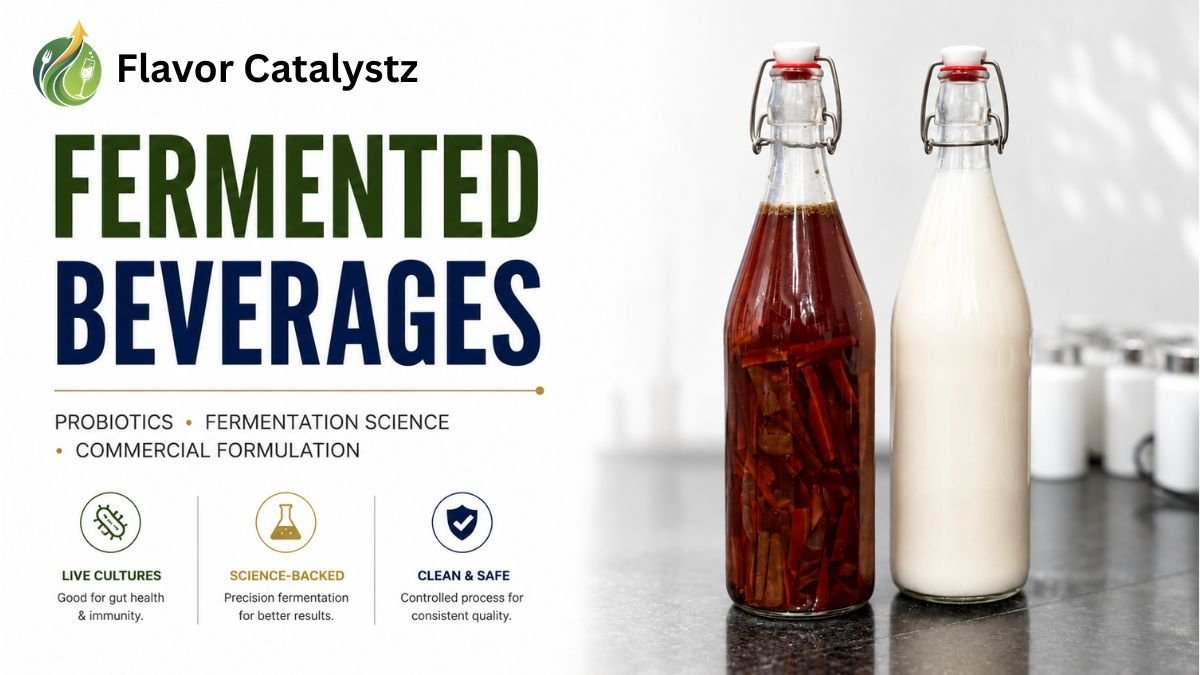
A fermented beverage is any drink produced through the controlled biological process of fermentation — where microorganisms (bacteria, yeast, or moulds) convert sugars and carbohydrates in a liquid into alcohol, carbon dioxide, organic acids, or a combination of these.
The result is a drink that’s chemically and nutritionally different from its starting ingredients — often richer in flavour, more complex in aroma, and in many cases containing live beneficial microorganisms (probiotics) that have meaningful health implications.
Fermented beverages exist on a wide spectrum:
- Non-alcoholic fermented drinks: Kombucha, kefir, kanji, fermented rice water, fermented pineapple drink (tepache), lassi, chaas
- Low-alcohol fermented drinks: Water kefir (0.5–3% ABV), naturally fermented ginger beer, kvass, traditional Indian ferments
- Alcoholic fermented beverages: Beer, wine, sake (Japanese beverage from fermented rice), cider, mead, traditional Indian palm wine (toddy)
Key distinction: Not all fermented drinks are alcoholic, and not all alcoholic drinks are simply fermented (distilled spirits involve an additional process beyond fermentation). This is a common point of confusion we’ll address later.
How Fermentation Works: The Science in Plain Language
Most people have heard of fermentation but couldn’t explain it. Here’s the clearest version:
Fermentation = microorganisms eating sugars + producing useful by-products.
When yeast, bacteria, or mould are introduced to a sugar-containing liquid (tea, fruit juice, milk, grain water, etc.), they begin consuming those sugars as an energy source. Depending on the microorganism involved, the by-products of this consumption include:
| Microorganism | Primary By-Product | What It Creates | Example Drink |
| Saccharomyces yeast | Ethanol + CO₂ | Alcohol + carbonation | Beer, wine, sake |
| Lactobacillus bacteria | Lactic acid | Tangy/sour flavour | Kefir, lassi, kanji |
| SCOBY (yeast + bacteria) | Acetic acid + CO₂ | Fizz + vinegar note | Kombucha |
| Wild yeast (tepache) | CO₂ + ethanol | Light fizz, fruity | Fermented pineapple drink |
| Aspergillus mould + yeast | Enzymes + ethanol | Complex umami + alcohol | Sake, rice wine |
The magic of fermented beverages isn’t just the alcohol or the fizz — it’s the transformation of flavour. A flat, sweet pineapple juice becomes a layered, lightly effervescent, mildly alcoholic tepache. Plain tea becomes the complex, vinegary, slightly sweet kombucha. Milk becomes the creamy, tangy, probiotic-rich kefir. The liquid changes entirely.
Fermentation vs Distillation: What’s the Difference?
This comes up constantly — and the confusion is understandable. Here’s the clear distinction:
- Fermented beverages: The sugars are converted by microorganisms. The drink is consumed as-is after fermentation (and sometimes filtration). Beer, wine, kombucha, kefir are all fermented — not distilled.
- Distilled beverages: The fermented liquid is then heated to separate and concentrate the alcohol. Whisky, vodka, gin, and rum all start as fermented liquids but are then distilled. Distillation is an additional step that removes the probiotic cultures and most of the complex fermentation by-products.
Are all alcoholic drinks fermented? Yes — every alcoholic beverage starts with fermentation. But not all fermented beverages are alcoholic. Kombucha, kefir, and kanji contain little to no alcohol despite being fermented.
Complete List of Fermented Beverages: From Every Corner of the World
Here is the most comprehensive fermented beverages list — organised by category, origin, and what makes each one distinct:
Fermented Non-Alcoholic & Low-Alcohol Drinks
- Kombucha: Fermented sweetened black or green tea. Made using a SCOBY (symbiotic culture of bacteria and yeast). Naturally effervescent, with a vinegary-sweet profile. Contains trace alcohol (0.5–3%). One of the fastest-growing packaged fermented drinks globally.
- Water Kefir: Fermented sugar water using water kefir grains (different from milk kefir grains). Light, fizzy, mildly tangy. Dairy-free. Growing fast as a vegan probiotic alternative.
- Milk Kefir (Fermented Milk Drink): Fermented milk drink made using kefir grains. Creamy, tangy, and rich in probiotic cultures — up to 30+ different bacterial and yeast strains. More probiotic-dense than most yoghurts.
- Probiotic Fermented Milk Drink: Commercial variants like Yakult (Lactobacillus casei Shirota) fall here. Smaller serving size (65–100ml), very high culture count, sweet and smooth. Widely consumed in India.
- Lassi: Indian fermented milk drink made from cultured yoghurt blended with water, salt, or sugar. One of India’s oldest fermented beverages — also one of the most consumed.
- Chaas / Buttermilk: Thin, spiced fermented milk drink — byproduct of butter churning from cultured curd. Contains Lactobacillus cultures. Naturally cooling; traditionally consumed post-meals in Indian households.
- Kanji: Traditional North Indian fermented drink made from black carrots (and sometimes mustard seeds) fermented in water. Dark purple, sour, slightly effervescent. Rich in natural probiotics. Currently experiencing a major revival in urban health circles.
- Fermented Rice Water (Torani / Panta Bhat drink): Cooked rice soaked in water and left to ferment overnight. Consumed widely in Odisha, Assam, and parts of Bengal. Rich in Lactobacillus. Connected to the ‘Japanese beverage from fermented rice’ search intent — sake is the alcoholic version; fermented rice water is the non-alcoholic traditional equivalent.
- Tepache (Fermented Pineapple Drink): Mexican fermented drink made from pineapple peel and core, brown sugar, and spices. Wild yeast from the pineapple skin drives fermentation. Lightly alcoholic (1–3%), very refreshing. Growing as a packaged product in Western markets; emerging in India as a premium artisanal drink.
- Kvass: Eastern European fermented drink made from rye bread. Earthy, mildly sour, very low alcohol. Not widely known in India but relevant in the fermented beverages academic/notes/Class 12 context.
- Ginger Beer (Naturally Fermented): Traditional ginger beer (not the commercial soft drink version) is made using a ‘ginger bug’ — a wild yeast and bacteria starter culture. Spicy, fizzy, slightly alcoholic. Different from commercial ginger ale, which is just a flavoured carbonated drink.
- Jun Tea: Similar to kombucha but made with green tea and honey instead of black tea and sugar. Lighter, more delicate flavour profile. Premium positioning.
Fermented Alcoholic Beverages
- Beer: Grain-based fermented beverage (barley malt, water, hops, yeast). One of the world’s oldest and most consumed fermented drinks. India’s beer market crossed ₹50,000 crore in 2025.
- Wine: Fermented grape juice. Fermented beverages wine category is global — India’s wine market is growing at 15%+ annually, driven by Nashik and Bangalore-region vineyards.
- Sake (Japanese Beverage from Fermented Rice): Sake is Japan’s national drink — a fermented rice beverage using Aspergillus oryzae (koji) mould to break down starches, then yeast for alcoholic fermentation. Often called ‘rice wine’ though it’s technically brewed more like beer. Growing premium import category in India.
- Cider: Fermented apple juice. Naturally gluten-free, lower alcohol than beer. Growing niche category in India.
- Mead: Fermented honey and water. One of the oldest alcoholic beverages in human history. Making a comeback globally as a craft beverage.
- Toddy (Indian Palm Wine): Traditional Indian fermented beverage from palm tree sap. Naturally ferments within hours of collection. Significant cultural importance in Kerala, Tamil Nadu, Goa, and coastal Karnataka.
- Feni: Goan fermented and distilled cashew apple or coconut drink. Starts as a fermented beverage before distillation.
- Handia / Rice Beer: Traditional tribal fermented rice drink from Jharkhand, Odisha, and Chhattisgarh. Made using herbal yeast cakes called ‘ranu’. Low alcohol, nutritionally rich.
For beverage brands: The fermented beverages list shows enormous category diversity — but commercially, the biggest opportunities in India are in the non-alcoholic segment: probiotic drinks, fermented milk drinks, kombucha, and traditional Indian ferments like kanji and fermented rice water. These face lower regulatory barriers than alcoholic fermented beverages.
Fermented Drinks in India: Ancient Tradition Meeting Modern Consumer
India has one of the richest fermented beverage traditions in the world — but most of it has existed at the household or community level, never packaged or commercialised at scale. That is changing rapidly in 2026.
Traditional Indian fermented drinks include:
| Drink | Region | Base Ingredient | Type |
| Kanji | North India | Black carrot + mustard | Probiotic, non-alcoholic |
| Fermented Rice Water (Torani) | Odisha, Bengal, Assam | Rice | Probiotic, very low alcohol |
| Chaas / Buttermilk | Pan-India | Cultured milk | Probiotic, non-alcoholic |
| Lassi | Punjab, North India | Yoghurt | Probiotic, non-alcoholic |
| Handia | Jharkhand, Odisha | Rice | Low-alcohol traditional |
| Toddy | Kerala, Tamil Nadu, Goa | Palm sap | Alcoholic, traditional |
| Kallu | Andhra Pradesh | Palm sap | Mildly alcoholic |
| Jaand | Sikkim, Himachal | Millet/rice | Traditional low-alcohol |
| Apong | Assam (Mising tribe) | Rice | Traditional rice beer |
What’s happening in 2026: Indian fermented beverages are being rediscovered and repositioned. Kanji is being sold in glass bottles at ₹150–200 in urban health stores. Fermented rice water drinks are appearing on wellness platforms. Probiotic lassi and chaas are getting premium makeovers. The category is large, culturally credible, and massively under-served in packaged form.
For brands entering this space, the challenge is primarily a formulation one: how do you package a traditionally fresh, living product with unpredictable fermentation activity — and give it a 3–6 month shelf life without killing the cultures that make it valuable?
Health Benefits of Fermented Beverages: What the Evidence Actually Says
The health benefits of fermented drinks are real — but they’re also frequently overstated in marketing. Here’s an honest breakdown of what’s well-supported, what’s emerging, and what’s hype:
1. Gut Health & Digestive Support (Well-Supported)
Fermented beverages containing live probiotic cultures (Lactobacillus, Bifidobacterium) have substantial evidence behind their ability to support digestive health. Regular consumption is associated with reduced bloating, improved transit time, and better management of IBS symptoms. The key is the live culture count — commercial fermented drinks that are pasteurised post-fermentation lose most of this benefit.
2. Immune Function (Good Evidence)
The gut houses approximately 70% of the body’s immune system. By supporting a healthy gut microbiome, consistent consumption of probiotic fermented beverages has been associated with improved immune response — particularly against respiratory infections. Vitamin K2 and B vitamins produced during fermentation add to this effect.
3. Can Fermented Foods Lower Cholesterol? (Emerging Evidence)
This is a genuine PAA question (‘Can fermented foods lower cholesterol?’) — and the answer is: yes, with nuance. Studies on fermented milk drinks (kefir, yoghurt) show meaningful LDL reduction with consistent long-term consumption. The proposed mechanism is bacterial bile salt hydrolase activity — fermentation bacteria help break down bile acids, which lowers cholesterol reabsorption. This is promising but not yet a clinically established ‘treatment.’
4. Mental Health (New Research, Very Interesting)
The gut-brain axis is one of the most active research frontiers in nutrition science. Fermented foods rich in GABA, serotonin precursors, and psychobiotic bacteria strains are being studied for anxiety and depression benefits. Too early to make definitive claims — but the direction of research is compelling.
5. Bioavailability of Nutrients (Often Overlooked)
Fermentation increases the bioavailability of many nutrients. Phytic acid (which blocks mineral absorption in grains and legumes) is reduced during fermentation. B12, folate, and certain minerals become more absorbable. This is why traditionally fermented rice drinks (like kanji or fermented rice water) are more nutritious than plain cooked rice water.
What’s the Healthiest Fermented Drink?
There’s no single answer — it depends on what health benefit you’re targeting:
- Best for gut health / probiotics: Milk kefir > water kefir > unpasteurised kombucha > lassi
- Best for cholesterol: Fermented milk drinks (kefir, cultured buttermilk) with consistent consumption
- Best hydration + electrolytes: Fermented coconut water, kanji, chaas
- Best for general wellness (low sugar): Plain water kefir, homemade kombucha, kanji
- Best all-round for Indian consumers: Kanji (traditional, high probiotic, anti-inflammatory) and chaas (cooling, digestive, widely available)
Important caveat: Most commercial ‘fermented’ drinks that are heat-treated or pasteurised after production do NOT contain live cultures. Check for ‘contains live cultures’ or ‘raw / unpasteurised’ on the label if probiotic benefit is the goal.
Creating a Probiotic or Fermented Drink Product?
Getting the live culture count, shelf-life, taste profile, and FSSAI claim compliance right on a fermented beverage requires serious formulation expertise. That’s what Flavor Catalyst is built for.
Explore Beverage Formulation Services
The Science of Fermented Drink Formulation: What Makes It Hard
Making a fermented drink at home is relatively forgiving. Making one at commercial scale — with consistent taste, safe microbiology, appropriate probiotic claims, and a shelf life that survives Indian distribution — is genuinely complex.
Here are the core formulation challenges in fermented beverage development:
1. Culture Selection & Stability
The specific strains of bacteria and/or yeast used define everything: flavour profile, fermentation speed, alcohol content, probiotic count, and health benefit. Not all Lactobacillus strains are equal. A strain that thrives in a lab ferment may lose viability rapidly in a Tetra Pak under ambient temperature over 90 days. Culture selection requires both efficacy research and real-world stability testing.
2. pH Management
Fermented drinks are inherently acidic — kombucha typically reaches pH 2.5–3.5; kefir around 4.0–4.5. This acidity is part of what makes them shelf-stable (most pathogens can’t survive below pH 4.6). But it also affects: flavour perception, packaging compatibility, regulatory labeling requirements, and interaction with any additional ingredients (functional actives, fruit juices, sweeteners).
3. Carbonation Control
Many fermented drinks are naturally carbonated through ongoing CO₂ production by yeast. Controlling this carbonation in a sealed package — especially at scale — requires precise management of residual sugars, active yeast counts, and temperature during packaging. Get it wrong and you have flat drinks or, worse, exploding bottles.
4. Shelf Life & Live Culture Retention
This is the central tension in fermented beverage formulation: you want the cultures alive (for probiotic benefit and taste), but live cultures continue fermenting (which changes taste and produces gas over time). Solutions include:
- HPP (High Pressure Processing): Kills pathogens without heat — preserves cultures better than pasteurisation
- Refrigerated chain: Most reliable but expensive and limits distribution in India
- Specific strain selection: Choosing strains with known heat tolerance and slower fermentation rates
- Controlled terminal fermentation: Stopping fermentation at a precise point before packaging
5. FSSAI Compliance & Health Claims
In India, making probiotic claims on fermented beverages requires meeting FSSAI standards under the FSS (Health Supplements, Nutraceuticals, Food for Special Dietary Use, etc.) Regulations 2022. Specific minimum live culture counts must be met and maintained throughout shelf life to support a probiotic claim. Health claims must be substantiated — you cannot simply write ‘boosts immunity’ without a regulatory basis. Working with an expert beverage consultant familiar with FSSAI’s evolving functional food framework is essential for any brand making health-positioned fermented drinks.
The Fermented Beverage Market Opportunity in India 2026
Despite India’s deep fermentation heritage, the packaged fermented beverage market is still in early stages — which is exactly what makes it interesting for new brands.
| Segment | Current Status | Opportunity Level |
| Probiotic dairy drinks (lassi, chaas) | Mainstream, moderate growth | Medium — needs differentiation |
| Kombucha | Niche, premium, urban only | High — huge untapped Tier 2 potential |
| Traditional Indian ferments (kanji) | Artisanal only — almost no packaged presence | Very High — first-mover advantage |
| Fermented rice drinks | Completely unpackaged at scale | Very High — and culturally authentic |
| Fermented pineapple drink (tepache) | Zero packaged presence in India | High — strong flavour, low cost to produce |
| Water kefir | Nascent — 2–3 D2C brands only | Medium-High — growing health awareness |
| Non-alcoholic fermented malt | Very small | High — especially in no-alcohol beer segment |
The key insight: India’s fermented beverage opportunity is not about copying Western kombucha brands. It’s about packaging India’s own fermentation heritage — kanji, rice ferments, traditional chaas blends — with the formulation quality, shelf-life stability, and modern branding that urban (and increasingly Tier 2) consumers will pay a premium for.
Conclusion: Fermented Beverages Are Not a Trend — They’re a Return
Fermented drinks are one of the oldest human technologies. Every culture on Earth developed them independently — because fermentation worked. It preserved food, created nutrition, tasted good, and made people feel well.
What’s happening in 2026 is not a new trend. It’s a return. Consumers who grew up eating processed food are discovering that the older, slower, living foods their grandparents ate were nutritionally superior in specific ways that modern science is now confirming.
For beverage brands, the opportunity in fermented beverages is enormous — particularly in India, where the cultural familiarity already exists and the packaged market is essentially wide open. The challenge is formulation: getting the culture, the taste, the shelf-life, and the regulatory compliance right at commercial scale.
That’s precisely where Flavor Catalyst’s beverage formulation and consulting team works. If you’re building a fermented drink brand — or adding a fermented variant to an existing portfolio — let’s talk about making it viable at scale.
Ready to Build a Fermented Beverage Brand?
From culture selection and pH management to shelf-life stability, FSSAI compliance and scale-up — Flavor Catalyst helps you navigate every stage of fermented drink development. Let’s turn your concept into a product that actually works in the real world.
Start Your Fermented Beverage Project
FAQ: Fermented Beverages & Fermented Drinks
Q1. What is a fermented beverage?
A fermented beverage is any drink produced through fermentation — a biological process where microorganisms (bacteria, yeast, or mould) convert sugars in a liquid into alcohol, carbon dioxide, organic acids, or a combination of these. Examples include kombucha, kefir, beer, wine, sake, lassi, kanji, and fermented pineapple drink (tepache). Fermented beverages can be alcoholic or non-alcoholic.
Q2. What is a fermented drink vs a regular drink?
A regular drink is produced without biological transformation — it’s simply a liquid with flavour, colour, and sweetener added. A fermented drink goes through a biological process that fundamentally changes the chemistry of the liquid — creating new flavours, producing probiotics (in non-alcoholic ferments), and altering nutritional content. Kombucha vs iced tea is a good example: both are tea-based, but kombucha is biologically transformed through fermentation.
Q3. What are 10 examples of fermented beverages?
- Kombucha (fermented tea), 2. Kefir (fermented milk drink), 3. Beer (fermented grain), 4. Wine (fermented grape juice), 5. Sake (Japanese beverage from fermented rice), 6. Lassi (fermented yoghurt drink), 7. Kanji (Indian fermented carrot drink), 8. Tepache (fermented pineapple drink), 9. Water kefir (fermented sugar water), 10. Kvass (fermented bread drink). India also has many traditional fermented drinks including chaas, fermented rice water, toddy, and handia.
Q4. Are all alcoholic drinks fermented?
Yes — all alcoholic beverages begin with fermentation. Yeast converts sugars into ethanol in every alcoholic drink. However, some alcoholic beverages (whisky, vodka, rum, gin) are also distilled after fermentation, which concentrates the alcohol and removes many fermentation by-products. Fermented-only alcoholic drinks (beer, wine, sake) retain more of the fermentation character. Non-alcoholic fermented drinks (kombucha, kefir, kanji) are fermented but produce very little or no alcohol.
Q5. What is the difference between fermented and distilled beverages?
Fermented beverages are produced by microorganisms converting sugars — the resulting drink is consumed as-is after fermentation. Distilled beverages go through an additional step where the fermented liquid is heated and the alcohol vapours are captured and concentrated. Beer and wine are fermented. Whisky and vodka are distilled (starting from a fermented base). Distillation removes probiotic cultures and most complex fermentation flavour compounds.
Q6. Can fermented foods lower cholesterol?
There is emerging scientific evidence suggesting yes. Studies on fermented milk drinks (kefir, cultured buttermilk) show modest but real LDL cholesterol reduction with consistent consumption. The proposed mechanism is bacterial bile salt hydrolase activity — probiotic bacteria in fermented drinks appear to interfere with cholesterol reabsorption in the gut. This is not a clinically established treatment, but the evidence is sufficiently positive that researchers consider it a meaningful benefit of regular fermented food consumption.
Q7. What is the healthiest fermented drink?
There’s no single answer — it depends on the health goal. For gut health and probiotics: milk kefir and unpasteurised kombucha are among the most culture-rich. For hydration with electrolytes: kanji and chaas. For cholesterol support: cultured buttermilk and kefir. For lowest sugar: water kefir and plain kombucha. For Indian consumers seeking a traditional, affordable option: kanji (black carrot fermented drink) and chaas are excellent choices with strong scientific backing and deep cultural familiarity.
Q8. What is fermented milk drink?
A fermented milk drink is any beverage made by fermenting milk using specific bacterial cultures. The most well-known include kefir (made with kefir grains, containing 30+ bacterial and yeast strains), probiotic fermented milk drinks like Yakult (made with Lactobacillus casei Shirota), and traditional Indian versions including lassi (cultured yoghurt blended with water) and chaas (thin spiced buttermilk). Fermented milk drinks are among the most probiotic-rich beverages available.
Q9. What is a probiotic fermented milk drink?
A probiotic fermented milk drink is a fermented milk product that contains a specified minimum count of live beneficial bacterial cultures (typically 10⁶–10⁷ CFU/ml or higher). Yakult is the most widely recognised example globally. In India, brands like Epigamia probiotic drinks, Amul Probiotic lassi, and imported kefir brands fall into this category. For a product to carry a ‘probiotic’ claim under FSSAI regulations, it must meet specific live culture count requirements at the point of consumption.
Q10. What is the Japanese beverage made from fermented rice?
Sake is the most well-known Japanese beverage made from fermented rice. It uses a two-step fermentation process: Aspergillus oryzae (koji) mould first converts rice starches into sugars, then Saccharomyces yeast ferments those sugars into alcohol. The result is a complex, subtly sweet, mildly alcoholic beverage (typically 14–16% ABV). Despite being called ‘rice wine,’ sake is technically brewed more like beer. Traditional non-alcoholic fermented rice water (like India’s torani or panta bhat liquid) is the non-alcoholic equivalent.
Q11. What is a fermented pineapple drink?
Tepache is the most widely known fermented pineapple drink — a traditional Mexican beverage made from the peel and core of pineapple, fermented with wild yeast naturally present on the fruit’s skin, along with brown sugar and spices (cinnamon, cloves). The result is lightly carbonated, mildly alcoholic (1–3% ABV), refreshingly fruity and spiced. It’s made from the parts of the pineapple usually discarded, making it sustainable. Tepache is growing as a packaged artisanal product in Western markets and beginning to appear in Indian premium health beverage spaces.
Q12. What are fermented foods and beverages?
Fermented foods and beverages are any edible products produced through the controlled action of microorganisms (bacteria, yeast, or mould). Fermented foods include yoghurt, cheese, tempeh, miso, idli, dosa batter, kimchi, and pickles. Fermented beverages include kombucha, kefir, beer, wine, sake, lassi, kanji, and tepache. The unifying principle is biological transformation — microorganisms change the original ingredient’s chemistry, creating new flavours, improved nutrition, and in many cases beneficial probiotic cultures.