Jun 2026 · 6 min read
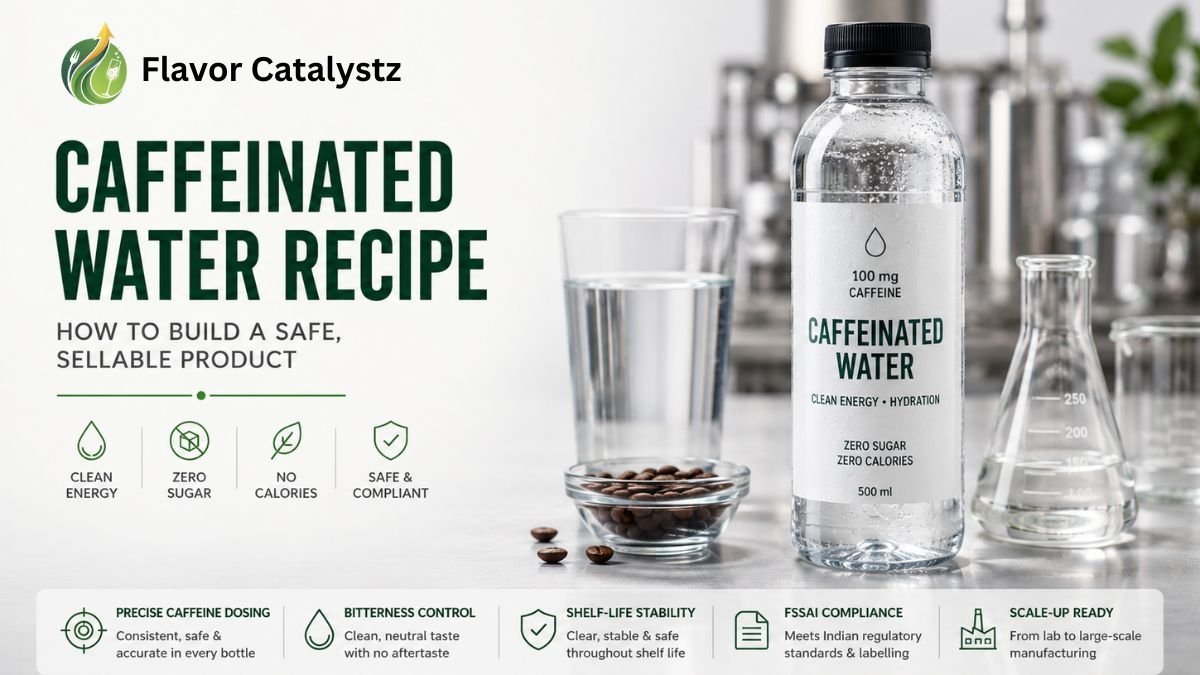
Caffeinated water is one of the quietest success stories in beverages — no sugar, no calories, no taste of an energy drink, just clean water with a coffee-sized hit of caffeine. Brands like Water Joe and Avitae built whole businesses on it. So it’s no surprise people search for how it’s made and how to formulate it. The short version: a typical caffeinated water carries around 100 mg of caffeine per 500 ml serving, and the real challenge of caffeinated water recipe formulation is getting that caffeine to dissolve cleanly and taste neutral — safely, and at scale.
This guide explains what caffeinated water actually is, how it’s made, the safety reality most “DIY recipe” posts ignore, and what proper formulation involves if you want to launch it as a real brand.
Thinking About Launching a Caffeinated Water Brand?
Caffeine dosing, bitterness control, shelf-life stability, and FSSAI compliance are what separate a safe commercial product from a risky DIY recipe. Get expert guidance before you invest in production.
What Is Caffeinated Water?
Caffeinated water is plain or lightly flavoured water with caffeine added to it. Unlike an energy drink, it usually has no sugar, no taurine, and no B-vitamin blend — the whole appeal is a clean, almost invisible energy boost. It comes in still and sparkling versions, and it sits in the “functional water” space alongside things like electrolyte water and sparkling water brands.
The category is popular because it’s simple: hydration plus alertness, without the sugar crash.
How Is Caffeinated Water Made?
At its core, caffeinated water is made by dissolving a measured amount of caffeine into purified water, then balancing taste and (sometimes) carbonation. That sounds easy — and that’s exactly the trap.
Two things make it genuinely hard:
- Caffeine is bitter. Pure caffeine has a sharp, unpleasant bitterness. A good caffeinated water has to mask or balance that so the water still tastes clean and neutral.
- Caffeine doesn’t love cold water. Getting it fully and stably dissolved — without cloudiness, sediment, or it dropping out over time — takes the right process, not just stirring.
This is why the products on shelves taste like nothing and stay clear, while a quick home attempt usually tastes bitter and goes cloudy.
The Safety Problem Nobody Talks About
Here’s the part we won’t gloss over. Most “caffeinated water recipe” posts tell you to dissolve pure caffeine powder (caffeine anhydrous) at home. Please don’t treat that casually. Pure caffeine powder is extremely potent — the difference between a normal dose and a dangerous one is a tiny fraction of a teaspoon, and home scales simply aren’t accurate enough to measure it safely. Caffeine overdose is a real, documented danger.
We’re not going to publish a home dosing protocol, because getting it wrong isn’t a bad-tasting drink — it’s a health risk. And that’s precisely the point: caffeine dosing has to be exact, and exact dosing is what professional formulation exists to guarantee. Every bottle of a commercial caffeinated water delivers the same safe, consistent dose because it was formulated and manufactured under controlled conditions — not measured by hand in a kitchen.
If you’re exploring this because you want to build a product, that’s the right instinct. Let’s talk about how it’s actually done.
What Caffeinated Water Recipe Formulation Involves
Turning the idea into a safe, sellable product means solving five things properly:
- Precise, safe caffeine dosing. We standardise the caffeine content so every unit delivers the same dose, every time — the single most important safety factor in this category.
- Caffeine solubility and clarity. We formulate so the caffeine stays fully dissolved and the water stays crystal clear across its full shelf life, without synthetic crutches where you want a clean label.
- Flavour clarity (or true neutrality). Whether you want a flavourless caffeinated water or a lightly flavoured one, we balance out caffeine’s bitterness so the product tastes the way the category demands.
- FSSAI compliance and labelling. India regulates caffeine in beverages closely — caffeinated beverages are capped within defined limits (generally around 300 mg per litre) and must carry specific caffeine declarations and warning labels. We build the recipe to energy drink / caffeinated beverage FSSAI compliance standards and handle FSSAI functional beverage approval where required. You can confirm the current limits on the official FSSAI website.
- Stability and scale-up. A clear, well-dosed sample in the lab has to behave identically in a production run of tens of thousands of bottles. We hand over a production-ready batch sheet validated for your contract manufacturer or private-label partner.
Caffeinated Water vs Energy Drinks: Don’t Confuse the Two
This trips up a lot of new founders. A caffeinated water is minimalist — water plus caffeine, usually no sugar. An energy drink is a full functional formula with caffeine plus taurine, sugar or sweeteners, B-vitamins, and often a stronger flavour. They look similar on a caffeine label but are completely different products to formulate, position, and price. If your idea is closer to the second, our energy drink formulation guide and functional beverage development pages are the right place to start.
Knowing which one you’re actually building is step one — and it changes everything that follows.
Thinking of Launching a Caffeinated Water Brand?
Functional and caffeinated waters are growing fast in India, and the category is still young enough that there’s real room for a sharp new brand. But it’s also a category where safety and consistency aren’t optional — they’re the whole product. That’s the part you don’t want to get wrong, and it’s exactly where we add value.
We’ve helped founders go from a rough idea to a safe, FSSAI-compliant, shelf-ready caffeinated water — handling dosing, solubility, flavour, compliance, and scale-up from our in-house Noida lab. If you’re starting fresh, read how to start a beverage brand in India, and check our beverage formulation cost guide to plan a budget.
Ready to Build a Safe, FSSAI-Compliant Caffeinated Water Brand?
From precise caffeine dosing and bitterness management to shelf-life validation, manufacturing scale-up, and regulatory compliance, Flavor Catalystz helps founders launch commercial-ready functional water products.
Frequently Asked Questions
How is caffeinated water made?
Commercially, a precisely measured amount of caffeine is dissolved into purified water under controlled conditions, then balanced for taste and clarity. The hard parts are keeping the caffeine dissolved and the water tasting neutral — which is why it’s formulated professionally rather than mixed by hand.
How much caffeine is in caffeinated water?
A typical serving carries around 100 mg of caffeine per 500 ml — similar to a cup of coffee. Commercial products standardise this so every bottle delivers the same dose.
What is the formulation of caffeine in a beverage?
It means setting a safe, exact caffeine level and then solving solubility, bitterness, clarity, stability, and FSSAI compliance around it — so the product is consistent and legal to sell.
Can I make caffeinated water at home?
You can infuse caffeine using strong brewed tea or coffee, but dissolving pure caffeine powder at home is dangerous because accurate dosing is nearly impossible with home equipment. For a sellable product, precise commercial formulation is essential.
Is caffeinated water good for you?
In moderation it can be a low-calorie way to stay hydrated and alert. As with all caffeine, the dose matters — which is the core reason commercial caffeinated water is carefully standardised.