May 2026 · 14 min read
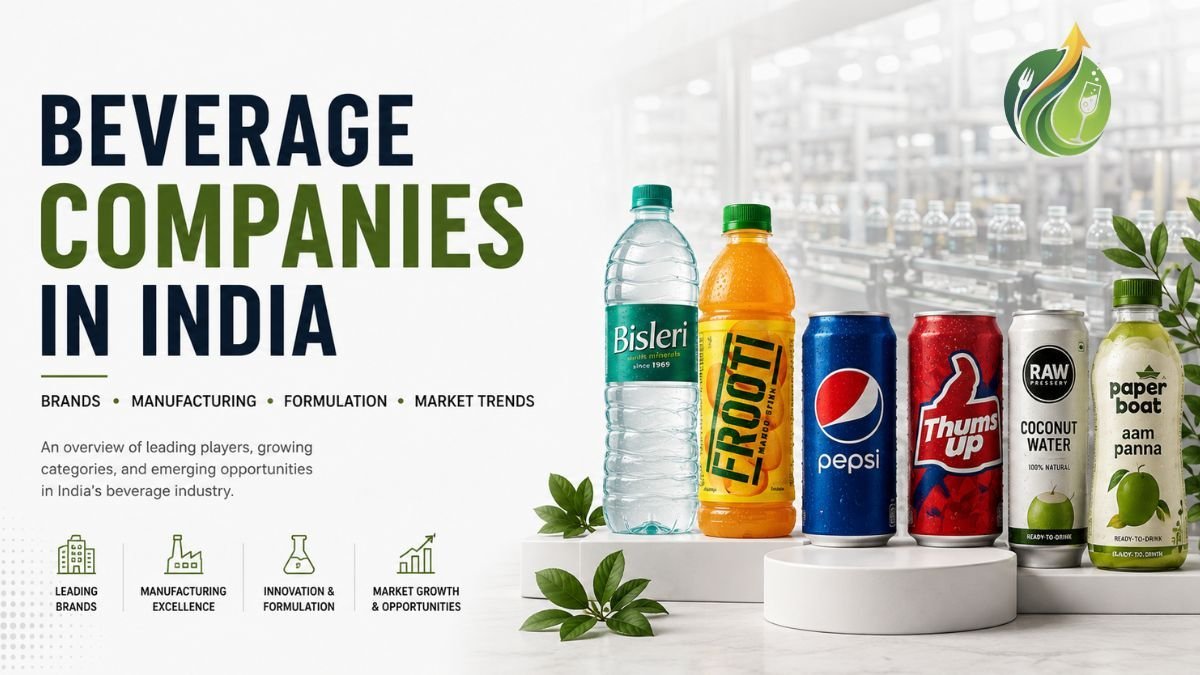
India is the world’s third-largest consumer market for beverages — and one of its fastest-growing. From multinational giants like Coca-Cola and PepsiCo to homegrown champions like Parle Agro, Paper Boat, and Bisleri, beverage companies in India collectively serve over a billion consumers across every price point, occasion, and format imaginable.
But here’s what most industry overviews miss: the most exciting chapter in India’s beverage industry isn’t being written by the top 20 beverage companies. It’s being written by a new generation of founders, regional entrepreneurs, and FMCG brands who are building challenger beverage companies — brands rooted in Indian ingredients, functional health benefits, and authentic cultural identity — and scaling them faster than ever before.
This guide covers both sides of that story: an honest look at the beverage company landscape in India, and a practical roadmap for anyone who wants to build their own beverage brand in 2026.
What Is a Beverage Company? Defining the Business
A beverage company is any business that develops, manufactures, markets, and/or distributes drinks for commercial sale. The term covers an enormous range of business models — from multinational corporations that own dozens of global brands to single-founder D2C startups selling a single SKU on Blinkit.
In India, beverage companies typically operate through one or more of these models:
- Brand Owner + Own Manufacturing: Company owns both the recipe and the production facility (e.g., Bisleri, Parle Agro)
- Brand Owner + Contract Manufacturing: Company owns the brand and formulation; outsources production to co-manufacturers (common for D2C and startup brands)
- Franchise Bottler: Licensed to manufacture and distribute for a parent brand within a territory (e.g., Varun Beverages for PepsiCo)
- Private Label Manufacturer: Manufactures beverages for other brands without a consumer-facing identity
- Beverage Formulation Company: Specializes in R&D and formulation services for other beverage brands (e.g., Flavor Catalyst)
Understanding which model you’re building — or which models you’re competing against — is the first strategic decision for any new beverage company in India.
The Indian Beverage Industry: Market Size and Opportunity
Before we look at specific beverage companies in India, let’s understand the market these companies are competing in:
| Market Metric | Data |
| Indian Beverage Market Size (2025 est.) | ~USD 25–28 Billion (alcoholic + non-alcoholic) |
| Non-Alcoholic Segment Size | ~USD 14–16 Billion |
| Market Growth Rate (CAGR) | 8–12% through 2030 |
| Global Beverage Market Size (2030 projected) | ~USD 2.56 Trillion |
| India’s Share in Asia-Pacific Growth | Top 3 fastest-growing markets |
| Number of FSSAI-Licensed Beverage Manufacturers | 10,000+ across India |
| Fastest-Growing Segment | Functional, Health & Premium Beverages |
| Top Distribution Channels | Modern trade, quick commerce, D2C, HoReCa |
Top Beverage Companies in India: The Major Players
The Indian beverage industry is a mix of multinational giants, large Indian conglomerates, and nimble challenger brands. Here’s a structured look at the biggest beverage companies in India across categories:
Non-Alcoholic Beverage Companies in India
| Company | Key Brands | Market Position |
| Hindustan Coca-Cola Beverages (HCCB) | Thums Up, Limca, Sprite, Maaza, Kinley | Largest non-alcoholic beverage company in India; 37+ products |
| Varun Beverages Ltd (VBL) | Pepsi, Mountain Dew, Mirinda, 7UP, Tropicana, Aquafina | India’s largest PepsiCo bottler; listed on NSE/BSE |
| Parle Agro | Frooti, Appy Fizz, Bailey Water, Hippo | India’s largest Indian-owned NA beverage company |
| Dabur India | Real Juices, Réal Activ, Hajmola | Premium juice + digestive drink leader |
| Hector Beverages (Paper Boat) | Aam Panna, Jaljeera, Thandai, Kokum | Pioneer of premium traditional Indian drink RTDs |
| Bisleri International | Bisleri water, Vedica, Urzza | India’s #1 packaged water brand; 60%+ market share |
| DS Group (Catch) | Catch Soda, Packaged Water, Confectionery beverages | Strong in on-trade / HoReCa segment |
| ITC Limited | B Natural juices, Bingo beverages | FMCG giant expanding into premium beverage space |
Emerging & Challenger Beverage Companies in India (2024–2026)
Beyond the established players, a new wave of challenger beverage companies in India is reshaping the market. These brands are winning on authenticity, health positioning, and digital-first distribution:
- Lahori Zeera: Jeera soda brand from Punjab — one of India’s fastest-growing regional beverage companies; raised significant VC funding
- Noto Ice Cream (& beverages): Premium, clean-label frozen + beverage brand targeting health-conscious urban consumers
- Rage Coffee: Premium RTD coffee and coffee beverage brand — D2C first, now in offline retail
- Nomad Food Project: Artisanal kombucha and fermented beverage brand — premium gut-health positioning
- Raw Pressery: Cold-pressed juice brand — premium, clean-label, acquired by Coca-Cola India
- Coolberg: India’s first craft non-alcoholic beer brand — targeting the sober-curious segment
- Jimmy’s Cocktails: Cocktail mixer brand — non-alcoholic, premium, occasion-based positioning
The pattern is clear: the most successful new beverage companies in India are not trying to out-cola the cola giants. They are finding underserved categories, building on cultural authenticity, and using D2C + quick commerce to reach consumers the legacy players haven’t.
What Do Beverage Companies in India Produce? Category Breakdown
India’s beverage industry spans a wide range of product types. Understanding the category map is essential for anyone planning to launch or invest in a beverage company in India:
| Category | Examples | Key Players |
| Carbonated Soft Drinks (CSD) | Cola, lemon soda, orange soda | Coca-Cola India, Varun Beverages (Pepsi), Parle Agro |
| Packaged Water | Still water, flavored water, sparkling water | Bisleri, Aquafina, Kinley, Himalayan |
| Fruit Juices & Nectars | Mango, mixed fruit, citrus juices | Dabur Real, Tropicana, B Natural, Parle Frooti |
| Traditional Indian Drinks | Aam Panna, Jaljeera, Thandai, Kokum | Paper Boat, regional brands, startup D2C brands |
| Dairy Beverages | Flavored milk, lassi, chaas, thandai | Amul, Mother Dairy, Heritage, regional dairies |
| Energy & Sports Drinks | Energy shots, electrolyte drinks, isotonic | Red Bull, Monster, Sting, Gatorade, Charged |
| Functional & Wellness Drinks | Immunity drinks, probiotic, adaptogen | Emerging D2C brands, Dabur, ITC Health+ |
| Tea & Coffee RTD | Cold brew, iced tea, masala chai RTD | Rage Coffee, Raw Sugar, Wagh Bakri RTD |
| Non-Alcoholic Beer & Spirits | NA beer, NA gin mixer, zero-proof cocktails | Coolberg, Jimmy’s Cocktails, Bira91 NA |
Beverage Formulation Companies in India: The Hidden Engine of the Industry
Behind every successful beverage company is a formulation — and behind many successful formulations is a specialist beverage formulation company. This is one of the most searched but least understood segments in the Indian beverage industry.
Beverage formulation companies in India provide R&D, flavor development, stability testing, ingredient sourcing, and regulatory compliance services to brands that want to launch or improve their beverages without building their own in-house food science team. For a startup or mid-size beverage company, partnering with the right formulation company can cut months off your development timeline and dramatically reduce your risk of product failure.
What to look for in a beverage formulation company:
- FSSAI-compliant formulation expertise across multiple beverage categories
- In-house stability and shelf life testing capability (not just outsourced)
- Deep knowledge of Indian ingredients, traditional drink profiles, and Ayurvedic actives
- Connections to certified contract manufacturers for seamless scale-up
- Regulatory support — not just R&D, but label compliance and product registration
- Track record with both early-stage startups and established FMCG brands
Flavor Catalyst is one of India’s dedicated beverage formulation companies — working across non-alcoholic beverages, traditional Indian drinks, functional beverages, and RTD products. If you’re looking for a formulation partner to develop or refine your beverage, reach out to our team here.
How to Start a Beverage Company in India: The Practical Roadmap
This is the section for founders, entrepreneurs, and brand owners who want to build their own beverage company in India. The good news: the barriers to entry have never been lower — contract manufacturing, D2C platforms, and professional formulation services have democratized beverage entrepreneurship. Here is the roadmap:
Step 1: Define Your Concept and Target Market
Every successful beverage company starts with a clearly defined concept — not just “a healthy drink” but a specific answer to: Who is my consumer? What occasion does my drink own? What is my unfair advantage (recipe, ingredient sourcing, cultural story, distribution)? What shelf or channel am I targeting first? The most common mistake new beverage companies make is starting with a product before defining the positioning. Define the consumer and the occasion first.
Step 2: Develop Your Beverage Formulation
Your beverage formulation is your most important business asset. It determines your taste, your cost structure, your shelf life, and your regulatory position. Work with an experienced beverage formulation consultant or company to develop a formula that is not just delicious at home, but stable at 35°C for 9 months and reproducible in a 10,000-litre batch.
See our complete guide to beverage recipe formulation for a deep dive into what this process involves.
Step 3: Get FSSAI Licensed and Compliance-Ready
No beverage company in India can legally manufacture or sell without FSSAI licensing. Depending on your turnover and distribution footprint, you’ll need a State or Central FSSAI Manufacturing License. Your product formulation, label design, and additive usage must all comply with FSSAI standards before you go to production. This is non-negotiable.
Read our FSSAI beverage compliance guide for a step-by-step breakdown.
Step 4: Choose Your Manufacturing Model
For most new beverage companies in India, contract manufacturing is the right first step. It eliminates the ₹2–10 crore capital requirement for building your own production facility, and lets you focus on brand building while an FSSAI-licensed co-manufacturer handles production. As volume grows, you can evaluate whether to bring manufacturing in-house.
Explore how beverage contract manufacturing works in India.
Step 5: Build Your Brand and Distribution
For a new beverage company in India, a focused launch strategy beats a broad one. Start with one channel — quick commerce (Blinkit, Zepto), a specific retail chain, HoReCa, or direct D2C — and dominate it before expanding. Use digital marketing to build awareness, invest in great packaging (your primary shelf-sales tool), and build repeat purchase before scaling distribution. The beverage companies in India that have scaled fastest in the last five years have all started narrow and then expanded.
How Much Does It Cost to Start a Beverage Company in India?
The investment required to launch a beverage company in India varies significantly based on your manufacturing model, product complexity, and scale ambition. Here is a realistic cost map for a contract-manufacturing-based startup beverage company:
| Investment Area | Cost Range | Notes |
| Beverage Formulation R&D | ₹50,000 – ₹2,00,000 | Per SKU; complex = higher |
| Stability + Lab Testing | ₹20,000 – ₹60,000 | Mandatory before launch |
| FSSAI License + Compliance | ₹10,000 – ₹30,000 | State or Central |
| Packaging Design + Label Print | ₹30,000 – ₹1,50,000 | Initial MOQ |
| Contract Manufacturing (10K units) | ₹1,00,000 – ₹3,00,000 | Depends on format |
| Brand + Marketing (Digital) | ₹50,000 – ₹5,00,000+ | Highly variable |
| Total Pilot Launch Estimate | ₹3,00,000 – ₹12,00,000 | Single SKU, 10K units |
For a full stage-by-stage investment breakdown, read our beverage formulation cost guide India.
Where Flavor Catalyst Fits in India’s Beverage Company Ecosystem
Flavor Catalyst is not a beverage brand — we are the development partner that helps beverage companies in India build better products, faster. We work at the intersection of food science, regulatory knowledge, and commercial reality to help founders and brands turn their beverage concepts into shelf-ready products.
We help beverage companies at every stage:
- Startups with a concept: We develop your formulation from scratch, manage FSSAI compliance, and connect you to co-manufacturers — so you can launch without building an in-house R&D team.
- Growing brands reformulating: We help existing beverage companies in India improve shelf life, reduce cost-of-goods, clean up ingredient labels, or develop new SKUs.
- FMCG companies entering new categories: We provide fast, expert formulation of traditional Indian drinks, functional beverages, or specialist categories outside your current core.
- Regional manufacturers creating own brands: We help contract manufacturers move up the value chain by developing their own branded beverage products.
For reference on global beverage industry data, see the Investopedia guide to the world’s largest beverage companies [nofollow, opens in new tab] and for FSSAI industry context, the Ministry of Food Processing Industries (MoFPI) sector overview
Explore More From Flavor Catalyst
- Beverage Product Development: From Concept to Shelf
- Functional Beverage Development India
- How to Launch a Beverage Brand in India
- Types of Beverages: 20 Popular Drink Categories
- Private Label Beverage Manufacturing India
Conclusion: The Beverage Industry Is Expanding — and There Is Room for You
India’s beverage industry has never been more dynamic. The top beverage companies in India — HCCB, Varun Beverages, Parle Agro — are enormous, but the market is large enough and diverse enough that challenger beverage companies with the right concept, formulation, and execution can carve out significant, profitable positions.
Whether you’re researching the beverage company landscape as an investor, studying it as a student, or planning to build your own — the fundamental truth is the same: great beverage companies start with great products. And great products start with the right formulation partner.
FAQs: Beverage Company & Beverage Companies in India
Q1. What are beverage companies?
Beverage companies are businesses that develop, manufacture, market, and/or distribute drinks for commercial consumption. In India, beverage companies range from multinational giants like Hindustan Coca-Cola Beverages and Varun Beverages (PepsiCo bottler) to homegrown brands like Parle Agro, Dabur Real, and Paper Boat, as well as emerging D2C startups. Beverage companies operate across non-alcoholic categories (juices, sodas, water, functional drinks) and alcoholic categories (beer, spirits, wine).
Q2. Who are the biggest beverage companies in India?
The biggest beverage companies in India by scale include Hindustan Coca-Cola Beverages (HCCB), Varun Beverages Limited (PepsiCo’s largest bottler), Parle Agro (Frooti, Appy Fizz), Dabur India (Real juices), Bisleri International (India’s #1 packaged water brand), and ITC Limited (B Natural). In the alcoholic segment, United Spirits (Diageo India), Radico Khaitan, and United Breweries are dominant. Globally, Coca-Cola, PepsiCo, and Anheuser-Busch InBev are the three largest beverage companies by market capitalization.
Q3. What are the top 5 beverages in India?
India’s top 5 most consumed beverages by volume are: (1) Tea — chai remains India’s single most consumed beverage; (2) Packaged Water — Bisleri, Aquafina, Kinley; (3) Carbonated Soft Drinks — cola, lemon soda, orange soda; (4) Lassi and Dairy Beverages — especially in North India; (5) Fruit Juices and Nectars — Frooti, Real, Tropicana. In the premium and functional segment, traditional Indian drinks, energy drinks, and probiotic beverages are the fastest-growing categories.
Q4. How do I start a beverage company in India?
To start a beverage company in India, you need: (1) a defined product concept and target market, (2) a commercially viable beverage formulation (developed with a formulation partner or in-house), (3) FSSAI Manufacturing License, (4) a manufacturing arrangement — either own facility or contract manufacturing, (5) compliant packaging and labeling, and (6) a focused launch and distribution strategy. Most successful new beverage companies in India use the contract manufacturing model for their first 1–2 years to minimize capital requirements while validating the product-market fit.
Q5. What are beverage formulation companies in India?
Beverage formulation companies in India are specialized firms that provide R&D, recipe development, flavor formulation, stability testing, ingredient sourcing, and regulatory compliance services to beverage brands. Rather than manufacturing beverages themselves, formulation companies develop the recipe and technical specifications that contract manufacturers then produce at scale. Key capabilities to look for include FSSAI compliance expertise, shelf life testing, and connections to certified co-manufacturers. Flavor Catalyst is one of India’s dedicated beverage formulation companies, working across non-alcoholic beverages, traditional Indian drinks, and functional drink categories.
Q6. What is the beverage company market size in India?
India’s combined beverage market (alcoholic + non-alcoholic) is estimated at USD 25–28 billion in 2025, with the non-alcoholic segment comprising approximately USD 14–16 billion. The market is growing at 8–12% CAGR and is expected to continue strong growth through 2030, driven by health consciousness, premiumization, urbanization, and the rapid expansion of quick-commerce distribution channels. India is among the top 3 fastest-growing beverage markets in Asia-Pacific.
Q7. What is the difference between a beverage company and a beverage formulation company?
A beverage company owns and sells consumer-facing beverage brands and products. A beverage formulation company is a B2B service provider that develops recipes, formulations, and technical specifications for beverage companies — but does not sell products directly to consumers. Many beverage companies, especially startups and mid-size brands, partner with specialist beverage formulation companies to develop their products, then use contract manufacturers for production. This model separates the intellectual work (formulation) from the physical work (manufacturing) and the brand work (marketing).
Q8. Which beverage companies are listed in India (stock market)?
Several beverage companies are listed on Indian stock exchanges (NSE/BSE). Key listed beverage companies in India include Varun Beverages Limited (VBL) — PepsiCo’s largest bottler, listed on NSE/BSE; Parle Agro — privately held but a key benchmark; United Spirits (Diageo India) — listed; Radico Khaitan — listed; United Breweries — listed; Tata Consumer Products — has significant beverage interests (Tata Tea, Himalayan water). For investors researching beverage company stocks in India, these are the primary publicly traded options in the sector.