May 2026 · 9 min read
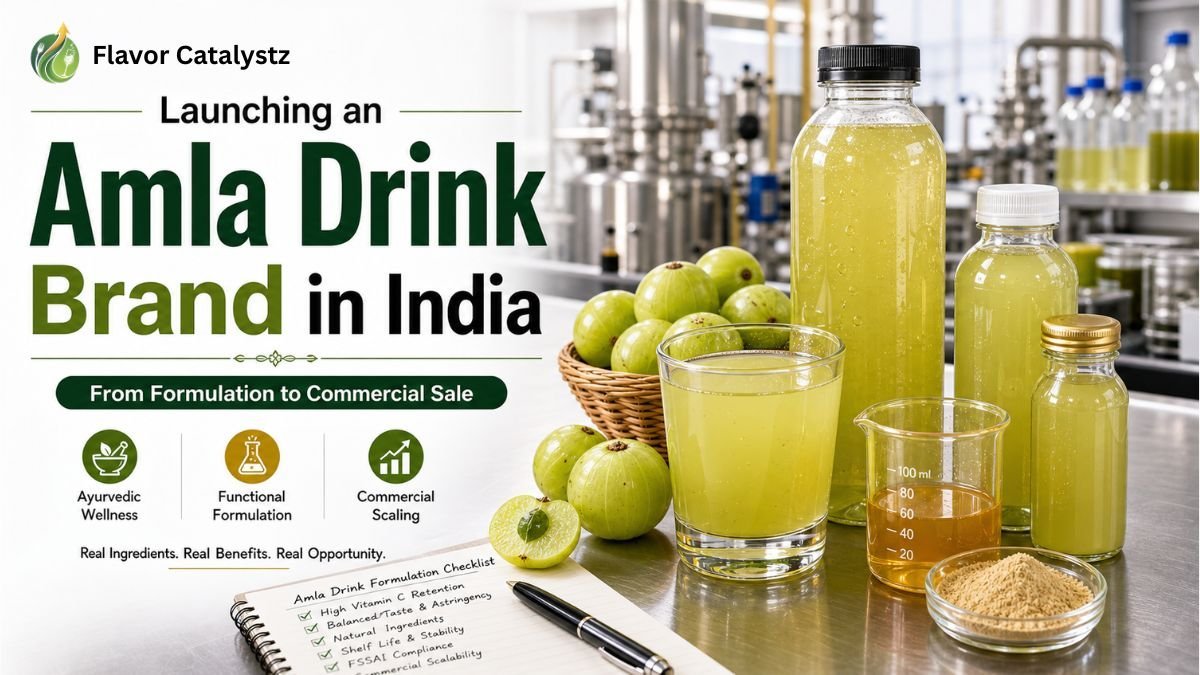
Amla — Indian gooseberry — is arguably the most nutritionally powerful fruit in the Indian traditional medicine system. It has been used in Ayurveda for thousands of years. It contains more Vitamin C per gram than almost any other natural source. It is associated with immunity, digestion, skin health, hair strength, and overall vitality.
And yet, as a commercial beverage category, amla drinks remain massively underdeveloped relative to the ingredient’s cultural prominence and nutritional credibility.
Most amla beverages in the Indian market today are either bitter raw amla juice sold in 500ml PET bottles at health stores, or sugar-heavy amla sharbat syrups that bury the functional credentials under sweetness. Neither format has cracked the premium, modern-consumer market.
That is the opportunity this guide is about. If you are thinking about launching an amla drink brand in India — as a juice, a concentrate, a functional shot, an Ayurvedic wellness drink, or a sparkling gooseberry beverage — here is the complete picture.
Why Amla Is a Strong Beverage Brand Ingredient Right Now
The timing for an amla drink brand in India has genuinely never been better. Several trends are converging:
The immunity wave is not going away. Post-pandemic consumer interest in immunity-supporting foods and beverages has fundamentally shifted purchasing behaviour. Amla’s Vitamin C credentials are real, documented, and resonate immediately with health-conscious consumers.
Ayurvedic functional beverages are mainstream. What was once a niche health-store category is now in every modern trade outlet. Brands like Baidyanath, Dabur (Real Activ Amla), and dozens of D2C wellness startups have validated the consumer appetite. The category is growing, not niche.
“Clean label” functional is the consumer ideal. Consumers want products with minimal ingredients, no synthetic additions, and a clear health story. Amla — one ingredient, massive nutritional credentials, deep cultural familiarity — is almost perfectly positioned for this.
The competitive gap is real. Despite the category’s potential, there is no iconic, modern amla drink brand in India that has done for gooseberry what brands like Raw Pressery did for cold-pressed juice or what Paper Boat did for traditional Indian flavours. The space is open.
Flavor Catalystz
Planning to launch an amla drink brand in India?
From bitterness balancing and Vitamin C retention to shelf-life stability and FSSAI compliance — we help brands formulate scalable amla beverage products.
Understanding Amla as a Beverage Ingredient
Before formulating an amla drink brand, it helps to understand what makes amla technically challenging — because these challenges are where most failed attempts start.
Vitamin C content: Fresh amla contains 600–900mg of Vitamin C per 100g — roughly 20x more than oranges. However, Vitamin C (ascorbic acid) is highly heat-sensitive and oxidises quickly. This means conventional heat processing destroys much of amla’s primary nutritional claim. Formulation and processing choices must protect Vitamin C retention.
Tannin content and astringency: Amla is intensely astringent and bitter raw. This is the biggest consumer barrier. The tannins (primarily emblicanin A and B, gallotannins) that give amla its bitterness are also responsible for many of its health benefits — they cannot simply be removed without diminishing the product. Managing astringency while preserving the functional profile is the core formulation challenge.
pH: Fresh amla juice is acidic (pH 3.0–3.5), which is actually helpful for shelf life — the low pH inhibits microbial growth. However, it also contributes to the harsh, sour flavour that makes straight amla juice difficult to drink.
Colour: Fresh amla juice is pale yellow-green. It oxidises to a dull brown quickly. Colour stability is a significant challenge for a visually appealing commercial product.
Tannin-protein interaction: If your formulation includes any dairy or protein ingredients, amla tannins will cause precipitation and cloudiness. This rules out certain hybrid formulations unless stabilisers are used.
Amla Drink Formulation: The Key Approaches
Different commercial formats require different formulation strategies.
Straight Amla Juice (Minimally Processed)
The most direct expression of the ingredient — extracted amla juice, lightly sweetened, with pH adjustment. Appeals to hardcore health consumers who accept bitterness as a sign of authenticity.
Formulation target: Amla juice at 50–70% content, natural sweetener (honey or jaggery syrup work well), citric acid adjustment if needed, ascorbic acid addition to stabilise colour and protect Vitamin C, no artificial flavours.
Challenge: Bitterness limits mainstream consumer appeal. Works best as a 30–60ml shot format rather than a larger drink.
Amla Blend (Amla + Complementary Fruits)
Amla’s sharp edge is balanced with sweeter, milder fruits. Common and effective combinations:
- Amla + Apple (classic — apple sweetness and neutrality complement amla)
- Amla + Pomegranate (both high in antioxidants, pomegranate adds sweetness and colour)
- Amla + Ginger + Honey (warming, functional, good for immunity positioning)
- Amla + Tulsi + Neem (full Ayurvedic immunity stack — strong positioning but strong flavour)
Formulation target: Amla at 20–35% of total blend, complementary fruit at 40–60%, sweetener to Brix 10–12°, pH 3.2–3.8.
Amla Sharbat / Concentrate
A sweetened concentrate for dilution — similar to the traditional sharbat format. Higher sugar (Brix 55–65°), longer shelf life, versatile consumption occasions. Jaggery-sweetened amla sharbat has strong premium-positioning potential.
Amla Functional Shot
30–60ml concentrated dose format, high amla content, positioned as a daily wellness shot. Growing rapidly in urban health markets. Can command significant per-ml premium. Often combined with ashwagandha, ginger, or turmeric for a broader Ayurvedic functional proposition.
Sparkling Amla Beverage
A modern, carbonated format that makes amla accessible to mainstream consumers who would not drink straight amla juice. Light amla flavour, carbonation to refresh, positioned as a healthy alternative to cola. Lower amla content (8–15%) but much broader mass-market appeal.
Protecting Vitamin C: The Critical Formulation Factor
If your amla drink brand is going to make Vitamin C claims — and it should, because that is amla’s strongest credential — you need to protect Vitamin C content through your formulation and processing.
Key steps:
Use cold processing where possible. HPP (High Pressure Processing) or cold-fill with refrigerated shelf life preserves Vitamin C far better than heat treatment. If thermal processing is required, minimise temperature and time.
Add ascorbic acid. Adding supplementary ascorbic acid (Vitamin C) to your formulation compensates for processing losses and ensures the declared Vitamin C content per serving is consistently met. This is standard practice in commercial juice production and FSSAI-compliant.
Use oxygen-barrier packaging. Oxygen degrades Vitamin C rapidly. Aseptic cartons, aluminium, or glass are significantly better than standard PET for Vitamin C retention over shelf life.
Conduct shelf life Vitamin C decay testing. Your claimed Vitamin C content per serving should be verifiable at the end of shelf life, not just at production. This requires stability testing with regular lab analysis.
For a brand making immunity claims based on Vitamin C, having a certified lab report showing the Vitamin C content at end of shelf life is both a regulatory necessity and a powerful marketing tool.
FSSAI Compliance for Amla Drink Brand
Amla-based beverages fall under FSSAI’s fruit juice and beverage standards. Specific compliance points:
Fruit juice content declaration: If labelled as amla juice, the product must meet minimum fruit content standards per FSSAI. Check the current standards for the specific product category.
Vitamin C claims: “Source of Vitamin C” or “Rich in Vitamin C” claims have defined thresholds under FSSAI’s health claim regulations. Ensure your declared content meets the threshold and is lab-verified.
Ayurvedic/health claims: Claims like “boosts immunity” are regulated. FSSAI permits certain nutrient function claims but prohibits disease prevention claims. Work with a knowledgeable regulatory consultant to phrase your claims correctly.
FSSAI licence: A Central FSSAI Licence is required for commercial manufacturing above ₹20 lakh turnover. The licence category relevant to your product type must be correctly identified.
Our FSSAI beverage compliance guide covers the regulatory framework in detail. Our beverage consultant team can review your specific product and claims before launch.
Go-to-Market Strategy for an Amla Drink Brand
Channel 1 — D2C Online
Start with your own website and Amazon/Flipkart. Health and wellness consumers are active online shoppers. Strong product story, good photography, and credible Vitamin C claims convert well. D2C also lets you gather consumer feedback quickly before committing to retail.
Channel 2 — Health Food Stores and Organic Retail
Outlets like Organic World, Foodhall, and independent health stores are natural homes for an amla drink brand. Buyers in these channels respond well to Ayurvedic credentials, clean labels, and authentic ingredient stories.
Channel 3 — Modern Trade
Modern trade (DMart, Reliance Smart, Spencer’s) requires volume, price competitiveness, and consistent supply. Best approached once the product is proven in smaller channels and production is scaled.
Channel 4 — HoReCa and Wellness Hospitality
Hotels with wellness positioning, Ayurvedic resorts, yoga studios, and wellness cafes are excellent early placements for an amla drink brand. These accounts value authenticity and are willing to pay premium pricing.
Related: How to start a beverage brand in India and beverage product development.
Ready to Build Your Amla Drink Brand?
Amla has everything a great functional beverage brand needs — science-backed nutrition, Ayurvedic heritage, consumer familiarity, and a formulation challenge that, when solved well, creates a real competitive barrier.
At Flavor Catalyst, we work with founders who want to build beverage brands around powerful Indian ingredients like amla, ashwagandha, tulsi, and turmeric — combining traditional wisdom with modern food science and commercial rigour.
Talk to our team today — and let’s build the amla brand India’s health-conscious consumers have been waiting for.
FAQs
What is the commercial opportunity for amla drinks in India?
Significant. The functional beverage market in India is growing rapidly, and amla’s Vitamin C and Ayurvedic credentials position it well for the immunity and wellness consumer segment. The category currently lacks a dominant modern brand — which is the opportunity.
How do you reduce amla’s bitterness in a commercial drink?
Through formulation — blending with sweeter fruits (apple, pomegranate), using honey or jaggery as sweeteners, adjusting Brix and pH, and in some cases using enzymatic treatment or mild processing to reduce tannin intensity without destroying other bioactives.
Can I claim “Vitamin C” on my amla drink label?
Yes, subject to FSSAI’s nutrient content claim regulations. Your declared Vitamin C content must meet the threshold for the claim (“source of” vs “rich in”), be lab-verified, and remain above the declared value at end of shelf life.
What is the shelf life of commercial amla juice?
HTST-processed amla juice in aseptic packaging: 6–9 months. HPP cold-processed: 30–45 days refrigerated. Amla concentrate/sharbat at high Brix: 12–18 months ambient. Shelf life depends heavily on processing method and packaging.
How much capital do I need to start an amla drink brand?
Starting with private label manufacturing: ₹10–20 lakh for product development, compliance, packaging, and first production run. Own manufacturing requires substantially more. Our beverage formulation cost guide gives a detailed breakdown.